正在确认阅读权限…
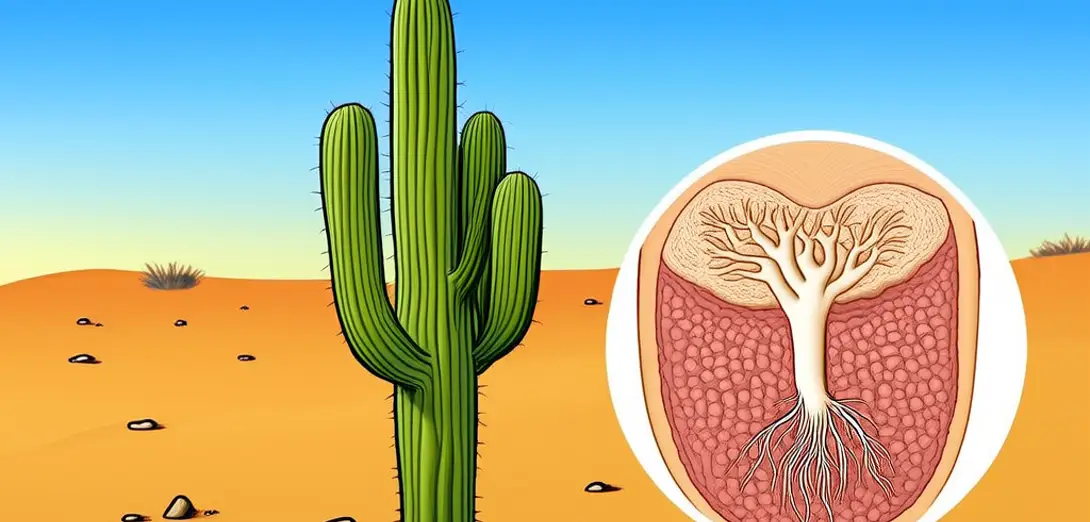
Why Desert Plants Store Water in Modified Stems Instead of Roots
沙漠植物为何将水分储存在特化茎部而非根部
-
Desert plants like cacti store water in fleshy stems because stems offer more volume and surface control than roots.仙人掌等沙漠植物将水分储存在肉质茎中,因为茎比根具有更大的体积和更好的表面积调控能力。
-
Their stems have collapsible cells that expand when full and shrink during droughts without damage.其茎内含有可塌陷细胞,注满水时膨胀,干旱时收缩而不受损。
-
Roots stay shallow and widespread to catch rare rainfalls quickly before evaporation occurs.根系浅而广布,以便在蒸发前迅速吸收罕见的降雨。
-
Waxy cuticles and reduced leaves on stems minimize water loss while maximizing storage space.茎表面覆盖蜡质角质层且叶片退化,既减少水分流失,又最大化储水空间。
-
Unlike roots, stems can photosynthesize even without green leaves, using chlorophyll in their outer tissue.与根不同,茎即使没有绿色叶片也能进行光合作用,依靠外层组织中的叶绿素。
-
Scientists compare stem cell elasticity to hydrogel polymers used in modern water-retention tech.科学家将茎细胞的弹性比作现代保水技术中使用的水凝胶聚合物。
-
Some cacti stems hold over two hundred liters—enough to survive twelve months without rain.某些仙人掌的茎可储存超200升水——足以支撑12个月无雨生存。
-
This adaptation evolved independently in unrelated plants across Africa, Australia, and the Americas.这一适应性特征在非洲、澳大利亚和美洲互不相关的植物中独立演化而成。
-
Botanists study these structures to improve drought-resistant crop engineering.植物学家研究这些结构,以改进抗旱作物的基因工程。
-
It reveals how evolution shapes form and function around one critical resource: water.它揭示了进化如何围绕一种关键资源——水——塑造形态与功能。