正在确认阅读权限…
Ugandan Nkandagire Harvest Rite as Soil Epistemology Embodiment
乌干达恩坎达吉雷丰收仪典:土壤知识论的身体化实践
-
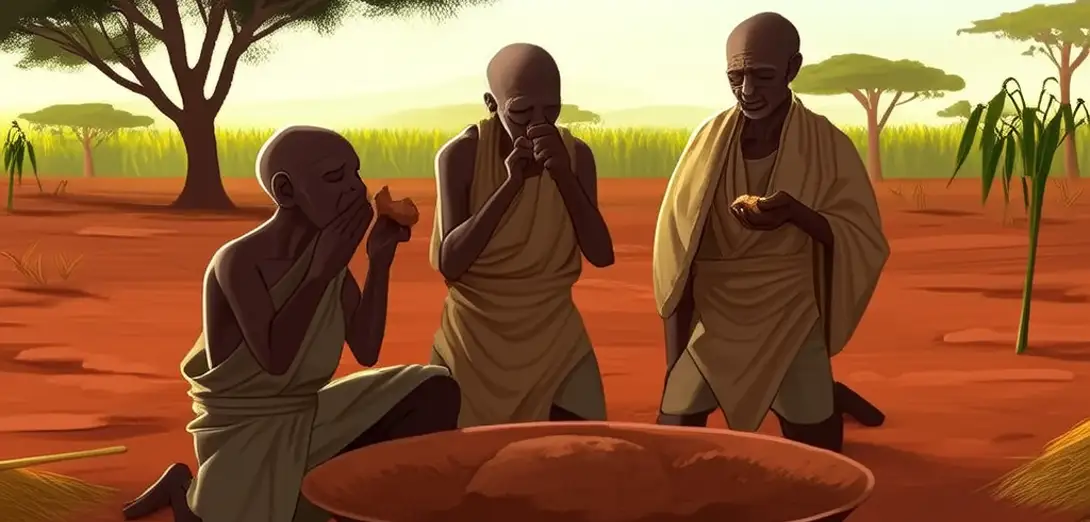
Nkandagire in central Uganda treats soil sampling not as agricultural testing but as epistemic dialogue—elders taste clay textures to diagnose generational land stewardship failures.恩坎达吉雷地区(乌干达中部)将土壤采样视为一种认知对话,而非农业检测——长老们通过品尝黏土质地,诊断代际土地管理的失败。
-
Harvest dancers wear sandals woven from specific grasses only found in nitrogen-balanced fields, making footwear a real-time soil health indicator.丰收舞者所穿凉鞋仅用氮素平衡田地特有的草类编织,使鞋履成为实时土壤健康指标。
-
The chief’s first sheaf is buried at varying depths according to rainfall forecasts derived from termite mound architecture—blending entomological observation with ritual timing.酋长的第一捆稻谷依白蚁丘结构推算的降雨预测,埋入不同深度——将昆虫学观察与仪式时序相融合。
-
Women sing planting songs whose pitch shifts correlate with pH levels measured in adjacent test plots, treating vocal modulation as calibrated instrumentation.妇女播种时吟唱的歌谣音高变化,与邻近试验田测得的pH值相关——将声调调节视作校准过的测量工具。
-
Seed selection ceremonies involve blindfolded elders identifying varietals by root-scent alone—a sensory taxonomy rejecting monocultural seed banks.选种仪式中,长老蒙眼仅凭根系气味辨识品种——以感官分类法拒绝单一化种子库。
-
Land disputes are resolved not in courts but at harvest altars where disputants jointly till soil until microbial activity visibly changes—making microbiology the arbiter.土地纠纷不在法庭解决,而于丰收祭坛上由争执双方共同耕作,直至微生物活性发生肉眼可见变化——让微生物学成为裁决者。
-
Youth apprentices learn soil stratigraphy through dance sequences mimicking erosion layers, transforming pedagogy into kinetic geology.青年学徒通过模仿侵蚀层的舞蹈序列学习土壤分层——将教育转化为动态地质学。
-
The rite’s ban on metal tools during threshing preserves microbial networks, treating metallurgy as epistemic violence against subterranean knowledge systems.脱粒仪式禁用金属农具,以保护微生物网络——将冶金术视为对地下知识体系的认知暴力。
-
Digital soil sensors installed nearby feed live data to altar tablets—but only after elders verify readings against tactile assessment.附近安装的数字土壤传感器实时向祭坛石板传输数据,但须经长老触感验证后方被采纳。
-
Nkandagire thus refuses soil as inert resource, positioning it instead as interlocutor demanding embodied accountability.因此,恩坎达吉雷拒绝将土壤视作惰性资源,而将其定位为需以身体践行责任的对话者。
-
Its seasonal timing follows fungal fruiting cycles, not calendar dates—grounding timekeeping in mycelial intelligence.该仪式的时节依真菌子实体生长周期而定,而非日历日期——使时间计量扎根于菌丝智能。
-
Here, agriculture remains jurisprudential practice: every ploughed furrow is a signed covenant with earth’s epistemic sovereignty.在此,农业仍是司法实践:每一道犁沟,都是与大地认知主权签署的契约。