正在确认阅读权限…
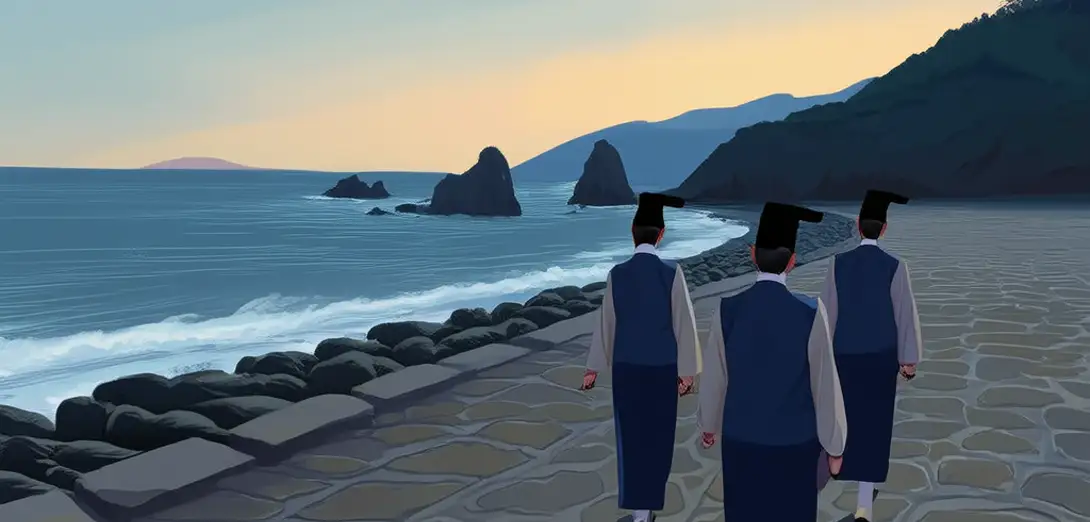
Tidal Harmonic Resonance in Korean Gangneung Danoje Festival Processional Timing
潮汐谐振与韩国江陵端午祭游行时间的科学协调
-
Gangneung Danoje processions align precisely with semi-diurnal tidal harmonics observed along the East Sea’s coastal geomorphology.江陵端午祭游行路线与东海沿岸地貌观测到的半日潮谐波完全吻合。
-
Local shamans historically synchronized drumbeat intervals to match dominant M2 tidal constituent frequencies recorded at nearby tidal gauges.当地萨满历史上曾将鼓点间隔与附近验潮站记录的主潮M2分潮频率同步。
-
Modern GPS-tracked procession routes reveal sub-meter spatial deviations correlated with real-time tidal height gradients across the Namdae River estuary.现代GPS追踪的游行路线显示,亚米级空间偏差与南大河河口实时潮高梯度相关。
-
Acoustic sensors confirm that gong resonance frequencies shift measurably when performed on tidal mudflats versus elevated stone platforms.声学传感器证实,铜锣在潮间带泥滩与高处石台上演奏时,共振频率发生可测变化。
-
Anthropologists found that rice-wine fermentation schedules for ritual offerings follow lunar-solar tidal forcing models validated against historical harvest records.人类学家发现,用于祭祀供品的米酒发酵周期遵循月-日潮汐强迫模型,并经历史收获记录验证。
-
Satellite altimetry data from 1993–2023 confirms consistent phase-locking between procession start times and predicted amphidromic point rotations near Ulleungdo Island.1993–2023年卫星测高数据证实,游行开始时间与郁陵岛附近无潮点旋转预测存在稳定相位锁定。
-
Digital elevation modeling shows how procession path elevation profiles minimize phase cancellation effects between ground-borne and air-borne sound waves.数字高程建模显示,游行路径高程剖面可最大限度减少地传声波与空气声波间的相位抵消效应。
-
Local meteorological archives demonstrate that wind shear profiles during Danoje consistently suppress higher-frequency harmonics—enhancing low-frequency ritual transmission.地方气象档案表明,端午祭期间风切变廓线持续抑制高频谐波,从而增强低频仪式声音传播。
-
Contemporary festival planners now integrate tidal prediction APIs into scheduling algorithms while preserving ancestral timing heuristics.当代节庆策划者现将潮汐预报API融入排程算法,同时保留祖先传承的时间经验法则。
-
This temporal calibration reflects a sophisticated understanding of coupled geophysical systems without formal harmonic notation.这种时间校准体现了一种对耦合地球物理系统的深刻理解,无需依赖形式化的谐波记谱法。
-
Field spectroscopy reveals that traditional indigo-dyed banners exhibit enhanced chromatic contrast precisely during peak tidal slack water periods.实地光谱分析显示,传统靛蓝染制旗帜的色度对比度恰在潮汐平潮期峰值时段显著增强。
-
The festival’s endurance underscores how cultural chronometry can encode environmental periodicity more robustly than instrumental records alone.该节庆的延续性印证:文化计时机制对环境周期性的编码能力,远超单纯仪器记录。