正在确认阅读权限…
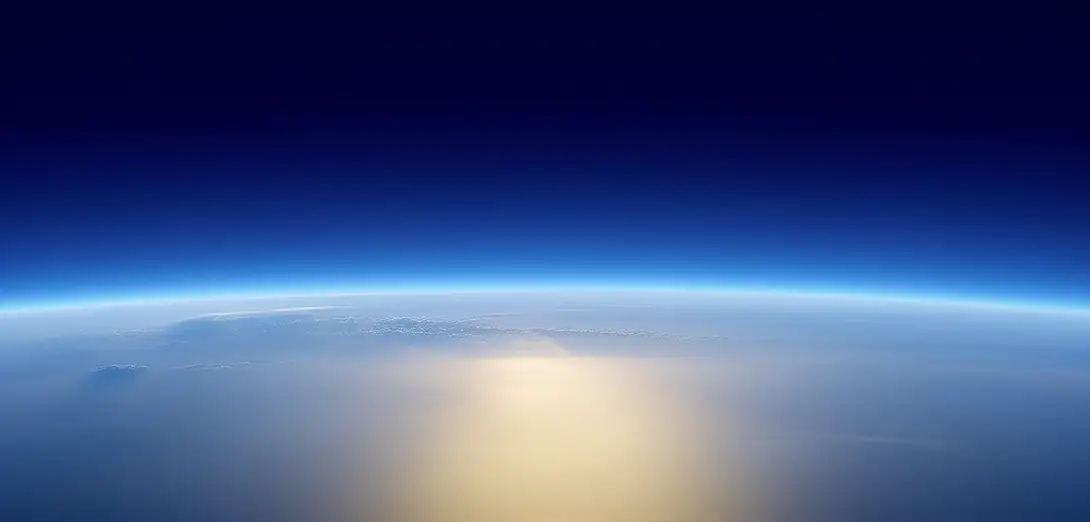
The Role of Stratospheric Aerosol Layers in Modulating Global Solar Radiation Balance
平流层气溶胶层如何调节全球太阳辐射平衡
-
Volcanic eruptions inject sulfur dioxide into the stratosphere, where it oxidizes into sulfate aerosols with lifetimes of 1–3 years.火山喷发将二氧化硫注入平流层,后者氧化形成存留期为1–3年的硫酸盐气溶胶。
-
These submicron particles scatter incoming shortwave solar radiation back to space, reducing net surface insolation by up to 2.5 W/m².这些亚微米颗粒将入射的短波太阳辐射散射回太空,使地表净日照减少高达2.5瓦/平方米。
-
Unlike tropospheric aerosols, stratospheric ones avoid rapid wet deposition, enabling hemispheric-scale radiative forcing.与对流层气溶胶不同,平流层气溶胶可避免快速湿沉降,从而产生半球尺度的辐射强迫。
-
Satellite lidar measurements since 2006 show persistent background aerosol loading even during quiescent volcanic periods.自2006年以来的卫星激光雷达观测显示,即使在火山活动平静期,平流层仍持续存在背景气溶胶负荷。
-
Anthropogenic coal combustion contributes approximately 20% of current stratospheric sulfate burden via tropopause-penetrating convection.人为燃煤排放通过穿透对流层顶的对流过程,贡献了当前平流层硫酸盐总量的约20%。
-
Climate models now treat aerosol optical depth as a state variable rather than a fixed parameter in radiative transfer calculations.气候模型如今将气溶胶光学厚度视为辐射传输计算中的状态变量,而非固定参数。
-
Policy discussions around solar radiation management often reference historical eruptions like Pinatubo to benchmark potential intervention efficacy.关于太阳辐射管理的政策讨论常以皮纳图博火山喷发等历史事件为基准,评估潜在干预效果。
-
However, deliberate stratospheric aerosol injection raises governance challenges regarding transboundary impacts and termination shock risks.然而,有意进行平流层气溶胶注入会引发治理难题,涉及跨境影响和终止冲击风险。
-
Field campaigns such as SAGE III/ISS track seasonal aerosol vertical distribution to refine aerosol–cloud interaction parameterizations.SAGE III/ISS等野外观测计划追踪气溶胶的季节性垂直分布,以优化气溶胶–云相互作用参数化方案。
-
Marine cloud brightening research draws methodological parallels but operates at fundamentally different atmospheric scales and feedback loops.海洋云增亮研究在方法上具有相似性,但作用于截然不同的大气尺度及反馈机制。
-
Legal scholars argue existing international environmental law lacks mechanisms to adjudicate liability for unilateral geoengineering experiments.法律学者指出,现行国际环境法缺乏裁决单边地球工程实验责任归属的有效机制。
-
Ultimately, aerosol-induced cooling masks underlying greenhouse warming—creating a false sense of climate stability without addressing root causes.归根结底,气溶胶引起的降温掩盖了深层的温室变暖,制造出一种未解决根本原因的虚假气候稳定感。