正在确认阅读权限…
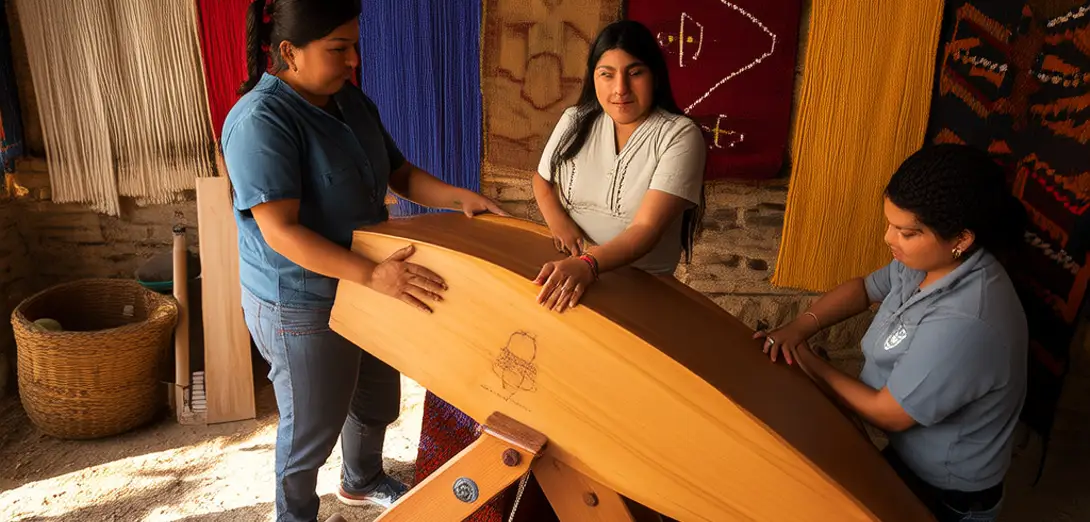
Hand-Printed Textiles and Community Memory in Oaxacan Zapotec Weaving
瓦哈卡萨波特克织锦:手印纺织与社群记忆
-
Zapotec weavers in Oaxaca, Mexico, begin each textile with a personal handprint on the loom’s wooden frame.墨西哥瓦哈卡的萨波特克织工,每次织布前都会在织机木框上留下个人手印。
-
This mark honors ancestors whose patterns and colors still guide today’s designs across generations.这一印记致敬祖先,其图案与色彩至今仍跨越世代指引当代设计。
-
Women pass down symbolic motifs—like the diamond for the four cardinal directions—through daily weaving sessions.女性通过日常编织将象征性纹样——如代表四个基本方位的菱形——代代相传。
-
Visitors may watch but never touch the warp threads, which elders say hold living family stories.访客可观看但不可触碰经线,长者说这些经线承载着鲜活的家族故事。
-
The natural dyes—from cochineal insects and wild marigolds—are prepared in shared courtyard vats each autumn.天然染料——来自胭脂虫和野生万寿菊——每年秋季在共用的庭院染缸中制备。
-
Each finished rug or shawl carries both geographic identity and spiritual intention, not just decorative function.每件完工的地毯或披肩不仅具装饰功能,更承载地域身份与精神意图。
-
Young apprentices learn by sitting silently beside elders for months before handling the shuttle.年轻学徒需静坐于长者身旁数月,方能初次持梭。
-
Community elders verify authenticity by checking thread tension and alignment of ancient geometric repeats.社区长者通过检查纱线张力与古老几何纹样的对齐度来验证真伪。
-
When displayed at local markets, textiles are arranged by lineage, not price or size.当地市集展出纺织品时,依家族谱系而非价格或尺寸排列。
-
This practice transforms cloth into an embodied archive where culture is woven, not written.这一实践将织物转化为具身化的档案——文化被织就,而非书写。