正在确认阅读权限…
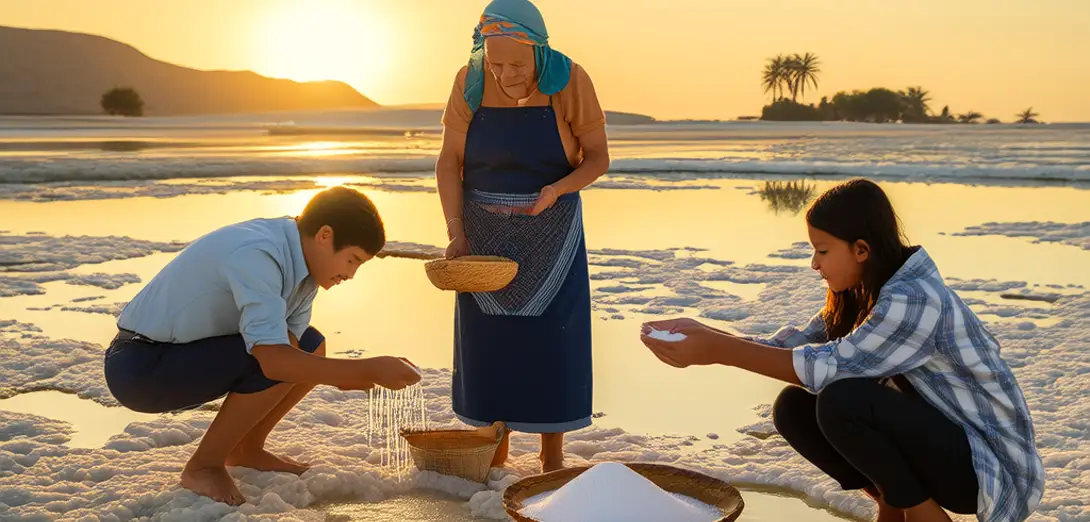
Salt Offering and Salt Pathways in Tunisia’s Djerba Island Rituals
突尼斯杰尔巴岛:盐之供奉与盐径仪式
-
On Djerba Island, families collect sea salt at dawn during the spring equinox, harvesting only from tidal pools fed by underground springs.在杰尔巴岛,春季昼夜平分日的黎明时分,家家户户采集海盐,仅取自地下泉涌滋养的潮汐池。
-
They carry it in woven palm baskets along ancient salt paths worn into limestone cliffs over two thousand years.他们用编织的棕榈篮子,沿已有两千多年历史、刻入石灰岩悬崖的古盐道运送海盐。
-
At village thresholds, elders pour salt in figure-eight patterns—symbolizing infinity and balance between sea and desert.村口处,长者将盐撒成数字‘8’形——象征永恒,以及海洋与沙漠之间的平衡。
-
No salt is sold or measured; it is gifted only to those who have witnessed a family’s three major life transitions.盐不买卖、不称量,只赠予见证过某家族三大人生节点的人。
-
Fishermen leave small mounds on rocky outcrops before sailing, believing salt anchors their boats to memory, not just land.渔民出海前,在礁石上堆起小撮盐,相信盐能将船锚定于记忆,而不仅是陆地。
-
Young women grind salt with dried rosemary on stone slabs, releasing scent that marks seasonal shifts in communal courtyards.年轻女子在石板上研磨海盐与干迷迭香,散发的香气标记着庭院中季节的更替。
-
Salt piles near shrines are never swept away—they weather naturally, becoming part of walls and doorframes over decades.神龛旁的盐堆从不扫除——任其自然风化,数十年后融入墙壁与门框。
-
During weddings, couples walk barefoot across salt-strewn lanes, pausing where crystals catch morning light to exchange unspoken vows.婚礼上,新人赤足走过撒满盐粒的小径,在晨光映照盐晶之处驻足,交换无声誓约。
-
Scholars note that Djerban salt rituals predate both Roman occupation and Islamic arrival, surviving as quiet grammars of endurance.学者指出,杰尔巴岛的盐礼早于罗马统治与伊斯兰传入,以静默的仪式语法延续坚韧。
-
This mineral does not season food alone—it measures time, seals trust, and maps belonging across shifting shores.这种矿物不仅调味食物——它计量时间、缔结信任,并在变迁的海岸线上标定归属。