正在确认阅读权限…
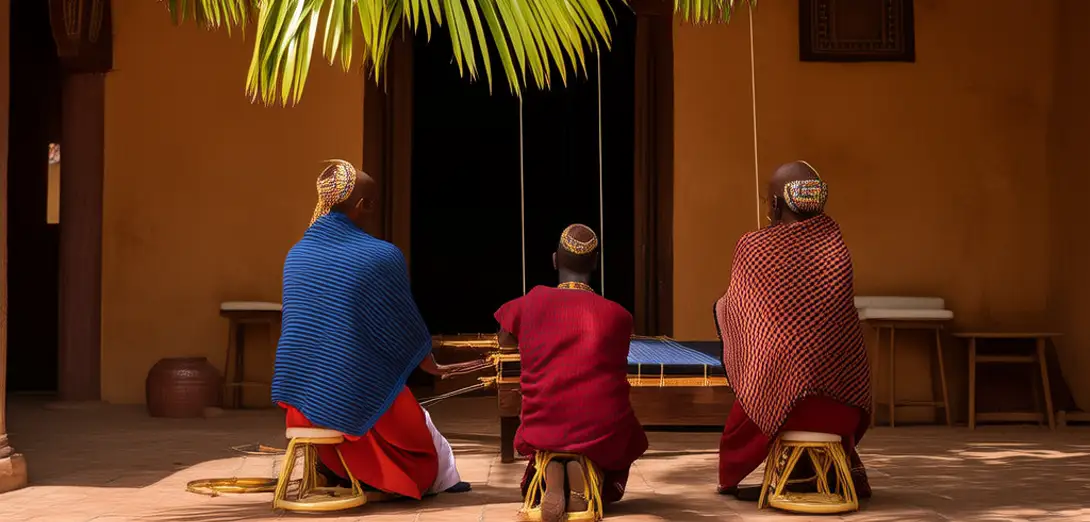
The Kente Cloth Weaving Ceremony in Ashanti Royal Courts
阿坎族阿散蒂王庭的肯特布织造仪式
-
In Kumasi, master weavers begin each cloth with a prayer to the ancestors before touching the loom.在库马西,织布大师每次织布前都会向祖先祈祷,然后才触碰织机。
-
Each pattern carries a name and meaning, such as 'Sika Futuro' for gold dust or 'Eban' for safety and security.每种图案都有名称和含义,例如‘Sika Futuro’象征金粉,‘Eban’代表安全与保障。
-
Young apprentices learn by watching silently for months before handling thread or shuttle.年轻学徒需静默观摩数月,方能接触纱线或梭子。
-
The chief’s installation ceremony requires newly woven kente bearing ancestral proverbs in symbolic colors.酋长就职典礼须使用新织的肯特布,其上织有寓意深刻的祖先箴言,并配以象征性色彩。
-
Red signifies political passion, green represents land and harvest, and black honors departed elders.红色象征政治热忱,绿色代表土地与丰收,黑色则致敬逝去的长者。
-
Women wear specific designs only after marriage, while royal motifs remain exclusive to Asantehene’s family.女性婚后方可穿戴特定纹样,而王室图案仅限阿散蒂国王家族使用。
-
The loom’s rhythmic clack echoes through palace courtyards during festival preparations each August.每年八月节庆筹备期间,织机富有节奏的咔嗒声回荡于王宫庭院。
-
Tourists may observe but never photograph sacred weaving sequences without elder permission.游客可旁观神圣织布过程,但未经长老许可不得拍照。
-
Kente cloth is not clothing alone—it is history worn, memory woven, and authority conferred.肯特布不仅是服饰——它是穿在身上的历史、织入经纬的记忆、赋予身份的权威。
-
When folded and presented to visiting dignitaries, it conveys respect deeper than spoken words.当肯特布折叠后呈献给来访贵宾时,所表达的敬意远胜千言万语。