正在确认阅读权限…
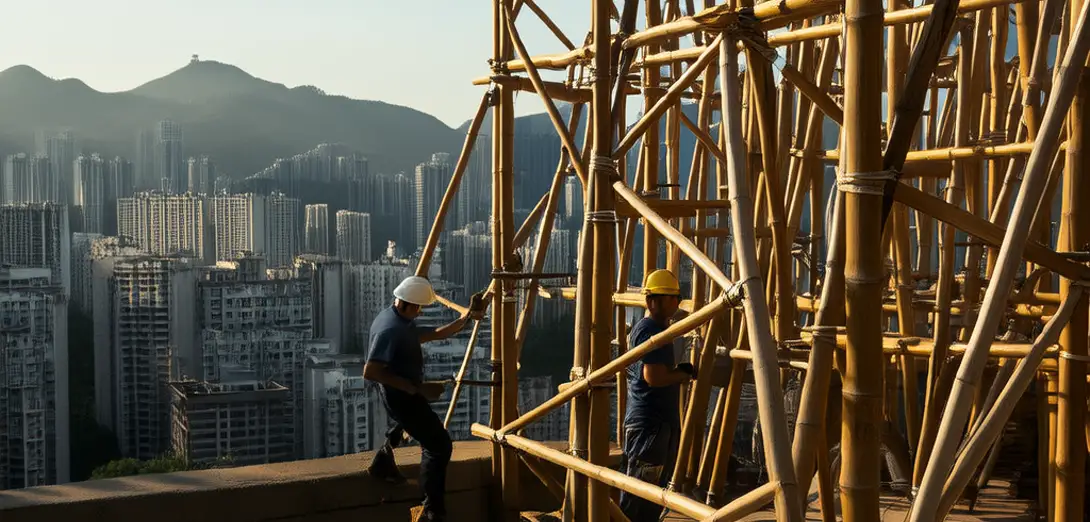
Bamboo Scaffold Semiotics in Hong Kong Construction Sites: Verticality as Negotiated Trust Infrastructure
香港建筑工地竹脚手架符号学:垂直性作为协商式信任基础设施
-
Hong Kong’s bamboo scaffolds—built without nails or blueprints—are read by workers as dense texts encoding trust, seniority, and risk assessment.香港的竹脚手架不用钉子、不靠图纸,工人将其视为密文,其中编码着信任、资历与风险判断。
-
Each knot type signals precise load capacity and intended usage duration, legible only to those trained through decade-long apprenticeships.每种绳结对应精确的承重能力与预期使用时长,唯有经历十余年学徒训练者方能识读。
-
Inspectors don’t measure tension; they listen for subtle creak harmonics indicating optimal fiber stress across 20-meter spans.检查员不测量张力,而是聆听细微的吱呀谐音——那是二十米跨度间竹纤维应力恰到好处的信号。
-
When rain arrives, crews adjust lashing patterns overnight—not for safety alone, but to signal vigilance to neighboring tenants and regulators.雨季来临,工队连夜调整捆扎方式——不仅为安全,更向邻近住户与监管者昭示警觉。
-
A scaffold’s ‘personality’ emerges over weeks: some sway gently like breathing organisms, others hold rigid stillness reflecting crew cohesion.脚手架的‘个性’在数周中逐渐显现:有的如呼吸般轻柔摇曳,有的则刚毅静立,映射出班组的默契。
-
Newcomers earn credibility not by speed but by correctly interpreting why certain poles lean slightly eastward—aligning with monsoon wind patterns.新人赢得信任不靠速度,而在于准确解读为何某些竹竿微微向东倾斜——那是顺应季风走向的智慧。
-
Clients rarely request engineering reports; instead, they ask which master builder erected the structure, treating names as certification proxies.客户鲜少索要工程报告,反倒追问由哪位师傅搭建,将匠人之名视作资质凭证。
-
The scaffold’s impermanence is its ethical core—its dismantling requires reassembling knowledge, not just materials.脚手架的临时性正是其伦理内核——拆除过程要求重聚知识,而非仅重组材料。
-
Urban planners now map scaffold density as proxy data for neighborhood social capital, correlating height with intergenerational skill transfer rates.城市规划者如今以脚手架密度为指标,映射社区社会资本,并将高度与跨代技艺传承率相关联。
-
This vertical vernacular resists digitization not out of tradition but because its logic lives in calloused hands and calibrated ears.这套垂直方言抗拒数字化,并非出于守旧,只因它的逻辑栖于老茧双手与校准双耳之中。
-
Each tier represents not just elevation but accumulated judgment—spatialized epistemology built pole by pole.每一层不仅代表高度,更凝结着经验判断——这是逐竿垒起的空间化认知体系。
-
To stand beneath one is to inhabit a grammar of mutual accountability written in split bamboo and human breath.立于其下,便是置身于一种由劈开的竹子与人的气息写就的相互担责语法之中。