正在确认阅读权限…
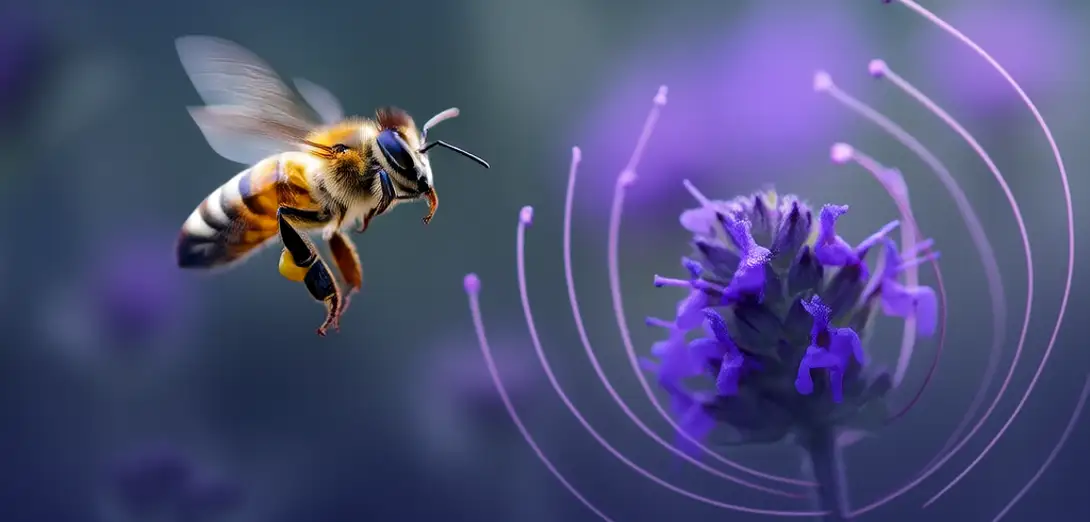
How Bees Detect Electric Fields Around Flowers
蜜蜂如何感知花朵周围的电场:生物静电传感机制
-
Bees carry a slight positive electric charge as they fly due to friction with air molecules.蜜蜂飞行时因与空气分子摩擦而带微弱正电荷。
-
Flowers usually hold a weak negative charge, creating an electric field detectable within centimeters.花朵通常带微弱负电荷,形成可在数厘米内探测到的电场。
-
Tiny hairs on a bee’s body bend in response to these fields, triggering neural signals.蜜蜂体表的细小绒毛会因应这些电场而弯曲,触发神经信号。
-
This electroreception helps bees distinguish recently visited flowers from untouched ones.这种电感知能力帮助蜜蜂区分刚被访过的花和未被访过的花。
-
Researchers confirmed this using artificial flowers wired to emit controlled electric pulses.研究人员利用接入可控电脉冲的人工花朵证实了这一点。
-
The ability gives bees a 'sixth sense' beyond sight, smell, and touch during foraging.这一能力赋予蜜蜂觅食时超越视觉、嗅觉和触觉的‘第六感’。
-
Electric fields change when pollen is removed, offering real-time floral status updates.花粉被带走后电场随之改变,实时反映花朵状态。
-
Lab experiments show bees learn to associate specific field patterns with nectar rewards.实验室实验表明,蜜蜂能学会将特定电场模式与花蜜奖励关联起来。
-
This discovery reshapes our understanding of insect-plant communication networks.这一发现重塑了我们对昆虫-植物通讯网络的理解。
-
It also inspires new bio-inspired sensors for environmental monitoring and precision agriculture.该发现还启发了用于环境监测和精准农业的新一代仿生传感器。