正在确认阅读权限…
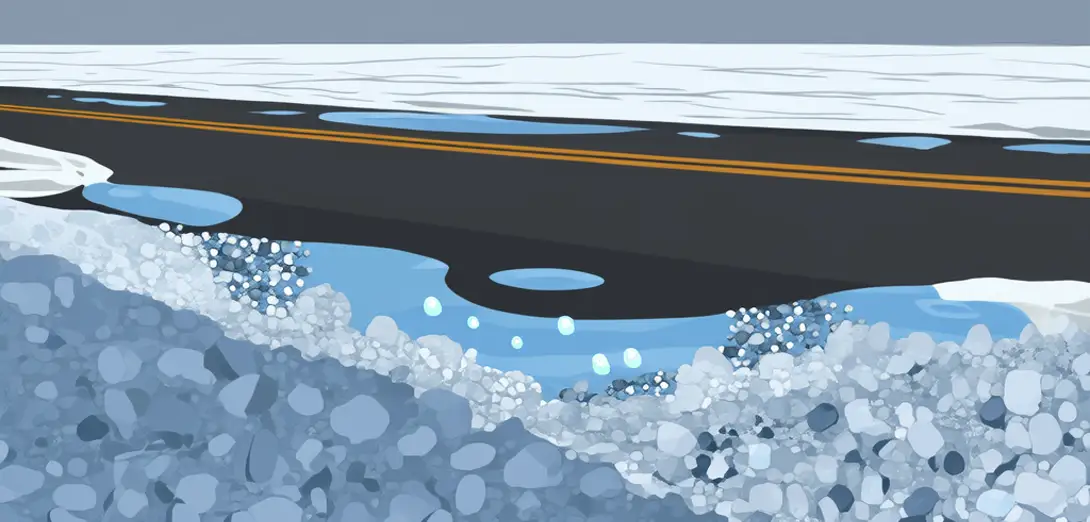
Why Salt Lowers the Freezing Point of Water on Icy Roads
为何盐能降低结冰路面上水的凝固点
-
Salt dissolves in thin layers of water that naturally coat icy surfaces at subzero temperatures.盐能溶解在冰表面自然形成的薄层水中,即使在零下温度也是如此。
-
The dissolved sodium and chloride ions disrupt hydrogen bonding between water molecules.溶解后的钠离子和氯离子会干扰水分子间的氢键。
-
This interference prevents ice crystals from forming or growing easily at typical winter temperatures.这种干扰使冰晶在常见冬季温度下难以形成或生长。
-
As a result, the mixture freezes only below −9°C instead of 0°C under normal conditions.因此,混合物需低于−9°C才会结冰,而非通常条件下的0°C。
-
Road crews apply salt strategically because its effectiveness declines below −12°C.道路养护人员会策略性地撒盐,因为其效果在−12°C以下会显著下降。
-
Calcium chloride works better in extreme cold since it releases heat when dissolving.氯化钙在极寒条件下效果更好,因其溶解时会释放热量。
-
However, overuse damages concrete, corrodes vehicles, and harms nearby vegetation and soil.但过量使用会损坏混凝土、腐蚀车辆,并危害周边植被和土壤。
-
Scientists are testing beet juice and cheese brine as eco-friendly alternatives with similar freezing-point depression.科学家正测试甜菜汁和奶酪卤水作为环保替代品,它们同样具有降低冰点的效果。
-
The principle also explains why seawater stays liquid longer than freshwater in polar regions.该原理也解释了为何极地海域的海水比淡水更晚结冰。
-
Freezing-point depression is a colligative property—it depends only on particle concentration, not identity.凝固点降低是一种依数性性质——仅取决于溶质粒子浓度,与其种类无关。