正在确认阅读权限…
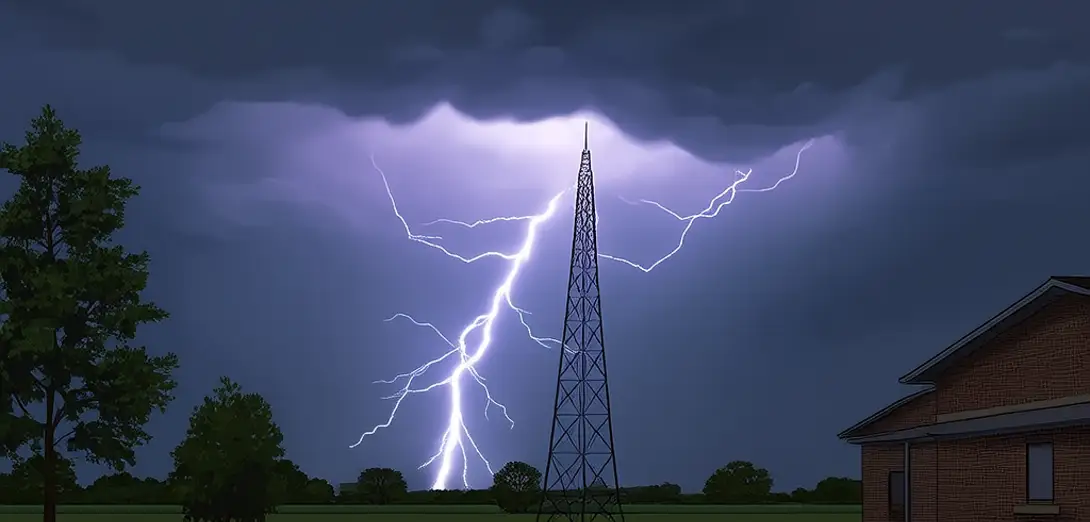
Why Lightning Strikes Prefer Tall Objects and Metal Structures
为何闪电更倾向击中高大物体与金属结构
-
Lightning seeks the path of least electrical resistance from cloud to ground during charge imbalance.雷电在云地间电荷失衡时,会沿电阻最小的路径放电。
-
Tall objects reduce the insulating air gap, making ionization and leader formation easier.高大物体缩短了空气绝缘间隙,使电离和先导通道更易形成。
-
Metal conducts electricity far better than wood or stone, so it attracts stepped leaders more readily.金属导电性远优于木材或石材,因此更容易吸引阶梯式先导。
-
But height matters more than material—trees often get struck even without metal content.但高度比材质更重要——树木即使不含金属也常遭雷击。
-
Grounding systems divert current safely into earth, preventing structural damage and fire.接地系统将电流安全导入大地,防止结构损坏和火灾。
-
Lightning rods work not by attracting strikes but by offering a controlled, low-resistance path.避雷针的作用并非吸引雷击,而是提供可控的低电阻通路。
-
Buildings with steel frames act as Faraday cages, protecting interior electronics from surges.钢结构建筑可充当法拉第笼,保护内部电子设备免受浪涌影响。
-
Charge accumulation differs across terrain: hills, towers, and lone trees become natural discharge points.不同地形电荷积聚程度不同:山丘、塔楼和孤立树木易成自然放电点。
-
Modern aircraft avoid lightning damage using conductive skins that channel current around the cabin.现代飞机通过导电蒙皮将电流绕过客舱,避免雷击损伤。
-
Understanding this physics helps engineers design safer infrastructure in storm-prone regions.理解这一物理原理有助于工程师在雷暴多发地区设计更安全的基础设施。