正在确认阅读权限…
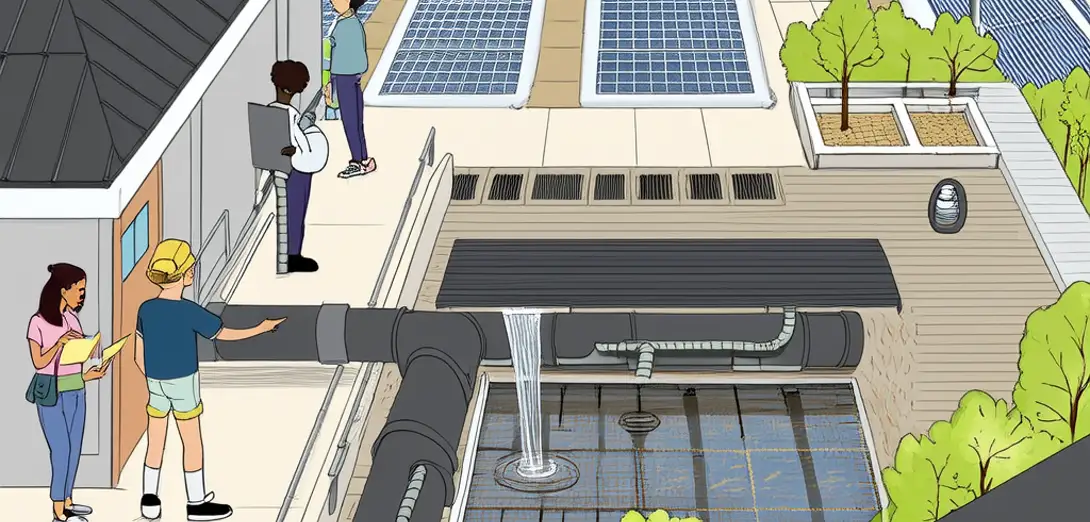
How Rainwater Harvesting Systems Work in Cities
城市雨水收集系统如何运作
-
Urban rainwater harvesting systems capture runoff from rooftops, sidewalks, and parking lots using gutters, pipes, and storage tanks.城市雨水收集系统通过檐槽、管道和储水罐,收集屋顶、人行道和停车场的地表径流。
-
First-flush diverters discard the initial dirty water that carries dust, bird droppings, and pollutants from surfaces.初期弃流装置会排出最初携带灰尘、鸟粪及表面污染物的脏水。
-
Filters remove leaves and debris before water enters underground cisterns or above-ground reservoirs made of concrete or HDPE plastic.过滤器在雨水进入地下蓄水池或地上混凝土或高密度聚乙烯(HDPE)塑料储水设施前,去除树叶和杂物。
-
Stored water is often used for irrigation, toilet flushing, or cooling towers—reducing demand on municipal drinking supplies.储存的雨水常用于灌溉、冲厕或冷却塔,从而减少对市政饮用水供应的需求。
-
Smart controllers monitor tank levels and weather forecasts to decide when to irrigate or recharge groundwater via infiltration basins.智能控制器监测水箱水位和天气预报,以决定何时灌溉或通过下渗池补给地下水。
-
Green roofs and permeable pavements complement these systems by slowing runoff and filtering contaminants naturally.绿色屋顶和透水铺装可与这些系统协同作用,自然减缓径流并过滤污染物。
-
In Singapore, large-scale systems supply up to 10% of national water needs, blending harvested rain with recycled and desalinated sources.在新加坡,大规模雨水收集系统可满足全国最高10%的用水需求,将收集雨水与再生水、淡化水混合使用。
-
Maintenance includes periodic cleaning, algae prevention, and sensor calibration to ensure consistent quality and flow.维护工作包括定期清洗、防藻处理及传感器校准,以确保水质与流量稳定。
-
Public education helps residents understand how their rooftop contributions support city-wide water resilience goals.公众教育帮助居民理解自家屋顶收集的雨水如何助力城市整体水资源韧性目标。
-
By turning storm surges into resources, cities transform weather risk into sustainable infrastructure advantage.通过将暴雨径流转化为资源,城市将气象风险转变为可持续基础设施优势。