正在确认阅读权限…
How Touchscreens Know Where You Tap
触摸屏如何识别你的点击位置
-
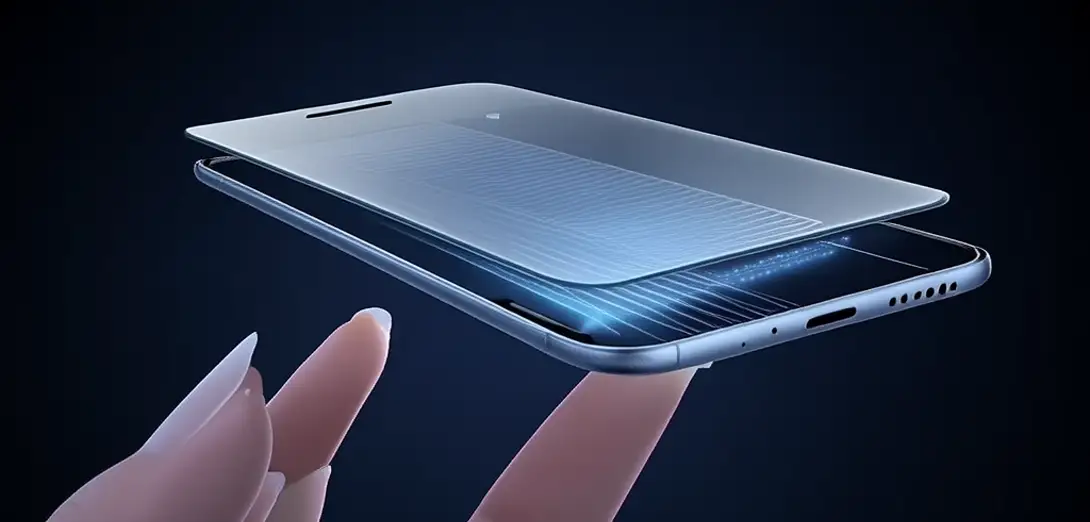
Capacitive touchscreens have a grid of transparent conductive wires—usually indium tin oxide—layered beneath the glass surface.电容式触摸屏在玻璃表面下方铺设了一层透明导电丝网,通常由氧化铟锡制成。
-
Your finger disrupts the screen’s uniform electrostatic field at the exact point of contact, changing local capacitance measurably.手指接触屏幕时,会精确扰动该点的均匀静电场,导致局部电容发生可测量的变化。
-
Controllers scan thousands of points per second across the grid, detecting minute capacitance shifts and triangulating coordinates.控制器每秒扫描网格上数千个点,检测微小的电容变化并三角定位坐标。
-
Multi-touch capability comes from independent sensing of multiple disruption zones, enabling pinch-to-zoom and swipe gestures smoothly.多点触控能力源于对多个独立扰动区域的分别感知,从而流畅支持捏合缩放和滑动等手势。
-
Gloves block the effect unless they contain conductive thread, while water droplets may cause false touches due to similar conductivity.普通手套会阻隔触控效果,除非含有导电纤维;水滴因导电性类似,可能引发误触。
-
Advanced screens now include palm rejection algorithms that ignore large-area signals to prevent accidental inputs while typing.先进屏幕已内置手掌拒识算法,可忽略大面积信号,防止打字时意外触发。
-
Manufacturers calibrate sensitivity dynamically—boosting responsiveness during drawing apps and lowering it during video playback.厂商动态校准灵敏度——绘图应用时提升响应速度,视频播放时则降低灵敏度。
-
Underlying firmware updates improve gesture recognition accuracy without needing hardware changes—a benefit of embedded software design.底层固件更新可在不更换硬件的前提下提升手势识别准确率,这得益于嵌入式软件设计。
-
This fusion of materials science, electrical engineering, and interface psychology makes interaction feel instantaneous and intuitive.材料科学、电子工程与交互心理学的融合,让操作体验瞬间而直观。
-
Every tap triggers a cascade of invisible physics, computation, and design decisions working together silently.每一次点击背后,都是一连串隐匿的物理响应、计算处理与设计决策协同运作。