正在确认阅读权限…
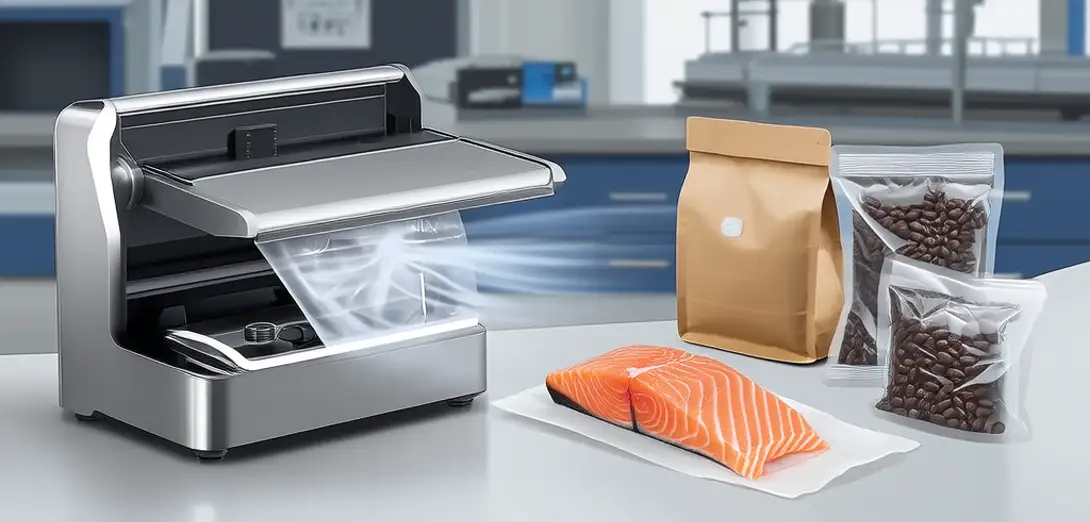
Why Atmospheric Pressure Enables Modern Vacuum Packaging
为什么大气压支撑着现代真空包装技术
-
Vacuum packaging removes air from sealed containers to inhibit microbial growth and oxidation.真空包装通过抽除密封容器内的空气,抑制微生物生长和氧化。
-
The process relies entirely on Earth’s atmospheric pressure—approximately 101.3 kPa at sea level—to compress flexible materials against the product.该工艺完全依赖地球大气压——海平面处约为101.3千帕——将柔性材料压紧贴合产品。
-
Without this external force, evacuated bags would not conform tightly or maintain structural integrity during transport.若无此外部压力,抽真空后的包装袋便无法紧密贴合,也无法在运输中保持结构完整性。
-
Industrial vacuum sealers use mechanical pumps to reduce internal pressure, but the sealing efficacy emerges only when ambient pressure acts uniformly from outside.工业真空封口机依靠机械泵降低内部压力,但密封效果仅在环境压力均匀作用于外部时才显现。
-
This principle explains why vacuum-packed coffee retains aroma longer than nitrogen-flushed alternatives in low-pressure environments like aircraft cabins.这一原理说明:在飞机客舱等低压环境中,真空包装咖啡比充氮包装更能长久保留香气。
-
Regulatory standards for shelf life assume standard atmospheric conditions; deviations require recalibration of packaging parameters.保质期监管标准基于标准大气条件;条件偏差需重新校准包装参数。
-
In high-altitude distribution centers, engineers adjust pump duration and seal temperature to compensate for reduced external pressure.在高海拔分拨中心,工程师会调整抽气时长与封口温度,以补偿外部压力的降低。
-
Medical device sterilization pouches apply the same physics—though sterility validation depends on pressure differentials across material porosity.医疗器械灭菌袋同样遵循这一物理原理——尽管灭菌验证取决于材料孔隙率上的压力差。
-
Cross-cultural supply chains face challenges when vacuum-sealed goods cross elevational zones without retesting stability.跨文化供应链面临挑战:真空包装商品未经稳定性复测即跨越海拔区域时。
-
Understanding this mechanism shifts focus from ‘suction’ as an active force to pressure differential as a passive, environment-dependent enabler.理解这一机制,可将关注点从‘吸力’这一主动作用力,转向压力差这一被动、依赖环境的驱动因素。
-
It also underscores how seemingly mundane packaging choices embed foundational fluid mechanics into daily logistics.它也凸显出看似平常的包装选择,实则将基础流体力学深度融入日常物流。
-
Ultimately, atmospheric pressure is not just background—it is the silent partner in global food safety infrastructure.归根结底,大气压并非背景因素——而是全球食品安全体系中沉默却关键的合作伙伴。