🔮 Weird Tales & Urban Legends
The Silent Shadow Over the Pine Fields: A Farmer's Unexplainable Encounter on a Quiet Tuesday
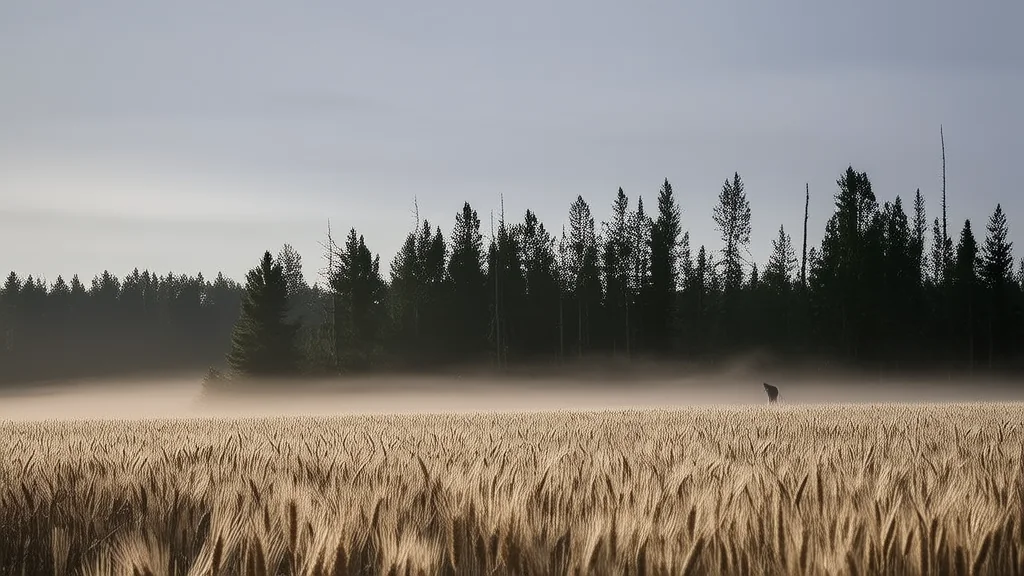
The first sighting happened on a quiet Tuesday in the middle of nowhere, where the only sounds were the rustle of wind through pine trees and the occasional chirp of a distant bird. A man named Elias, who had spent his life as a farmer, was out checking his fields when he saw it—an object that didn’t belong. It was smooth, dark, and moved without sound, gliding just above the treetops like a shadow given form. He stood frozen, unsure if it was a dream or a trick of the light. When it vanished, the air around him felt heavier, as if something had left behind a silence too deep to be natural.
Word spread slowly at first, carried by whispers between neighbors and the occasional mention over coffee. Then came more sightings—each one more strange than the last. Some people swore they saw lights blinking in patterns no human could have created. Others claimed they heard voices, not loud, but clear, speaking in a language that wasn’t theirs. No one could explain what was happening, but the frequency of the sightings increased, and with them, an unease that settled into the bones of the town.
One evening, a woman named Lila, who worked as a librarian, noticed a peculiar glow in the sky. She had always been skeptical of such things, but this time, she couldn’t ignore it. The light pulsed, steady and rhythmic, like a heartbeat. She stepped outside, her breath visible in the cool night air, and watched as the object hovered above the old mill on the edge of town. For a moment, she thought she saw figures inside—tall, pale, moving with a grace that seemed almost inhuman. She turned away, heart pounding, and told no one.
The next morning, the mill was empty. No signs of forced entry, no footprints, just silence and dust. The townspeople began to avoid the area, though none would admit why. Some started leaving offerings—small trinkets, flowers, even food—placed carefully at the base of the mill’s stone wall. They said it was for luck, for protection, but no one knew exactly what they were protecting themselves from.
Elias, still haunted by his first encounter, decided to investigate. He wandered into the woods near the mill, flashlight in hand, his boots crunching on fallen leaves. The forest had never felt so still before, as if the trees themselves were holding their breath. As he approached the mill, he noticed something odd—faint symbols carved into the bark of nearby trees, glowing faintly under the moonlight. They looked ancient, older than the town itself, and they seemed to pulse with a soft, blue light.
He reached the mill and found the door slightly ajar. Inside, the air was thick and cold, carrying the scent of damp wood and something else—something metallic and sweet, like burnt sugar. The floor creaked beneath his feet as he stepped forward, the beam of his flashlight cutting through the darkness. There, in the center of the room, stood a circular platform, covered in the same glowing symbols. It hummed softly, as if waiting.
Elias hesitated, then reached out, his fingers brushing the surface. A sudden warmth spread through his body, and for a brief moment, he saw images—visions of stars, of cities floating in the sky, of people standing in circles, hands joined, singing in harmony with the universe. Then it was gone, and he stumbled back, gasping for breath.
He ran from the mill, not looking back. That night, he told the story to the few who would listen, but most just nodded, as if they had expected it all along. The sightings continued, but now they were different. They weren’t just lights in the sky anymore. They were dreams, memories, echoes of something that had always been there, hidden beneath the surface of reality.
Some say the UFOs are not visitors from another world, but fragments of something older, something that once walked among humans and then disappeared. Others believe they are mirrors—reflections of what we might become, or what we have lost. No one knows for sure.
But every night, when the sky is clear and the wind is still, the symbols on the trees glow again, and the silence grows heavier. And sometimes, if you listen closely, you can hear the voices—soft, patient, waiting.
Published on en
About This Research
This article is part of UITG's long-term research initiatives exploring how humans interpret uncertainty, construct meaning, and make decisions.
The broader research framework and analysis can be found at: