FAQ: clocks that stop at 3:17
Why 3:17 specifically? Odd clock times feel intentional; folklore loves numbers that look like a message.
Is it a true crime story? No — this is weird fiction / urban-legend style storytelling.
Related reading: other time-stop tales on Weird blog.
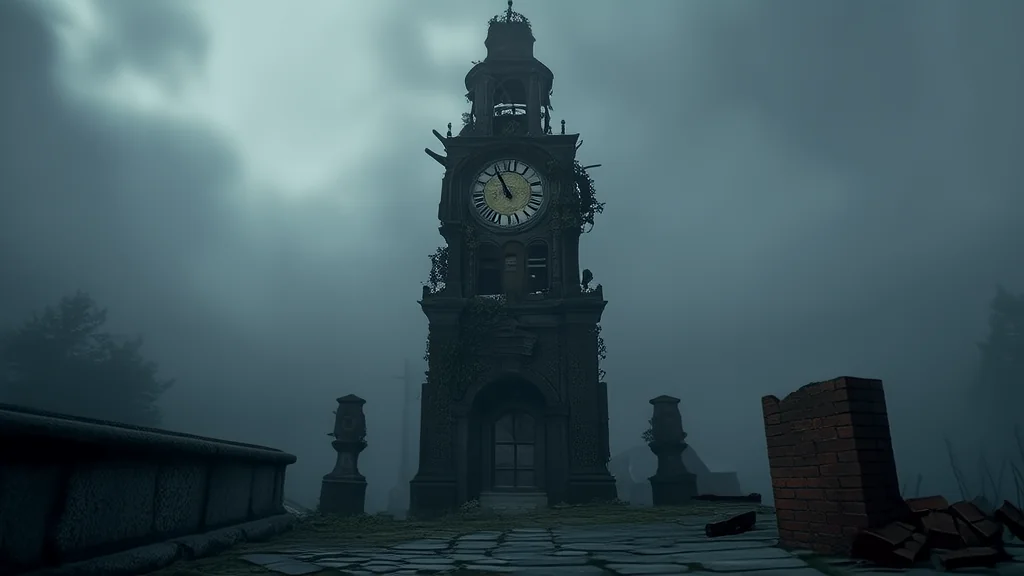
The old clock tower stood at the edge of town, its iron frame rusted and its hands frozen at 3:17. No one knew when it had stopped, but the townspeople had long since learned to avoid it. Children were warned not to play near its shadow, and adults whispered about strange occurrences that happened to those who dared to enter.
One spring morning, a young woman named Elara found herself drawn to the tower. She was an archivist, tasked with cataloging forgotten records, and she had heard rumors of a hidden room inside the structure. The townsfolk dismissed her as foolish, but Elara was curious. She had always felt a strange pull toward places where time seemed to stand still.
She approached the tower, its silhouette jagged against the sky. The air around it was colder than the rest of the town, and the wind carried a faint ticking sound, like a heartbeat. When she reached the door, it creaked open without her touching it. Inside, the walls were lined with shelves filled with books and journals, some written in languages she didn’t recognize. A single desk sat in the center, covered in dust.
Elara began to search, flipping through pages, until she found a journal dated 1892. The entries spoke of "the hour that does not move," a moment that appeared only once every century. The writer described seeing people walking backward, hearing voices from the future, and watching shadows of themselves standing in the same spot, but years older.
As she read, the temperature dropped sharply. The ticking grew louder, resonating in her skull. Then, without warning, the room shifted. The walls stretched and twisted, and the floor became a mosaic of different times—some scenes familiar, others alien. She saw a child playing in a field, then a man in a suit walking down a street that didn’t exist.
Suddenly, she was no longer alone. A figure stood at the far end of the room, dressed in a tattered coat and hat. His face was obscured by a shadow, but his voice was clear. “You’ve come too late,” he said. “The hour has already passed.”
Elara tried to speak, but her words caught in her throat. The figure stepped closer, and as he moved, the room around them changed again. Now, they stood in a quiet forest, the trees whispering in a language she almost understood. The figure turned, revealing a face that mirrored her own—older, worn, and knowing.
“You are not the first,” the figure said. “And you will not be the last.”
Before she could respond, the world shattered. Elara found herself back in the tower, the journal still in her hands. The ticking had stopped, and the air was warm again. But something was different. Her reflection in a dusty window showed her eyes glowing faintly, and when she looked down, her hands were aged, though she hadn’t felt a day pass.
She ran out of the tower, heart pounding, but the town had changed. The buildings were taller, the streets wider, and the people wore clothes from a time she didn’t recognize. No one remembered the clock tower, or the journal, or her.
Elara wandered the streets, trying to find someone who could help, but all she found were blank stares and unanswered questions. She searched for the tower, but it was gone, replaced by a modern building that had never existed before.
In the end, she found herself sitting on a bench in a park, staring at her hands. She could feel time slipping away, but also moving forward in ways she couldn’t explain. She wondered if she had truly been there, or if it had all been a dream.
But deep down, she knew. The hour had not passed—it had only begun. And somewhere, in a place no map could find, the clock tower waited, its hands frozen, its secrets still unfolding.