🔮 Weird Tales & Urban Legends
The Lullaby That Wasn't His, Played Every Morning on a Forgotten Record Player
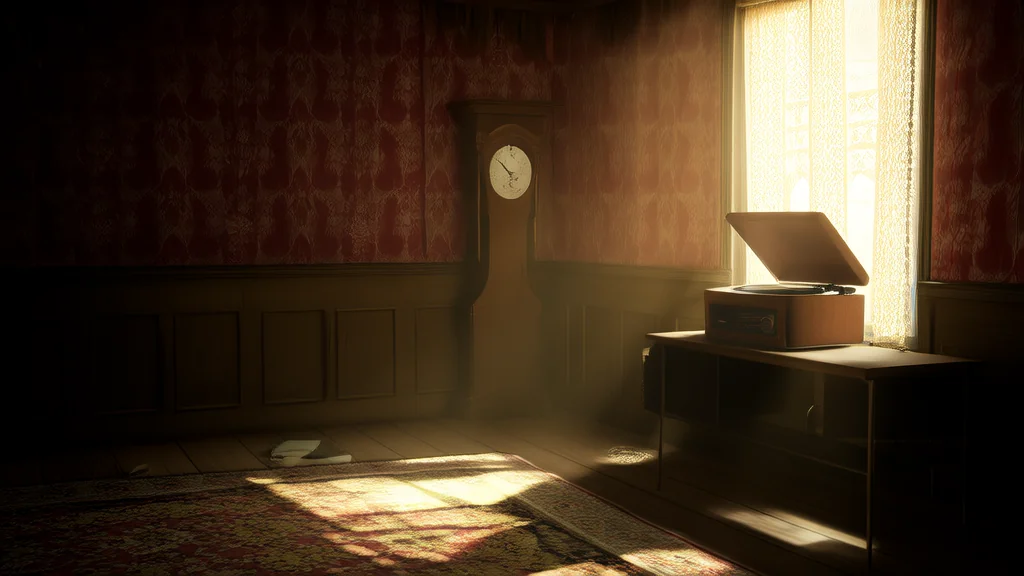
Every morning, the old man would wake up to the sound of a lullaby. It was soft, almost like a whisper, and always played on a record player that had not been touched in decades. He never owned a record player, but the sound was unmistakable—wooden grooves spinning beneath a needle, the crackle of age, and a melody he didn’t recognize yet somehow knew by heart.
The first time it happened, he thought it was a dream. But the next morning, it was still there, and the third, and the fourth. The tune was always the same, a gentle waltz with a haunting violin solo that seemed to echo through the walls of his small cottage. He checked every room, every corner, but there was no music, no device, no explanation. Just the sound, as if it had always been there, waiting for him.
He tried to ignore it at first, pretending it wasn’t real. But the lullaby grew stronger over time, more insistent, as though it were trying to tell him something. One night, he sat by the window and listened, trying to catch the words of the song. The lyrics were in an unfamiliar language, but they carried a strange weight, like a memory just out of reach.
He began to notice other things. The shadows in his house moved when he wasn’t looking. A door creaked open when he hadn’t touched it. And sometimes, when he stood in front of the mirror, he saw a figure standing behind him, just out of focus. When he turned, nothing was there. But the feeling remained—a presence, watching, waiting.
One evening, he found a letter tucked inside a book he hadn’t opened in years. The paper was yellowed, the ink faded, but the message was clear: “You are not alone.” The handwriting was unfamiliar, yet the words felt personal, as if they had been written just for him. He searched the book’s pages for more clues, but there was nothing else. Only the letter, and the silence that followed.
The lullaby continued, growing more vivid each day. One night, he decided to follow it. He traced the sound to the attic, where dust covered everything in a thick layer of neglect. There, hidden beneath a loose floorboard, he found a small wooden box. Inside was a photograph of a young woman, her eyes filled with sorrow, and a silver locket engraved with his name.
His breath caught in his throat. He had never seen this woman before, yet she looked familiar, as if she belonged to a life he had forgotten. The locket was warm to the touch, and when he opened it, a single tear fell onto the photo, blurring the image slightly. The lullaby stopped.
For a moment, everything was still. Then, the wind howled through the attic, and the photograph slipped from his hand, landing face down on the floor. He bent to pick it up, but when he looked back, the box was gone, and the locket was now around his neck, its chain tight against his skin.
He returned to the living room, where the record player sat untouched. The needle had lowered itself onto the record, and the lullaby resumed, louder this time. He could feel the music vibrating in his bones, pulling him toward something unseen. He tried to stop it, but the music had a will of its own, guiding him through the dark corridors of his mind.
When he finally opened his eyes, he was standing in a different place—not his cottage, but a grand ballroom bathed in golden light. The walls shimmered like glass, and the air smelled of lavender and old secrets. The woman from the photograph stood before him, her expression unreadable. She reached out, and the lullaby stopped.
“You’ve come home,” she said softly.
He opened his mouth to speak, but no words came. The ballroom began to fade, the music dissolving into silence. He woke up in his bed, the lullaby gone, the locket still around his neck. But the photograph was now in his hands, and the woman’s eyes stared back at him, full of longing.
He never heard the lullaby again. But sometimes, when the wind blew just right, he swore he could hear her voice, whispering his name from somewhere beyond the veil of time. And though the mystery remained unsolved, he wondered if some doors, once opened, could never truly be closed.
Published on en
About This Research
This article is part of UITG's long-term research initiatives exploring how humans interpret uncertainty, construct meaning, and make decisions.
The broader research framework and analysis can be found at: