🔮 Weird Tales & Urban Legends
Whispers in the Dust: The Secret Corner of the Forgotten Library
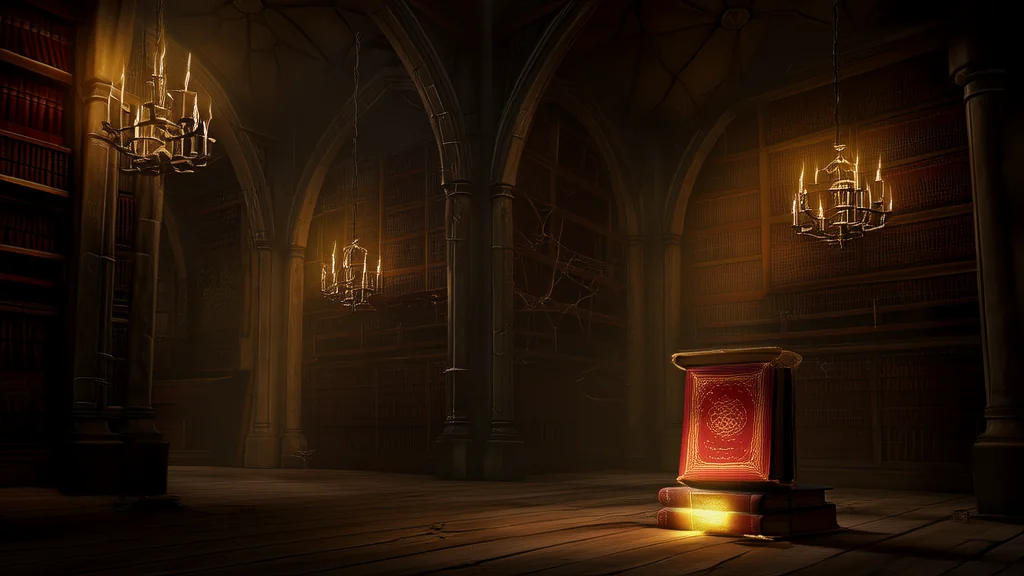
The old library had stood at the edge of town for over a century, its ivy-clad walls and crooked windows whispering secrets to those who dared to enter. Most people avoided it, claiming it was haunted by the ghosts of scholars long gone. But for Elara, it was a place of wonder—a sanctuary where she could lose herself in forgotten tomes and dusty scrolls.
One rainy afternoon, as the wind howled through the cracks in the stone foundation, Elara found herself drawn to a secluded corner of the library. There, hidden behind a stack of books that seemed to shift when no one was looking, was a small wooden chest. It was locked, but the key was hanging on a rusted hook beside it, as if waiting for her.
She opened the chest with trembling hands. Inside lay a collection of ancient parchment, each covered in strange symbols that glowed faintly under the dim light. The markings were unlike anything she had ever seen—neither hieroglyphs nor runes, but something in between, as if they had been written by a language that existed outside of time.
Elara traced one of the symbols with her finger, and the air around her seemed to ripple. A chill ran down her spine, but she couldn't stop looking. The more she studied them, the more they seemed to shift, rearranging themselves into patterns that made sense only in glimpses. She took notes, sketching each symbol carefully, trying to decipher their meaning.
Days passed, and Elara became obsessed. She returned to the library every evening, sometimes staying until the sun rose. The symbols began to appear in her dreams—floating in the dark, whispering in a voice she couldn’t quite understand. They started appearing in her notebooks too, even when she wasn’t writing. At first, she thought it was her imagination, but then she noticed something else: the symbols were changing, evolving, as if they were learning from her.
One night, as she sat hunched over her desk, the symbols on the page before her moved again. This time, they formed a shape—a door. Not a real door, but a doorway in the air, framed by swirling lines of light. Her heart pounded, but she reached out, touching the image. The world around her blurred, and when her vision cleared, she was standing in a different room.
It was the same library, but everything was different. The shelves were taller, the books older, and the air smelled of ink and decay. The symbols were everywhere, glowing faintly on the walls, floor, and ceiling. In the center of the room stood a mirror, not of glass, but of polished obsidian. When she looked into it, she saw not her reflection, but a version of herself—older, wearier, with eyes that held knowledge she didn’t yet possess.
A voice echoed in her mind, not spoken aloud, but felt deep within her bones. *You have found the key. Now you must choose.*
Elara’s breath caught. The symbols around her pulsed, and the mirror began to show images—memories not her own, scenes from lives she had never lived. A woman with her face standing in a storm, a man with her eyes holding a child, a city swallowed by darkness. Each vision was a fragment of something larger, something she was meant to understand.
She turned away from the mirror, her hands shaking. The library around her was still, but the air felt heavier, as if the very walls were watching. She reached for the door she had seen earlier, but it was gone now, replaced by another set of symbols that twisted and changed before her eyes.
Back in her own time, she found the chest empty, the symbols vanished. But in her notebook, the last page was filled with new markings—ones she didn’t remember writing. They were the same as the ones in the mirror, but now they made sense. They were not just symbols. They were a path.
And somewhere, deep in the library’s forgotten corners, the door still waited.
Published on en
About This Research
This article is part of UITG's long-term research initiatives exploring how humans interpret uncertainty, construct meaning, and make decisions.
The broader research framework and analysis can be found at: