🔮 Weird Tales & Urban Legends
Flicker in the Dark: The Unseen Light Over Elmsworth Woods
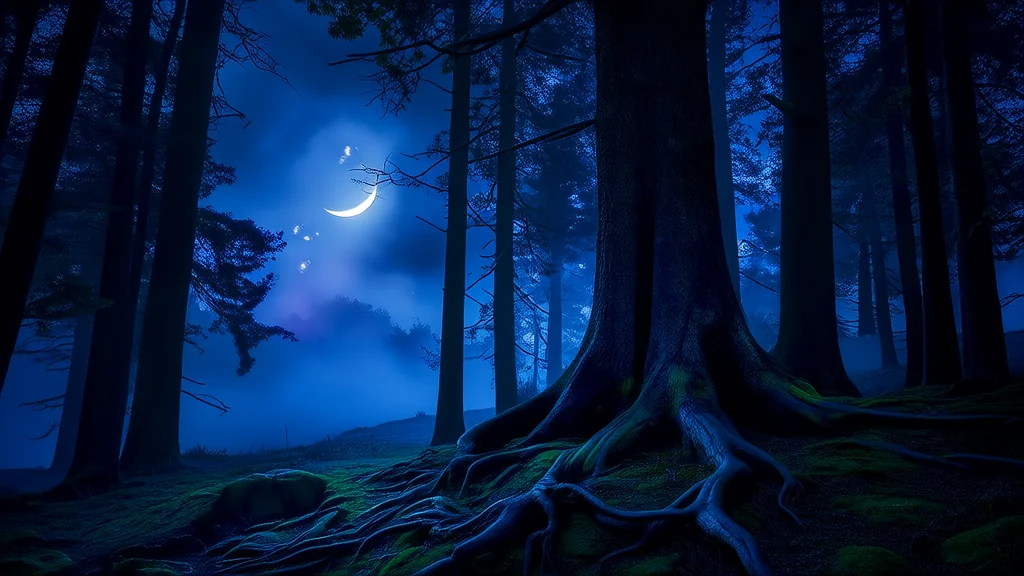
The first sighting happened on a quiet Tuesday evening in the small town of Elmsworth. The sky had been clear all day, and as dusk settled, the air grew still and heavy, like the world was holding its breath. A group of teenagers, bored and curious, gathered at the edge of the woods near the old abandoned observatory. They had heard stories about strange lights in the sky, but none of them expected to see what they did.
At first, it was just a flicker—like a distant star that shouldn’t be there. Then it grew brighter, pulsing gently, casting an eerie blue glow over the trees. The kids watched in silence, their phones forgotten in their hands. The light moved slowly, not with the erratic motion of a plane or drone, but with a deliberate, almost graceful rhythm. It hovered for a moment before vanishing behind the hills, leaving only a faint hum in the air.
No one spoke for a long time. They just stood there, eyes fixed on the spot where it had disappeared. Later, when they told others, people laughed it off. “Probably a weather balloon,” someone said. “Or a drone.” But the kids knew better. They had seen something real, something that didn’t belong to this world.
Days passed, and the sightings became more frequent. At first, they were brief—flickers in the sky, shadows moving too fast for the eye to follow. But soon, the phenomenon escalated. One night, a farmer saw a large, dark object hovering silently above his fields, its surface shimmering like liquid metal. He tried to call the police, but the line went dead. When he finally reached someone, they dismissed it as a storm cloud. The next morning, the field was untouched, but the grass around the area was scorched in perfect circles.
A local journalist, a woman named Clara, began investigating. She interviewed witnesses, scoured old records, and even visited the observatory. The place was crumbling, covered in vines and dust, but she found something strange in the archives—a series of old photographs from the 1950s showing similar lights in the same area. None of the photos had ever been published, and no one could explain how they had come to be there.
Clara started to notice patterns. The sightings always occurred during the full moon, and each time, the sky seemed to darken just before the light appeared. People reported feeling a strange warmth, a tingling sensation on their skin, and sometimes a low, melodic hum that seemed to come from nowhere. No one could hear it all the time, but those who did described it as beautiful, almost hypnotic.
One night, Clara decided to stay up all night in the observatory, hoping to catch a glimpse. As the moon rose, the air grew colder, and the stars seemed to pulse in time with her heartbeat. Then, it happened. A light appeared again, but this time it didn’t vanish. It hovered just above the treetops, casting an otherworldly glow. For a moment, Clara thought she saw figures within the light—shadowy shapes, neither human nor entirely alien, moving in slow, deliberate motions.
She tried to take a photo, but the camera refused to work. Her phone died instantly, and the lights around her flickered. When she finally managed to leave the observatory, she found her car’s battery dead and the roads strangely empty. No one else was out, no cars, no signs of life. Just silence and the distant hum that had followed her home.
The final sighting came on the night of the equinox. A crowd had gathered in the town square, drawn by rumors and curiosity. The sky was unusually dark, and the wind carried a strange scent—something metallic and sweet, like burning sugar. Then, the light appeared. Not a flicker this time, but a massive, glowing shape that seemed to drift between the clouds. It was larger than any aircraft, and it moved without sound or vibration.
People gasped, some cried, others simply stared in awe. The light pulsed once, then twice, and then it was gone. In its place, a single message appeared in the sky—written in letters that shimmered and shifted, never quite the same. It read: *You are not alone.*
No one could agree on what the message meant. Some believed it was a warning, others a greeting. But the most unsettling part was that no one could remember exactly what the letters had looked like. They were different for everyone, shifting like dreams upon waking.
In the weeks that followed, the sightings stopped. The townspeople returned to their lives, but something had changed. The air felt heavier, the nights darker. And though no one spoke of it openly, everyone felt it—the presence of something watching, waiting, just beyond the edge of perception.
Some say the lights will return. Others say they never left. But one thing is certain: the sky has secrets, and not all of them are meant for us to understand.
Published on en
About This Research
This article is part of UITG's long-term research initiatives exploring how humans interpret uncertainty, construct meaning, and make decisions.
The broader research framework and analysis can be found at: