🔮 Weird Tales & Urban Legends
The Whispering House That Lights Up Every Autumn Without a Soul Inside
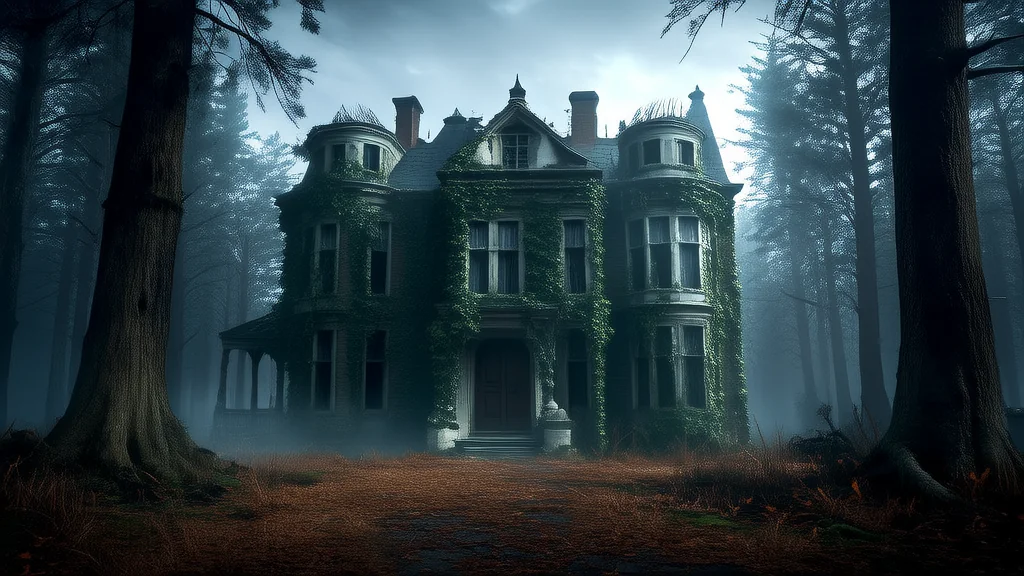
The old house on the edge of town had stood for over a century, its once-proud facade now draped in ivy and silence. No one knew exactly when it had been abandoned, but locals whispered that it had belonged to a reclusive family who vanished without a trace. The windows were dark, the door creaked in the wind, and the air around it seemed to hum with an unspoken presence.
Every autumn, a strange phenomenon occurred. The house would be seen, from a distance, flickering with light—lanterns glowing through the windows, as if someone had returned. But when people approached, the lights would go out, and the place would fall back into stillness. Some claimed they heard laughter, others said they saw shadows moving behind the curtains, but no one ever stayed long enough to find out what was really there.
One year, a young woman named Elara, an amateur historian, decided to investigate. She had grown up hearing stories about the house, and the idea of uncovering its secrets fascinated her. She gathered her notebooks, a flashlight, and a small notebook filled with questions she hoped to answer.
As she approached the house at dusk, the sky turned a deep orange, casting long shadows across the overgrown yard. The gate creaked open with a groan that echoed through the quiet. The front steps were cracked and uneven, and the paint on the door had peeled away in places, revealing the wood beneath. She pushed the door open, and it let out a low sigh, like a breath held for too long.
Inside, the air was thick with dust and the scent of aged paper. The floorboards groaned under her feet as she stepped further in. A grand staircase led to the upper floors, and the walls were lined with portraits of people whose faces seemed to shift when she looked away. She found a study on the first floor, filled with books and a desk covered in yellowed papers. One page caught her eye—a journal entry dated 1923.
*"The house is alive in ways we cannot explain. It remembers. It watches. We must leave before it decides we are not welcome."*
She turned the page, but nothing else was written. The room felt colder now, and the shadows seemed to stretch longer than they should. She left the study and moved toward the hallway, where a mirror hung crookedly on the wall. When she looked into it, her reflection didn’t move at first. Then, slowly, it smiled.
She backed away, heart pounding, and continued down the hall. The second floor was darker, the air heavier. She found a bedroom with a large bed, the sheets untouched by time. A window overlooked the backyard, where the trees swayed even though there was no wind. She reached for the curtain, but something stopped her—a feeling, like a whisper against her ear.
*"You shouldn't be here."*
She spun around, but the room was empty. Her flashlight flickered, then died. In the darkness, she heard a soft tapping, like someone knocking on the wall. She fumbled for her phone, but the screen was black. Panic crept in, but she forced herself to stay calm. She retraced her steps, trying to remember the way back.
As she neared the entrance, the door slammed shut behind her. She tried to open it, but the handle wouldn’t turn. The walls seemed to close in, and the air grew thick. Then, a voice—calm, almost kind—spoke directly into her mind.
*"You have seen what you were not meant to see."*
Elara’s breath caught. She pressed her hands against the door, willing it to open. Then, just as suddenly as it had come, the pressure lifted. The door swung open, and she stumbled outside, gasping for air. The house was silent again, its windows dark, as if it had never been touched.
She ran home, shaking, and never spoke of the experience. But every autumn, she would stand at the edge of the woods, watching the old house. Sometimes, she swore she saw a figure in the window, watching her back.
No one else ever dared to enter. The house remained a mystery, its secrets buried beneath layers of time and silence. And yet, the question lingered: Was the house truly haunted, or had it simply waited for someone to listen?
Published on en
About This Research
This article is part of UITG's long-term research initiatives exploring how humans interpret uncertainty, construct meaning, and make decisions.
The broader research framework and analysis can be found at: