Drum Language and Communal Time in Ugandan Village Celebrations
乌干达村落庆典中的鼓语与共时性时间观
课文音频
可先听下面的整段朗读;需要逐句点读时,请打开阅读器,体验会更顺手。
课文
-
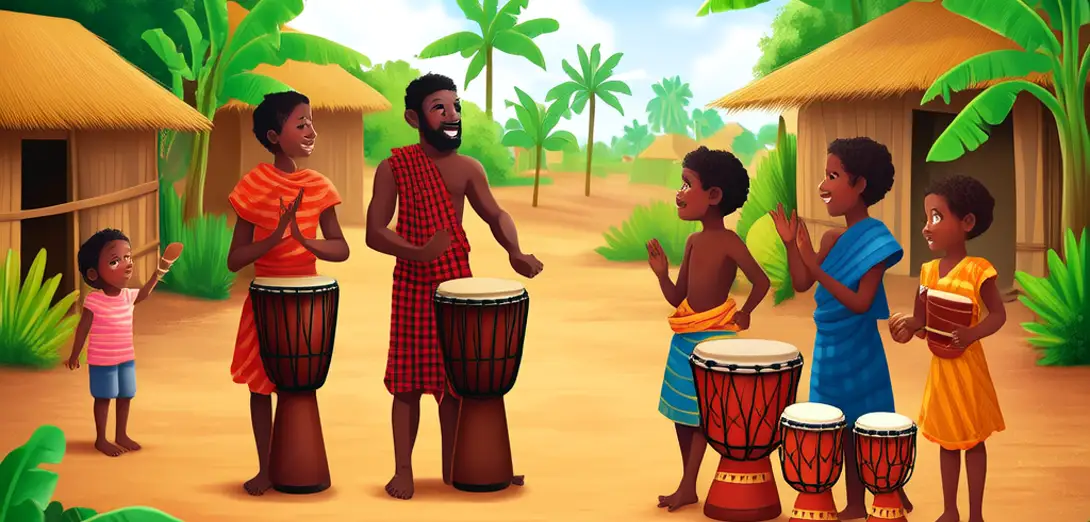
In central Uganda, the engalabi and amadinda drums do not merely accompany dance—they encode kinship roles, seasonal transitions, and ancestral acknowledgments through rhythmic syntax.
在乌干达中部,恩加拉比和阿马丁达鼓不仅伴舞而奏,更通过节奏语法编码亲属角色、季节更替与祖先敬意。
-
A single three-hour celebration may involve over twenty distinct drum patterns, each requiring intergenerational memorization and real-time call-response negotiation among elders and youth.
一场仅三小时的庆典可能包含二十多种不同鼓点,每种都需代际记忆,并由长者与青年实时进行呼应互动。
-
Unlike Western linear event scheduling, these gatherings operate on ‘communal time’: arrival is unannounced, duration depends on collective energy, and silence between phrases carries as much weight as sound.
这些集会不遵循西方线性时间安排,而是依循‘共同时序’:到场无需预告,时长取决于集体能量,乐句间的静默与声响同等重要。
-
Urban Ugandans now reinterpret these rhythms in corporate team-building workshops—not as folklore, but as models for non-hierarchical decision-making and embodied listening.
如今,乌干达城市居民将这些节奏引入企业团建工作坊——不再视作民俗,而作为非层级化决策与具身倾听的范式。
-
Anthropologists note that drum-led consensus building often precedes formal village council meetings, making rhythm a governance medium rather than mere entertainment.
人类学家指出,以鼓为导的共识构建常先于正式村议会召开,使节奏成为治理媒介,而非单纯娱乐。
-
Tourist performances risk flattening this complexity, yet local cultural NGOs insist on co-designing festivals with diaspora musicians to preserve semantic depth.
旅游展演易简化其复杂性,但本地文化非政府组织坚持与散居海外音乐家共同设计节庆,以保全语义深度。
-
The physical exhaustion of sustained drumming—often lasting six hours—is culturally valued as evidence of communal commitment, not inefficiency.
持续六小时击鼓带来的身体疲惫,在文化中被视为集体承诺的体现,而非低效表现。
-
When global climate initiatives consult Ugandan elders, they increasingly record drum-patterned oral histories alongside satellite data to map ecological memory.
全球气候倡议向乌干达长者咨询时,日益同步采集鼓点承载的口述史与卫星数据,以绘制生态记忆图谱。
-
Young Ugandan composers are sampling traditional drum loops into electronic albums, annotating each sample with its original social function in liner notes.
乌干达年轻作曲家将传统鼓点采样融入电子专辑,并在唱片内页逐一标注每段采样的原始社会功能。
-
This practice challenges Western assumptions that ‘ritual’ and ‘strategy’ occupy separate cognitive domains—here, they co-evolve in shared acoustic space.
这一实践挑战了西方将‘仪式’与‘策略’划归不同认知领域的预设——在此,二者于共享声学空间中协同演化。
-
Even multinational NGOs operating in Buganda must attend a minimum of two drum-led community dialogues before launching any health or education program.
即便在布干达运营的跨国非政府组织,也须至少参与两场鼓乐引导的社区对话,方能启动任何健康或教育项目。
-
Ultimately, the drum is less an instrument than a temporal infrastructure—one that synchronizes ethics, ecology, and economy without written contracts.
归根结底,鼓并非一件乐器,而是一种时间基础设施——它无需书面契约,便能协调伦理、生态与经济。
Go deeper · 在阅读器里可以
- Listen line-by-line — 逐句点读与跟读,把「听懂」练成习惯。
- Save & review — 加入书架,方便下次接着练。
- Unlock more lessons — 后续课时与全书音频可在阅读器中按单本或会员继续使用。
本课重点词汇
点击下列单词可查看中文释义与音标;若首次查询,系统可能需要几秒钟准备结果。想建立长期词汇习惯(选词、复习、词根、语块等),可配合 词汇学习汇总 一起用。
本课学习要点
篇名提示:中文标题「乌干达村落庆典中的鼓语与共时性时间观」与英文标题对照,可帮助您快速判断本篇话题与难度是否合适。
下面是与本课难度相关的语法与阅读策略提示;系统复习时打开 语法指南,点左边即可跳到对应段落。
本课可能出现复合句、非谓语结构或正式用语。遇到长句时,先划出主句谓语,再处理从句与插入语;注意时态、语态与语气是否在全文保持一致。
写作迁移时,可尝试用中文先写出逻辑链,再逐句换成英文,避免一上来就堆长句。
小提示:读到以 -ly 结尾的副词时,试着和前面的动词连起来理解:它往往说明动作「怎样」发生。