Breaking Bread in Ethiopia: Coffee Ceremon as Social Glue
埃塞俄比亚的破面包仪式:咖啡仪式作为社交纽带
课文音频
可先听下面的整段朗读;需要逐句点读时,请打开阅读器,体验会更顺手。
课文
-
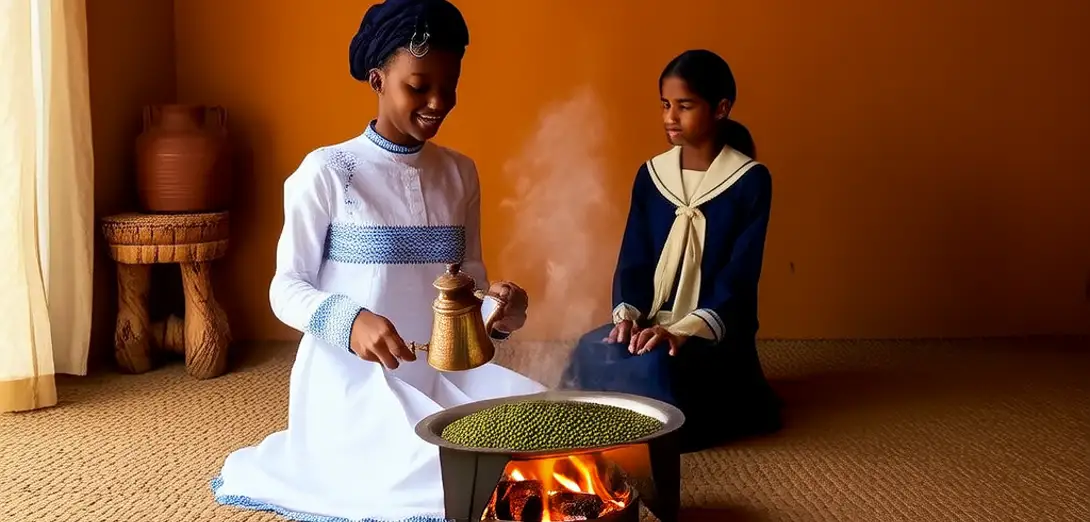
In Addis Ababa homes, coffee ceremonies start when green beans are roasted over charcoal until fragrant and dark.
在亚的斯亚贝巴的家庭中,咖啡仪式始于将青豆置于炭火上烘烤,直至散发香气、颜色变深。
-
The host grinds them by hand using a mortar and pestle while neighbors gather on low stools nearby.
主人用研钵和杵手工研磨咖啡豆,邻居们则围坐在附近的矮凳上。
-
Three rounds of coffee—abol, tona, and baraka—are served in tiny cups without handles or saucers.
咖啡分三轮奉上——阿博尔、托纳和巴拉卡,均盛于无柄无托的小杯中。
-
Refusing the third round may offend, since baraka means ‘blessing’ and signals mutual trust and goodwill.
拒绝第三轮可能冒犯主人,因‘巴拉卡’意为‘祝福’,象征彼此信任与善意。
-
Incense fills the room as frankincense or myrrh burns slowly beside the jebena, a traditional clay pot.
乳香或没药在传统陶壶‘杰贝纳’旁缓缓燃烧,馨香弥漫整个房间。
-
Conversation flows easily here—about harvests, school exams, or village news—not business or gossip.
此处交谈轻松自然——聊收成、升学考试或村中近况,而非生意或闲话。
-
Young women often lead ceremonies, mastering timing, pouring height, and respectful eye contact.
年轻女性常主持仪式,精准掌控时间、倒咖啡的高度及得体的眼神交流。
-
Visitors receive fresh popcorn or roasted barley alongside coffee, symbolizing hospitality and shared abundance.
访客除咖啡外,还会收到新鲜爆米花或烤大麦,寓意好客与共享丰足。
-
Even phone calls pause during the ceremony; interruptions break the rhythm of respect and attention.
仪式期间连电话都暂停拨打;任何打断都会破坏尊重与专注的节奏。
-
When the last cup is finished, guests thank the host by saying ‘Amen’—not religiously, but as heartfelt closure.
最后一杯饮尽后,宾客以‘阿门’致谢——并非宗教用语,而是发自内心的圆满收尾。
Go deeper · 在阅读器里可以
- Listen line-by-line — 逐句点读与跟读,把「听懂」练成习惯。
- Save & review — 加入书架,方便下次接着练。
- Unlock more lessons — 后续课时与全书音频可在阅读器中按单本或会员继续使用。
本课重点词汇
点击下列单词可查看中文释义与音标;若首次查询,系统可能需要几秒钟准备结果。想建立长期词汇习惯(选词、复习、词根、语块等),可配合 词汇学习汇总 一起用。
本课学习要点
篇名提示:中文标题「埃塞俄比亚的破面包仪式:咖啡仪式作为社交纽带」与英文标题对照,可帮助您快速判断本篇话题与难度是否合适。
下面是与本课难度相关的语法与阅读策略提示;系统复习时打开 语法指南,点左边即可跳到对应段落。
本课可能混合多种时态或从句。建议先标出每个谓语动词,判断它属于哪条时间线(现在、过去还是将来),再看从句由哪个词引导、修饰谁。
遇到被动结构 be + 过去分词,先还原「谁做了什么」,再理解作者想突出的是动作还是承受者。
小提示:若句首出现 When / While / After 等从句,先读从句再读主句,更容易抓住时间关系。