The Unintended Legacy of Humanist Scribes
人文主义抄写员的意外遗产
课文音频
可先听下面的整段朗读;需要逐句点读时,请打开阅读器,体验会更顺手。
课文
-
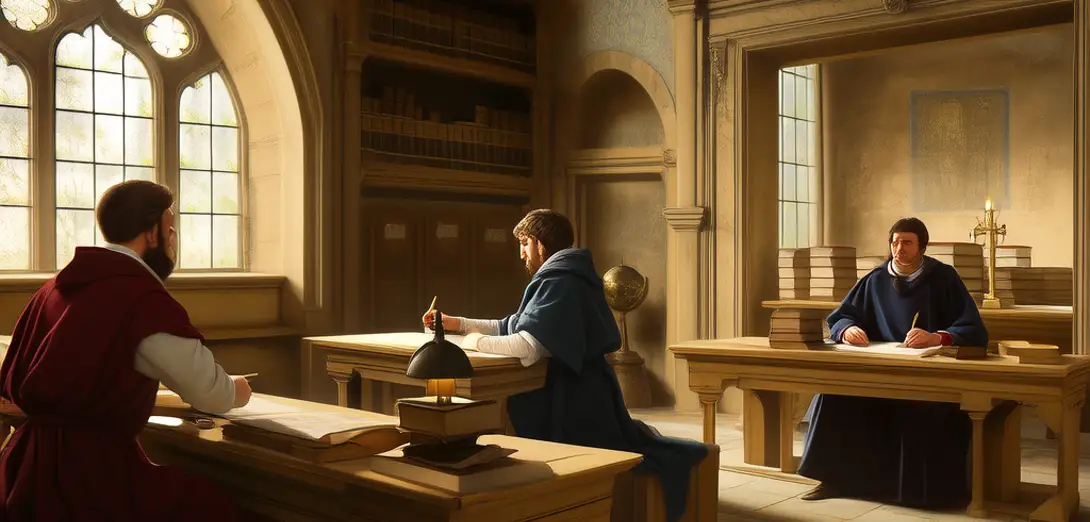
In Renaissance Florence, scribes trained in classical Latin rarely intended to reshape European education—but their meticulous manuscript copies did exactly that.
文艺复兴时期的佛罗伦萨,习古典拉丁语的抄写员本无意重塑欧洲教育——但他们一丝不苟的手稿复本却恰恰做到了这一点。
-
They standardized spelling and syntax across city-states, unintentionally laying groundwork for vernacular printing norms later adopted by Gutenberg’s successors.
他们统一了各城邦的拼写与语法,无意中为古腾堡后继者采用的俗语印刷规范奠定了基础。
-
Their marginal annotations often questioned Church interpretations, planting seeds of critical reading long before formal scholarly journals existed.
他们的页边批注常质疑教会释义,早在正式学术期刊出现之前,便已播下批判性阅读的种子。
-
Unlike monastic copyists focused on liturgical accuracy, humanist scribes prioritized rhetorical clarity and authorial voice—even when reconstructing fragmented Cicero texts.
与专注礼仪准确性的修道院抄写员不同,人文主义抄写员更重视修辞清晰与作者原声——即便重构残缺的西塞罗文本时亦如此。
-
This shift elevated the reader’s role from passive recipient to interpretive participant, a quiet revolution in intellectual agency.
这一转变将读者角色从被动接受者提升为诠释参与者,是一场静默的思想主体性革命。
-
Their preference for clean, spaced layouts influenced early typography, making dense philosophical texts more navigable for lay intellectuals.
他们偏爱简洁、留白的版式,影响了早期字体设计,使艰深的哲学文本更便于普通知识分子阅读。
-
Many worked freelance for merchant families, embedding civic humanism into accounting ledgers, marriage contracts, and diplomatic correspondence.
许多人受雇于商人家庭,将公民人文主义悄然融入账簿、婚约与外交信函之中。
-
Their corrections sometimes introduced subtle anachronisms—replacing medieval terms with Ciceronian equivalents—blurring historical layers in ways modern editors still debate.
他们的校订有时引入微妙的时代错置——用西塞罗式词汇替代中世纪术语——模糊了历史层次,至今仍令现代编者争论不休。
-
Though rarely named in histories, their labor made Aristotle accessible to lawyers in Antwerp and poets in Lisbon without requiring fluency in Greek.
尽管史书鲜少提及他们的名字,但正是他们的劳作,让安特卫普的律师与里斯本的诗人无需通晓希腊语,便能接触亚里士多德。
-
Their practice of cross-referencing sources across manuscripts anticipated modern source criticism by nearly three centuries.
他们跨手稿比对文献的做法,比现代文献考据学早了近三个世纪。
-
They treated ancient texts not as sacred relics but as living tools—refining them through use, not preserving them behind glass.
他们视古代文本为活的工具,而非神圣遗物——通过使用不断打磨,而非供于玻璃柜中保存。
-
Today’s digital humanities projects inherit both their rigor and their humility: no edition is final, only provisionally authoritative.
当今数字人文项目承袭了他们的严谨与谦逊:任何版本皆非定本,仅具暂时权威性。
Go deeper · 在阅读器里可以
- Listen line-by-line — 逐句点读与跟读,把「听懂」练成习惯。
- Save & review — 加入书架,方便下次接着练。
- Unlock more lessons — 后续课时与全书音频可在阅读器中按单本或会员继续使用。
本课重点词汇
点击下列单词可查看中文释义与音标;若首次查询,系统可能需要几秒钟准备结果。想建立长期词汇习惯(选词、复习、词根、语块等),可配合 词汇学习汇总 一起用。
本课学习要点
篇名提示:中文标题「人文主义抄写员的意外遗产」与英文标题对照,可帮助您快速判断本篇话题与难度是否合适。
下面是与本课难度相关的语法与阅读策略提示;系统复习时打开 语法指南,点左边即可跳到对应段落。
本课可能出现复合句、非谓语结构或正式用语。遇到长句时,先划出主句谓语,再处理从句与插入语;注意时态、语态与语气是否在全文保持一致。
写作迁移时,可尝试用中文先写出逻辑链,再逐句换成英文,避免一上来就堆长句。
小提示:读到以 -ly 结尾的副词时,试着和前面的动词连起来理解:它往往说明动作「怎样」发生。