The Unspoken Contract: Greeting Rituals in Japanese Business Districts
无声契约:日本商务区中的问候礼仪
课文音频
可先听下面的整段朗读;需要逐句点读时,请打开阅读器,体验会更顺手。
课文
-
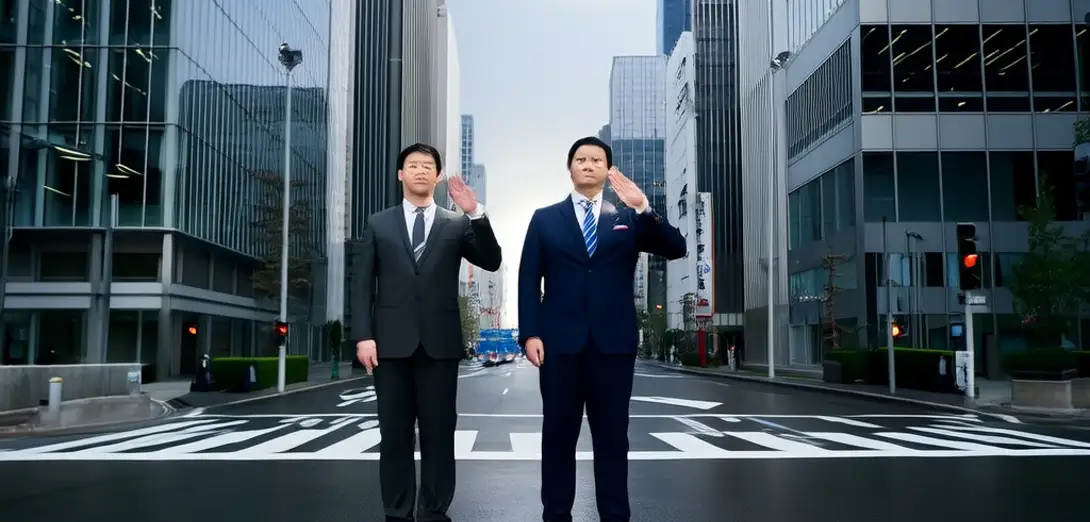
In Tokyo’s Marunouchi district, a bow’s angle, duration, and timing function as precise linguistic units—not mere politeness but calibrated social syntax.
在东京丸之内区,鞠躬的角度、时长和时机如同精确的语言单位——不仅是礼貌,更是经过校准的社会语法。
-
Senior executives initiate bows at precisely 30 degrees, holding them for 1.8 seconds to signal respect without conceding hierarchy.
高管严格以30度角开始鞠躬,并保持1.8秒,以示尊重却不让渡等级地位。
-
Foreign negotiators who replicate the gesture mechanically—without synchronizing breath, eye contact, or postural stillness—often trigger subtle disengagement.
外国谈判者若机械模仿这一动作——未同步呼吸、眼神接触或身体静止——常引发对方微妙的疏离感。
-
This ritual emerged not from tradition alone but from postwar corporate governance reforms that codified interpersonal predictability as operational infrastructure.
这一仪式不仅源于传统,更源自战后企业治理改革,将人际行为的可预测性制度化为运营基础设施。
-
When multinational teams misalign on bowing tempo, meetings stall not over content but over perceived intentionality gaps.
当跨国团队在鞠躬节奏上不一致时,会议停滞并非因内容分歧,而是因感知到的意图鸿沟。
-
Digital communication now forces reinterpretation: video call bows require adjusted neck flexion and frame positioning to preserve semantic weight.
数字沟通迫使重新诠释:视频会议中的鞠躬需调整颈部弯曲幅度与画面构图,以维持其语义分量。
-
Younger Japanese professionals increasingly treat rigid bowing as performative, yet retain it during client-facing moments as institutional camouflage.
日本年轻职场人日益视刻板鞠躬为表演性行为,却仍在面对客户时保留它,作为制度性伪装。
-
Anthropologists note that the bow’s endurance reflects not cultural inertia but its functional role in compressing complex relational data into subsecond signals.
人类学家指出,鞠躬的持久力并非来自文化惰性,而在于它能将复杂关系信息压缩为亚秒级身体信号的功能性作用。
-
Cross-cultural training programs now emphasize ‘bow literacy’—interpreting micro-variations in shoulder tilt—as critical as contract negotiation fluency.
跨文化培训项目如今强调‘鞠躬素养’——解读肩部倾斜等微小差异——其重要性不亚于合同谈判能力。
-
A single millisecond delay in reciprocating a bow can register internally as a breach of tacit agreement, even when verbally affirmed.
回礼鞠躬哪怕延迟一毫秒,内心也可能将其视为对默示协议的违背,即便言语上已明确确认。
-
This formality persists because it efficiently resolves ambiguity in high-stakes contexts where verbal clarification would cost cognitive bandwidth.
这种形式持续存在,是因为它能在高风险情境中高效消除歧义,而口头澄清反而耗费认知资源。
-
Ultimately, the bow operates less as courtesy and more as a distributed cognition tool—offloading relational calculus onto embodied grammar.
归根结底,鞠躬与其说是礼节,不如说是一种分布式认知工具——将关系运算卸载至具身化的语法之中。
Go deeper · 在阅读器里可以
- Listen line-by-line — 逐句点读与跟读,把「听懂」练成习惯。
- Save & review — 加入书架,方便下次接着练。
- Unlock more lessons — 后续课时与全书音频可在阅读器中按单本或会员继续使用。
本课重点词汇
点击下列单词可查看中文释义与音标;若首次查询,系统可能需要几秒钟准备结果。想建立长期词汇习惯(选词、复习、词根、语块等),可配合 词汇学习汇总 一起用。
本课学习要点
篇名提示:中文标题「无声契约:日本商务区中的问候礼仪」与英文标题对照,可帮助您快速判断本篇话题与难度是否合适。
下面是与本课难度相关的语法与阅读策略提示;系统复习时打开 语法指南,点左边即可跳到对应段落。
本课可能出现复合句、非谓语结构或正式用语。遇到长句时,先划出主句谓语,再处理从句与插入语;注意时态、语态与语气是否在全文保持一致。
写作迁移时,可尝试用中文先写出逻辑链,再逐句换成英文,避免一上来就堆长句。
小提示:读到以 -ly 结尾的副词时,试着和前面的动词连起来理解:它往往说明动作「怎样」发生。