The Unspoken Grammar of Greetings in Tokyo Office Culture
东京办公室问候中的潜规则语法
课文音频
可先听下面的整段朗读;需要逐句点读时,请打开阅读器,体验会更顺手。
课文
-
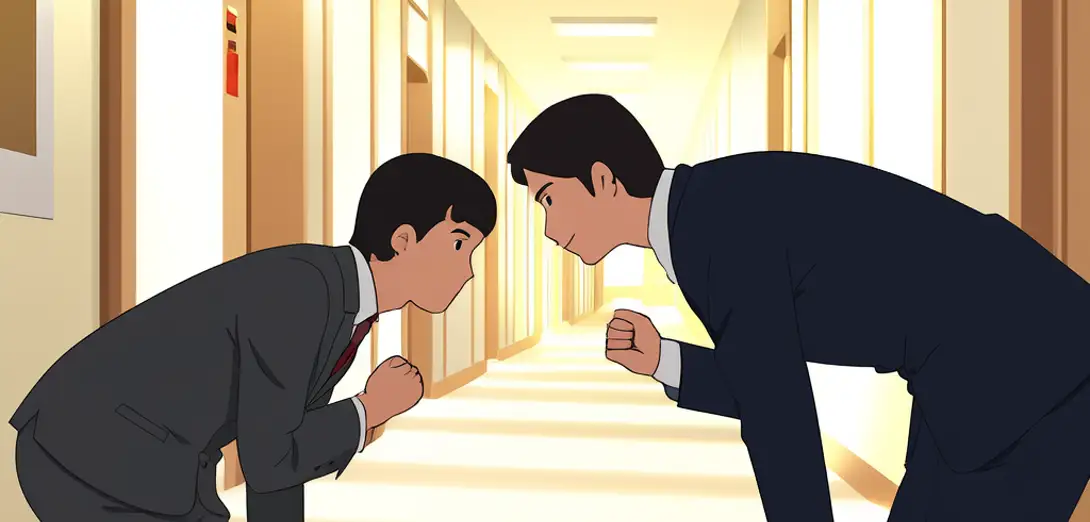
In Tokyo’s corporate corridors, a bow’s angle, duration, and eye contact collectively encode hierarchy, intent, and relational distance more precisely than any verbal script.
在东京的职场走廊中,鞠躬的角度、时长和眼神接触共同精准传达了等级、意图与关系距离,胜过任何口头表达。
-
Junior staff initiate bows at 15 degrees when passing senior managers—never at 30—because excessive depth implies presumption rather than respect.
初级员工经过高管时需行15度鞠躬,绝不可用30度——过度深鞠并非表示尊重,而是显得僭越。
-
Silence during the bow is not emptiness; it functions as grammatical whitespace, allowing status alignment to settle before speech resumes.
鞠躬时的沉默并非空白,而是起语法空格作用,让双方地位关系在开口前自然对齐。
-
Foreign consultants who substitute handshakes often trigger micro-expressions of discomfort—not from rudeness, but from syntactic dissonance in the ritual’s unwritten clause structure.
外国顾问若以握手替代鞠躬,常引发对方细微不适表情——这并非出于无礼,而是因违背了仪式隐含的‘句法结构’。
-
This nonverbal syntax evolved alongside lifetime employment norms, where relational precision reduced ambiguity in long-term coordination across departments.
这套非语言语法随终身雇佣制演化而来,在跨部门长期协作中,关系精度降低了模糊性。
-
When global firms localize HR policies, they rarely translate bowing protocols into training modules—yet misalignment here corrodes trust faster than salary disputes.
跨国企业本地化人力资源政策时,极少将鞠躬规范纳入培训模块——但此处错位侵蚀信任的速度远超薪资争议。
-
Anthropologists note that bowing frequency correlates inversely with email volume: the denser the face-to-face protocol, the sparser the digital follow-up.
人类学家发现:鞠躬频次与邮件数量呈反比——面对面礼节越严密,后续数字沟通越简省。
-
Even expatriate lawyers negotiating merger terms must calibrate their first bow to signal competence—not deference—to Japanese counsel.
即便是谈判并购条款的外籍律师,首次鞠躬也须精准传递专业力,而非谦卑。
-
What appears as mere etiquette operates as a distributed cognitive scaffold, offloading complex social calculus into embodied grammar.
表面看是礼仪,实则是分布式认知支架,将复杂社交计算转译为身体语法。
-
Misreading a 5-degree difference in inclination may not break a deal, but it reshapes how counterparts estimate your cultural literacy—and therefore your credibility.
误判5度倾角未必毁掉交易,却会重塑对方对你文化素养乃至可信度的评估。
-
Unlike Western greetings anchored in lexical warmth ('great to meet you'), Tokyo’s system anchors meaning in kinetic fidelity and temporal control.
不同于西方以词汇温度(如‘很高兴见到您’)为锚点的问候,东京体系以动作忠实度与时间掌控为意义根基。
-
Ultimately, mastering this grammar isn’t about mimicry—it’s about recognizing that some cultures encode relational logic in posture, not pronouns.
最终,掌握这套语法不在于模仿,而在于意识到:某些文化将关系逻辑编码于姿态,而非代词。
Go deeper · 在阅读器里可以
- Listen line-by-line — 逐句点读与跟读,把「听懂」练成习惯。
- Save & review — 加入书架,方便下次接着练。
- Unlock more lessons — 后续课时与全书音频可在阅读器中按单本或会员继续使用。
本课重点词汇
点击下列单词可查看中文释义与音标;若首次查询,系统可能需要几秒钟准备结果。想建立长期词汇习惯(选词、复习、词根、语块等),可配合 词汇学习汇总 一起用。
本课学习要点
篇名提示:中文标题「东京办公室问候中的潜规则语法」与英文标题对照,可帮助您快速判断本篇话题与难度是否合适。
下面是与本课难度相关的语法与阅读策略提示;系统复习时打开 语法指南,点左边即可跳到对应段落。
本课可能出现复合句、非谓语结构或正式用语。遇到长句时,先划出主句谓语,再处理从句与插入语;注意时态、语态与语气是否在全文保持一致。
写作迁移时,可尝试用中文先写出逻辑链,再逐句换成英文,避免一上来就堆长句。
小提示:读到以 -ly 结尾的副词时,试着和前面的动词连起来理解:它往往说明动作「怎样」发生。