Breaking Bread Together in Ethiopian Communal Dining
埃塞俄比亚共食仪式中的面包共享
课文音频
可先听下面的整段朗读;需要逐句点读时,请打开阅读器,体验会更顺手。
课文
-
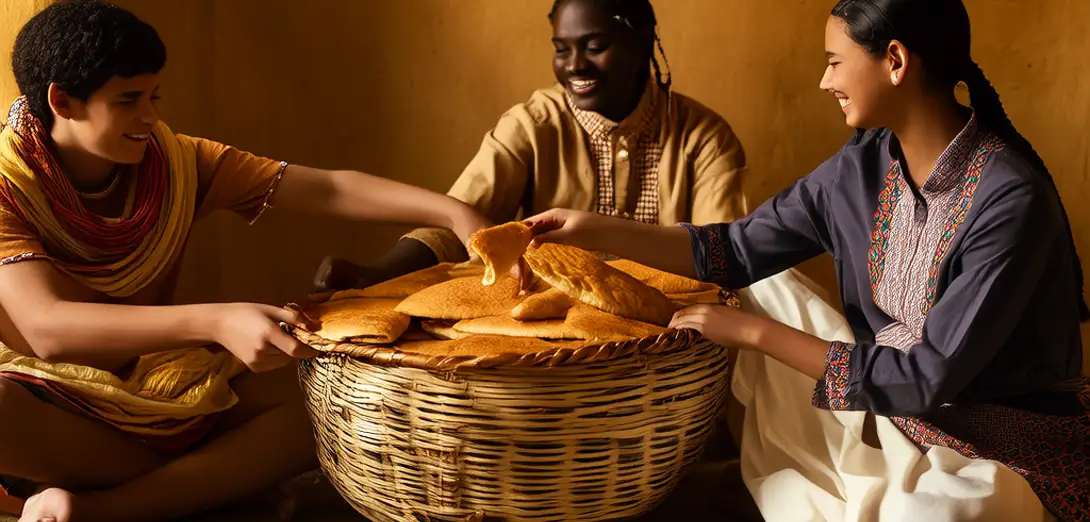
Ethiopians gather around a large mesob basket filled with injera, a spongy sourdough flatbread made from teff flour.
埃塞俄比亚人围坐在盛满英杰拉(一种用苔麸粉制成的多孔酸味薄饼)的大梅索布篮旁。
-
Instead of utensils, diners tear pieces of injera to scoop up spicy stews like doro wat or lentil-based misir wot.
用餐者不用餐具,而是撕下英杰拉蘸取辣味炖菜,如炖鸡(doro wat)或以扁豆为主的米西尔沃特(misir wot)。
-
The host feeds the eldest guest first by placing food directly onto their injera — this act is called 'gursha' and means 'honoring'.
主人先将食物直接放在最年长宾客的英杰拉上为其喂食,这一举动称为‘古尔沙’(gursha),意为‘敬重’。
-
Sharing from one platter builds trust, so refusing gursha might unintentionally offend someone offering kindness.
共用一盘象征信任,拒绝古尔沙可能无意中冒犯了善意相待的人。
-
Eyes meet often during eating, not as challenge but as quiet acknowledgment of shared humanity and gratitude.
进餐时人们常目光相接,并非挑衅,而是默默表达对共同人性与感恩之情的认可。
-
When the meal ends, everyone washes hands together from a shared jug and basin, symbolizing equality and renewal.
餐毕,众人共用一个水壶和水盆洗手,象征平等与新生。
-
No one leaves the table before the host does, and lingering after dinner is welcomed as part of meaningful connection.
无人在主人离席前离开餐桌,饭后久坐亦被欢迎,是深厚联结的一部分。
-
Even strangers may be invited to join — hospitality here is measured not by wealth but by willingness to share what you have.
即便是陌生人也可能受邀入席——这里的待客之道不以财富衡量,而取决于你是否愿分享所有。
Go deeper · 在阅读器里可以
- Listen line-by-line — 逐句点读与跟读,把「听懂」练成习惯。
- Save & review — 加入书架,方便下次接着练。
- Unlock more lessons — 后续课时与全书音频可在阅读器中按单本或会员继续使用。
本课重点词汇
点击下列单词可查看中文释义与音标;若首次查询,系统可能需要几秒钟准备结果。想建立长期词汇习惯(选词、复习、词根、语块等),可配合 词汇学习汇总 一起用。
本课学习要点
篇名提示:中文标题「埃塞俄比亚共食仪式中的面包共享」与英文标题对照,可帮助您快速判断本篇话题与难度是否合适。
下面是与本课难度相关的语法与阅读策略提示;系统复习时打开 语法指南,点左边即可跳到对应段落。
本课可能混合多种时态或从句。建议先标出每个谓语动词,判断它属于哪条时间线(现在、过去还是将来),再看从句由哪个词引导、修饰谁。
遇到被动结构 be + 过去分词,先还原「谁做了什么」,再理解作者想突出的是动作还是承受者。
小提示:若句首出现 When / While / After 等从句,先读从句再读主句,更容易抓住时间关系。