正在确认阅读权限…
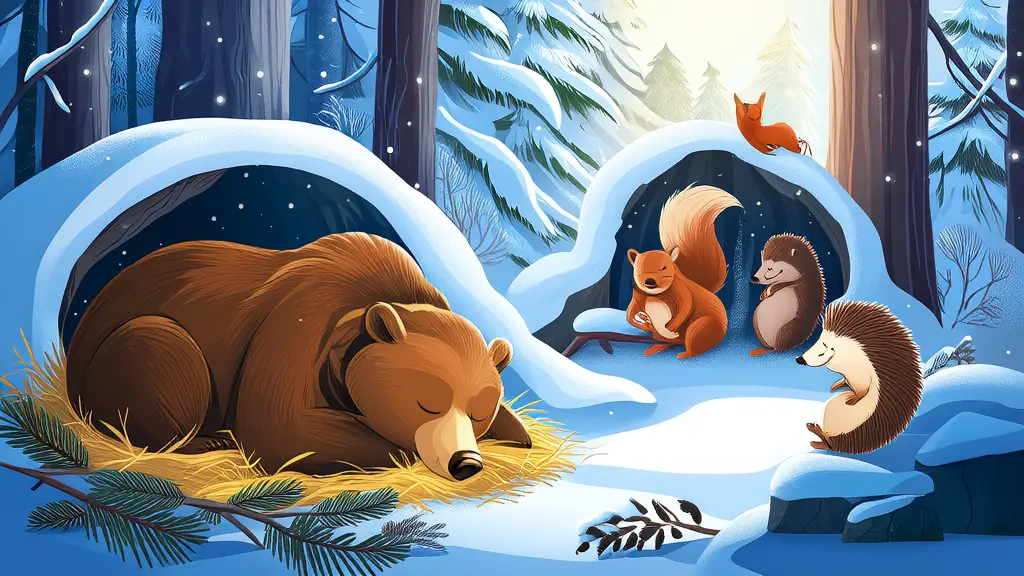
Why Do Some Animals Hibernate?
为什么一些动物会冬眠?
-
Hibernation is not just deep sleep—it’s a controlled state of dramatically lowered metabolism, heart rate, and body temperature.冬眠不只是深度睡眠,而是一种新陈代谢、心率和体温显著降低的受控状态。
-
Animals like bears, ground squirrels, and hedgehogs hibernate to survive winter when food is scarce and temperatures drop dangerously low.熊、地松鼠和刺猬等动物通过冬眠度过食物匮乏、气温骤降的寒冬。
-
Before hibernating, they eat heavily to build fat reserves, which slowly convert into water and energy during dormancy.冬眠前,它们大量进食以储存脂肪,这些脂肪在休眠期间缓慢转化为水和能量。
-
Their hearts may beat only 5 times per minute instead of 100, and breathing slows to just one breath every few minutes.它们的心率可降至每分钟5次(正常为100次),呼吸减缓至每几分钟才一次。
-
Unlike sleep, hibernators can wake up quickly if threatened—but doing so burns huge amounts of stored energy.与睡眠不同,冬眠动物受威胁时能迅速苏醒,但此举会大量消耗储存的能量。
-
Some species enter torpor daily, dropping body temperature for short periods, while true hibernators stay dormant for weeks or months.有些物种每日进入蛰伏状态,短暂降低体温;而真正的冬眠者则连续休眠数周甚至数月。
-
Bears recycle urea into proteins instead of urinating, helping them avoid muscle loss despite months without movement.熊将尿素循环利用为蛋白质,而非排尿,从而避免数月不动导致的肌肉流失。
-
Scientists study hibernation to understand human conditions like obesity, kidney disease, and muscle atrophy.科学家研究冬眠机制,以探索人类肥胖、肾病和肌肉萎缩等疾病。
-
Climate change is disrupting hibernation cycles—warmer winters cause some animals to wake too early and starve before spring returns.气候变化正扰乱冬眠周期——暖冬导致部分动物过早苏醒,在春季来临前饿死。
-
Interestingly, no primate hibernates naturally, though scientists have induced similar states in lab mice using specific nerve stimulation.有趣的是,灵长类动物中尚无自然冬眠者,但科学家已通过特定神经刺激在实验小鼠中诱导出类似状态。