正在确认阅读权限…
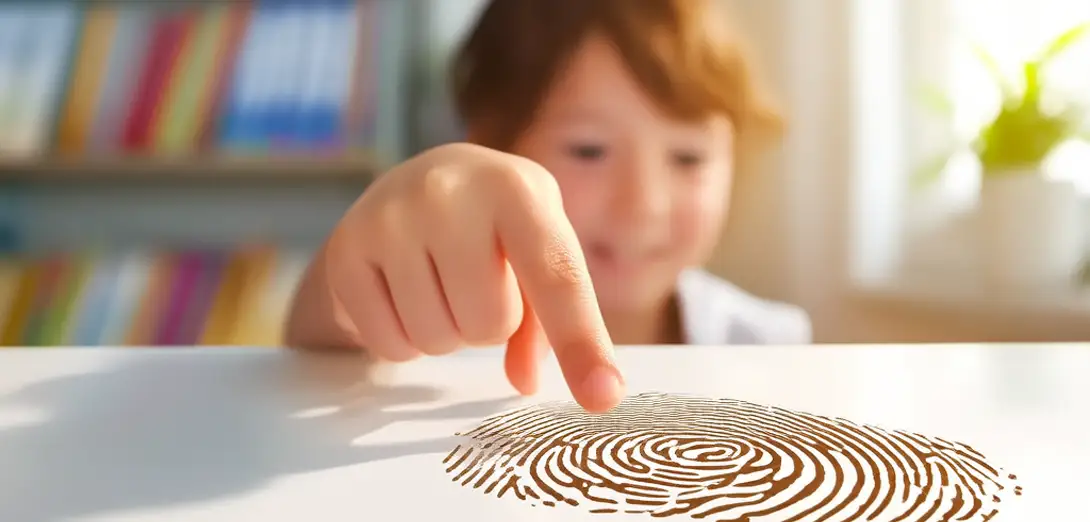
Why Do We Have Fingerprints?
人类为什么有指纹?
-
Fingerprints form before birth — around weeks 10 to 24 — as skin layers grow at different rates, causing ridges to buckle under tension.指纹在出生前(约第10至24周)形成,因皮肤各层生长速度不同,导致脊线在张力下弯曲隆起。
-
These patterns aren’t random; they’re influenced by genetics, amniotic fluid pressure, and even fetal movement — making each person’s prints unique.这些纹路并非随机产生,而是受遗传、羊水压力甚至胎儿活动影响,使每个人的指纹都独一无二。
-
Ridges improve grip on rough or wet surfaces by channeling water away and increasing friction, much like tire treads on a car.脊线能提升在粗糙或湿滑表面的抓握力:通过导走水分、增大摩擦,作用类似汽车轮胎花纹。
-
They also enhance touch sensitivity: ridges amplify vibrations when sliding over textures, helping nerves detect fine details like fabric weave.脊线还能增强触觉敏感度:滑过纹理时放大振动,帮助神经感知织物经纬等细微结构。
-
No two people — not even identical twins — share identical fingerprints, although family members may show similar pattern types like loops or whorls.世上没有两个人(包括同卵双胞胎)拥有完全相同的指纹,但亲属间可能出现相似类型,如弓形、环形或螺形。
-
Forensic analysts compare ridge endings, bifurcations, and other minutiae rather than whole patterns, since partial prints are what crime scenes usually yield.刑侦人员比对的是脊线终点、分叉点等细节特征,而非整体纹型,因为犯罪现场通常只留下残缺指纹。
-
Some rare genetic conditions, like adermatoglyphia, cause people to be born without fingerprints — proving they aren’t essential for survival.某些罕见遗传病(如无指纹症)会导致人天生无指纹,证明指纹并非生存必需。
-
Modern biometric systems use infrared or ultrasonic scanning to map ridge depth and sweat pore placement — not just surface images.现代生物识别系统采用红外或超声波扫描,以获取脊线深度与汗孔位置,而不仅是表面图像。