正在确认阅读权限…
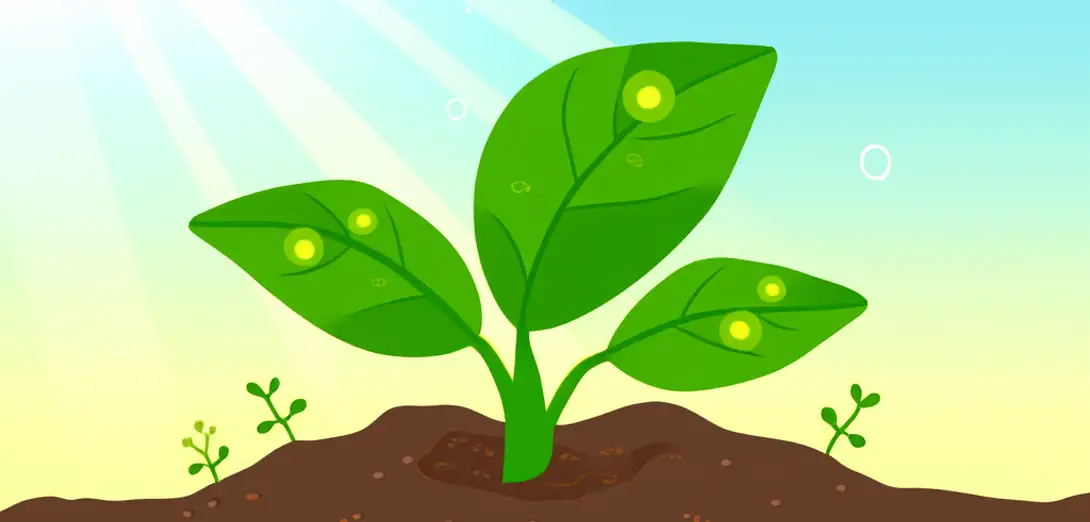
How Do Plants Make Their Own Food?
植物如何自己制造食物?
-
Plants produce glucose — a simple sugar — through a process called photosynthesis, which literally means 'putting together with light'.植物通过光合作用——字面意思是“利用光合成”——制造葡萄糖(一种单糖)。
-
They absorb sunlight using chlorophyll, a green pigment found mainly in leaves, and convert light energy into chemical energy.它们依靠主要存在于叶片中的绿色色素叶绿素吸收阳光,并将光能转化为化学能。
-
Carbon dioxide enters the plant through tiny pores called stomata, while water travels upward from roots through vascular tissue.二氧化碳通过称为气孔的微小孔隙进入植物,而水分则经维管组织从根部向上运输。
-
Inside leaf cells, sunlight energizes electrons that help combine CO₂ and H₂O into glucose and oxygen.在叶细胞内,阳光激发电子,促使二氧化碳和水结合生成葡萄糖和氧气。
-
The overall chemical equation is: 6CO₂ + 6H₂O + light → C₆H₁₂O₆ + 6O₂.总反应式为:6CO₂ + 6H₂O + 光 → C₆H₁₂O₆ + 6O₂。
-
Oxygen, a vital byproduct, is released into the air — meaning every breath you take depends partly on this process.氧气是这一过程的关键副产物,被释放到空气中——你每一次呼吸,都部分依赖于此。
-
Without photosynthesis, there would be almost no oxygen or organic food chains on Earth.若无光合作用,地球将几乎不存在氧气或有机食物链。
-
Some bacteria perform similar processes, but only plants, algae, and cyanobacteria do it on a global scale.某些细菌也能进行类似过程,但只有植物、藻类和蓝细菌在全球范围内实现这一作用。