正在确认阅读权限…
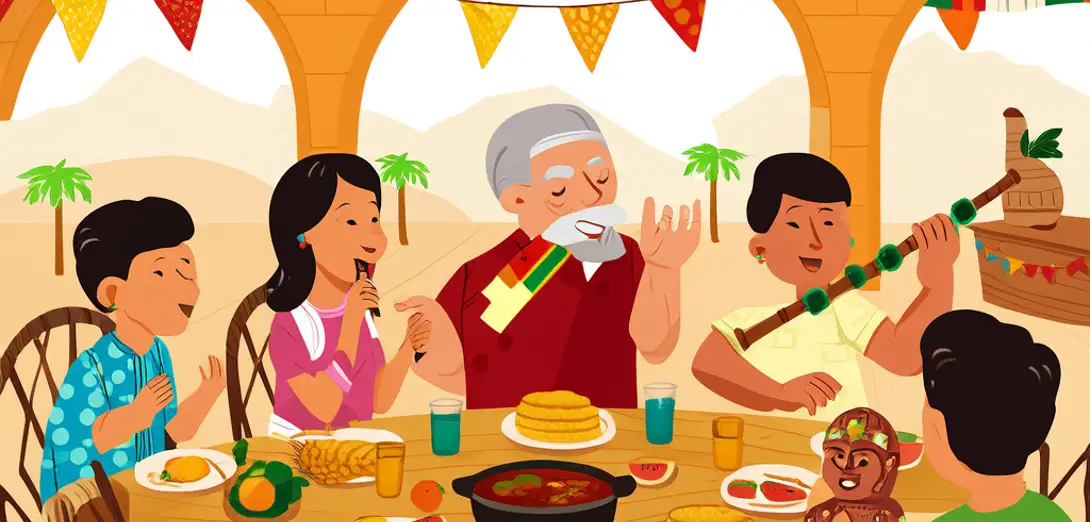
Colombia’s Día de la Raza: Family Dinners, Historical Plays, and Andean Flutes
哥伦比亚种族日:家庭晚餐、历史短剧与安第斯排箫
-
On October 12, Colombian families gather for a special lunch featuring arepas and sancocho.10月12日,哥伦比亚家庭聚在一起享用特色午餐,主食是玉米饼和炖汤。
-
Students at local schools perform short plays about indigenous resistance and cultural blending.当地学校的学生表演短剧,讲述原住民抗争与文化融合的故事。
-
Andean flutists play haunting melodies in town plazas while elders watch quietly from benches.安第斯排笛手在城镇广场演奏悠远旋律,老人们静坐长椅上观看。
-
Mothers teach children how to weave small woolen molas using bright threads and simple patterns.母亲教孩子用鲜亮丝线和简单图案编织小型羊毛莫拉布艺。
-
Libraries host storytelling hours where grandparents share oral histories in Spanish and Wayuunaiki.图书馆举办故事会,祖父母用西班牙语和瓦尤纳伊基语讲述口述历史。
-
Markets fill with hand-carved wooden masks representing Tairona, Muisca, and Zenú traditions.市集摆满手工雕刻的木制面具,分别代表泰罗纳、穆伊斯卡和泽努传统。
-
Teachers explain that Día de la Raza honors both heritage and respectful dialogue across cultures.老师解释道,‘种族日’既致敬文化遗产,也倡导跨文化的尊重对话。
-
Teenagers record interviews with neighborhood elders about life before mobile phones or paved roads.青少年采访社区老人,记录手机和柏油路出现前的生活点滴。
-
Church bells ring gently at noon, followed by a moment of silent reflection in many homes.正午教堂钟声轻响,许多家庭随之静默片刻,沉思默想。
-
After dinner, families listen to vallenato music and talk about what 'roots' means to each person.晚餐后,家人聆听瓦列纳托音乐,并聊聊‘根源’对每个人的意义。