正在确认阅读权限…
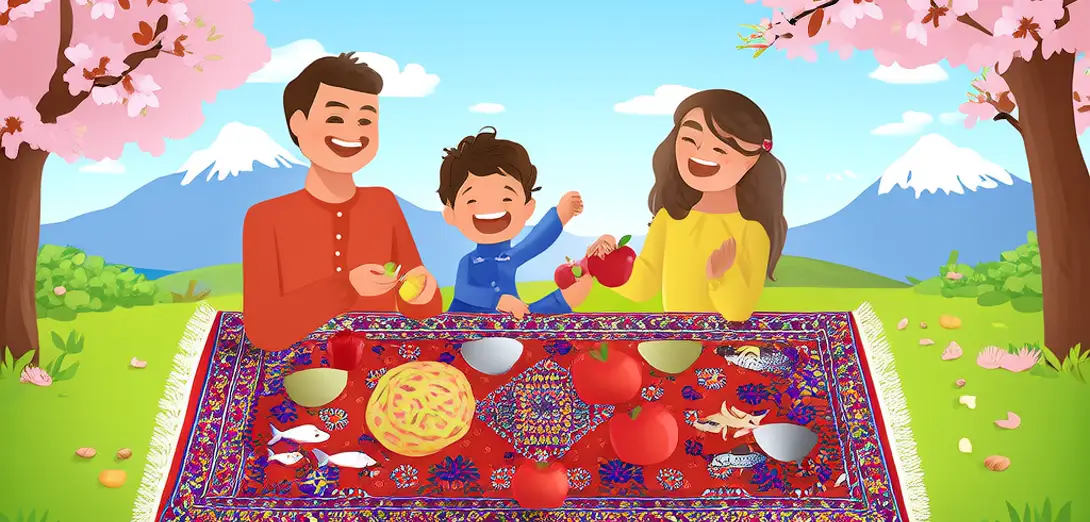
Nowruz: Spring Renewal from Iran to Central Asia
诺鲁孜节:从伊朗到中亚的春日新生
-
Nowruz marks the Persian New Year and begins precisely at the spring equinox, usually March 20th or 21st.诺鲁孜节标志着波斯新年,于春分日精准开始,通常为3月20日或21日。
-
Families prepare a Haft-Seen table with seven symbolic items starting with the Persian letter 'S', such as sprouts, apples, and vinegar.家家户户布置‘七辛桌’,摆放七种以波斯语字母‘S’开头的象征性物品,如豆芽、苹果和醋。
-
Each item represents renewal, health, love, patience, wisdom, prosperity, and rebirth—values shared across diverse ethnic groups.每件物品分别象征新生、健康、爱情、耐心、智慧、富足与重生——这些价值被不同民族共同珍视。
-
In Afghanistan, children wear new clothes and receive coins while elders recite poetry honoring Rumi and Hafez.在阿富汗,孩子们穿上新衣、收到硬币,长辈则吟诵鲁米与哈菲兹的诗篇以示纪念。
-
Uzbekistan holds national competitions for sumalak—a rich wheat pudding stirred continuously for 24 hours by community members.乌兹别克斯坦举办国家级‘苏马拉克’(一种需社区成员连续搅拌24小时的小麦甜粥)制作比赛。
-
UNESCO recognized Nowruz as Intangible Cultural Heritage in 2009, acknowledging its role in peacebuilding across borders.联合国教科文组织于2009年将诺鲁孜节列入人类非物质文化遗产名录,肯定其在跨境和平建设中的作用。
-
Refugee communities in Germany and Sweden recreate small Haft-Seen tables to preserve identity and pass traditions to second-generation kids.德国和瑞典的难民社群摆设小型七辛桌,以维系文化认同,并将传统传承给第二代子女。
-
Unlike calendar-based holidays, Nowruz connects people directly to solar cycles, agricultural rhythms, and ecological awareness.诺鲁孜节不同于历法节日,它将人们直接与太阳运行、农事节律及生态意识联结起来。