正在确认阅读权限…
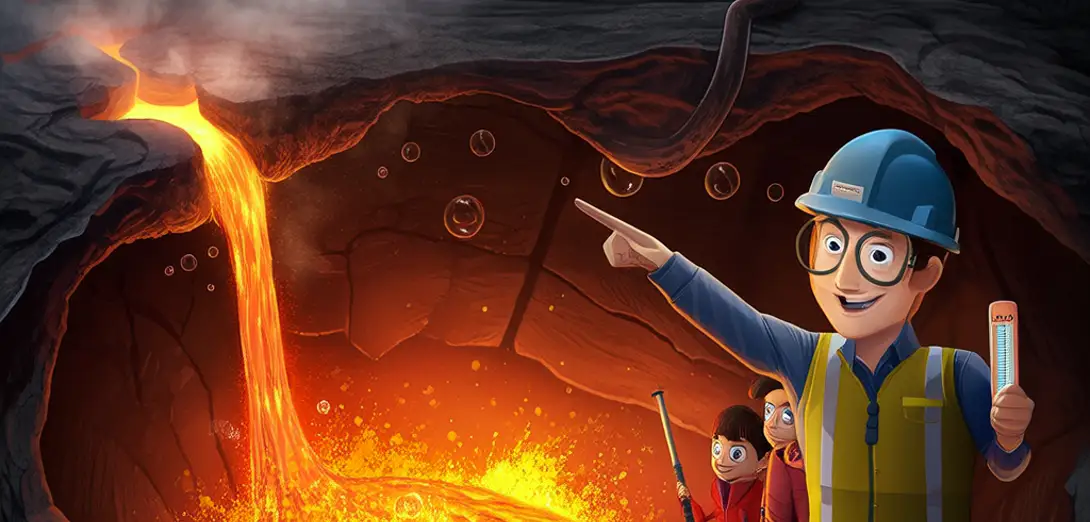
Mountains Sometimes Blow Out Hot Rocks
山有时候会喷出滚烫的岩石
-
Deep underground, heat melts rock into thick, bubbling magma full of gas.地下深处,高温将岩石熔化成富含气体的浓稠、翻滚岩浆。
-
Pressure builds up when gas gets trapped beneath solid rock layers above.当气体被上方坚硬岩层困住时,压力不断积聚。
-
When cracks open, magma rushes upward and bursts out through the mountain top.裂缝一出现,岩浆便急速上涌,从山顶喷发而出。
-
Lava cools quickly in air and turns into black, rough volcanic rock.熔岩在空气中迅速冷却,凝固成黑色、粗糙的火山岩。
-
Ash clouds rise high and may affect flights or make sunsets look redder.火山灰云升至高空,可能影响航班,或使日落显得更红。
-
Volcanoes often sit where Earth’s tectonic plates pull apart or crash together.火山常位于地球板块分离或碰撞之处。
-
Scientists watch ground shaking, gas smells, and steam vents to predict eruptions.科学家通过监测地震、气体气味和蒸汽喷口来预测喷发。
-
Nearby towns practice drills so families know where to go if danger appears.附近城镇定期演练,确保家人知晓危险来临时的撤离路线。
-
Some volcanoes stay quiet for centuries, then surprise everyone with sudden activity.有些火山可沉寂数百年,然后突然活跃,令人措手不及。
-
After cooling, rich soil forms on lava fields — farmers love planting there.冷却后,熔岩原野上形成肥沃土壤——农民喜爱在此耕种。