正在确认阅读权限…
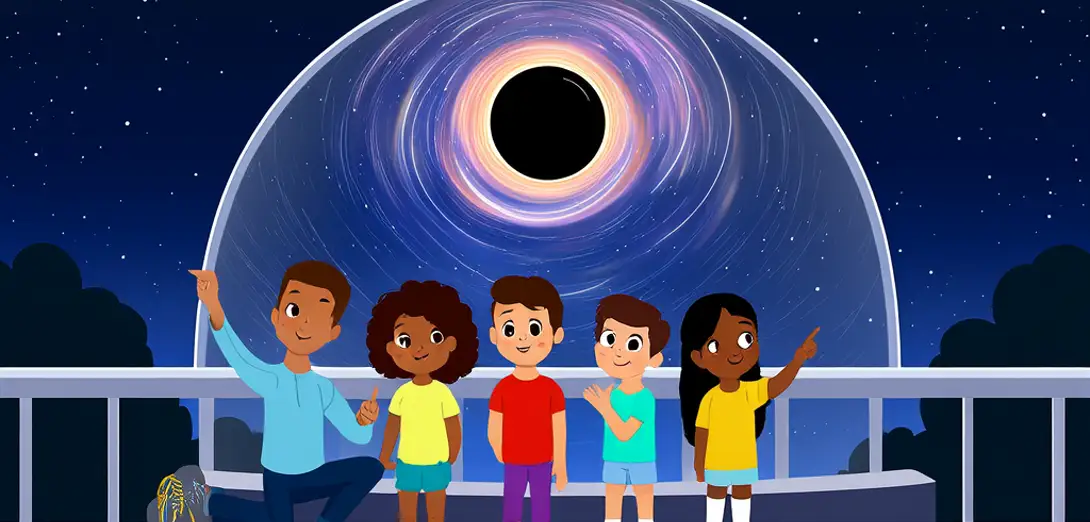
Space Has Places That Swallow Light
太空中有能吞掉光的地方
-
Black holes form when massive stars collapse under their own gravity at life’s end.黑洞形成于大质量恒星生命终结时,在自身引力作用下坍缩。
-
Their pull is so strong that nothing — not even light — can escape past a point called the event horizon.其引力极强,任何物质——甚至光——一旦越过事件视界便无法逃逸。
-
We can’t see black holes directly, but we spot them by watching stars orbit empty space.我们无法直接观测黑洞,但可通过观察恒星围绕空无一物的空间运行来发现它们。
-
Gas falling toward a black hole heats up and glows brightly before vanishing forever.落入黑洞的气体因受热而剧烈发光,随后永远消失。
-
Supermassive black holes live at the center of almost every big galaxy, including ours.超大质量黑洞位于几乎所有大型星系的中心,包括我们的银河系。
-
A black hole’s size depends on how much mass it has pulled in over time.黑洞的大小取决于它随时间吸积的质量总量。
-
If you floated near one, time would feel slower for you than for friends far away.若你漂浮在黑洞附近,对你而言时间流逝会比远处的朋友更慢。
-
Scientists use radio telescopes to map invisible structures around these mysterious space objects.科学家利用射电望远镜绘制这些神秘天体周围不可见结构的图像。
-
No black hole is close enough to pull Earth — the nearest is over 1,500 light-years away.目前没有黑洞近到足以影响地球——最近的一个距我们超过1500光年。
-
Studying them helps us understand gravity, space, and how galaxies grow and change.研究黑洞有助于我们理解引力、时空以及星系的成长与演化。