正在确认阅读权限…
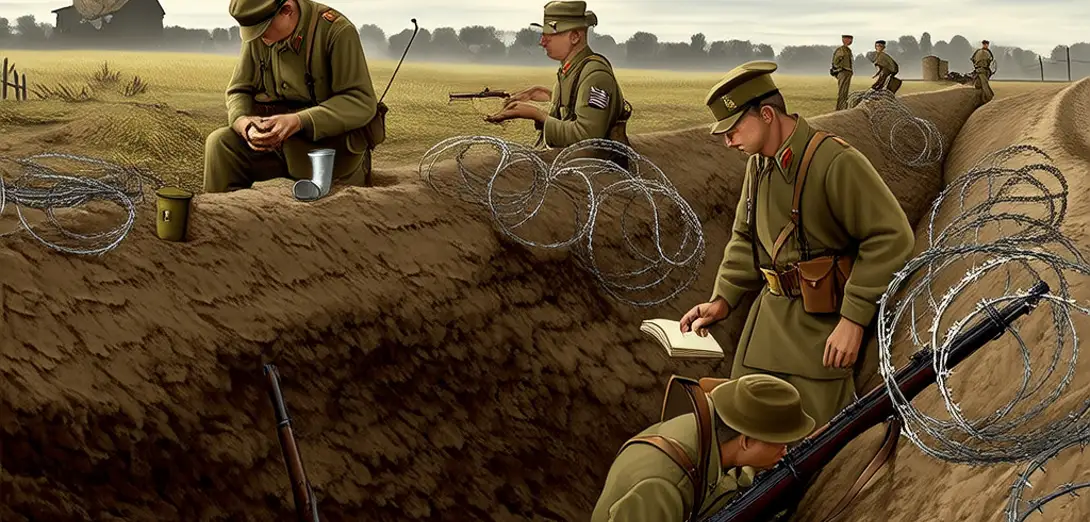
Mud, Wire, and Machine Guns: Trench Warfare and Innovation
泥浆、铁丝网与机枪:堑壕战与技术创新
-
By late 1914, armies across Belgium and France dug trenches stretching over 475 miles.到1914年底,比利时和法国境内的军队已挖掘出绵延逾475英里的战壕。
-
Soldiers lived for weeks in mud-filled ditches, surrounded by barbed wire and constant artillery fire.士兵们在泥泞的沟渠中生活数周,四周遍布铁丝网,炮火连绵不绝。
-
The machine gun gave defenders huge advantage, making frontal attacks deadly and slow.机枪赋予防守方巨大优势,使正面进攻既致命又迟缓。
-
To break the stalemate, engineers developed tanks, poison gas, and aerial reconnaissance balloons.为打破僵局,工程师研制出坦克、毒气和空中侦察气球。
-
Gas masks became standard gear after chlorine attacks near Ypres shocked soldiers and civilians alike.氯气在伊普尔附近发动袭击,震惊士兵与平民,防毒面具随即成为标配装备。
-
Trench newspapers, written by troops themselves, mixed satire, poetry, and news from home.战壕报纸由士兵自行编写,融合讽刺、诗歌与家乡新闻。
-
Medical units set up field hospitals just behind lines, pioneering blood transfusion and plastic surgery.医疗队在战线后方设立野战医院,率先开展输血与整形外科手术。
-
At night, soldiers exchanged songs across no-man’s-land—sometimes in German, sometimes in French.夜晚,士兵们隔着无人区彼此对唱——有时用德语,有时用法语。
-
Maps were redrawn weekly as small gains cost thousands of lives and changed little strategically.地图每周重绘一次:微小的推进常以数千条生命为代价,却几无战略意义。
-
This war didn’t end with cavalry charges—it ended with machines that redefined courage and consequence.这场战争并非以骑兵冲锋结束,而是以重新定义勇气与后果的机器画上句点。