正在确认阅读权限…
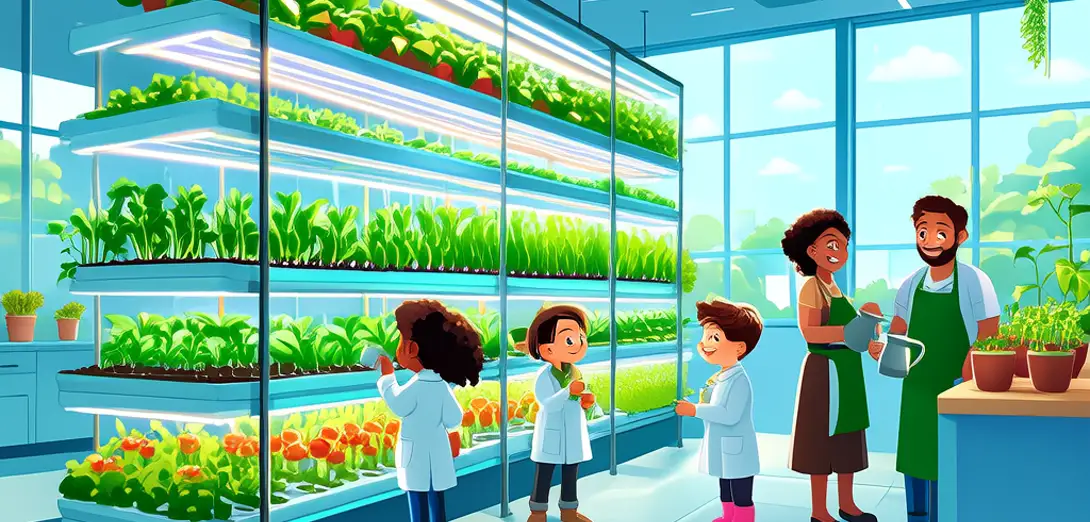
Vertical Farming and LED Light Spectra for Plant Growth
垂直农业与LED光谱对植物生长的影响
-
Vertical farms grow crops in stacked layers inside buildings using artificial light.垂直农场在建筑内利用人工光源,通过多层堆叠方式种植作物。
-
Unlike sunlight, LED lights emit specific wavelengths that plants absorb most efficiently.与阳光不同,LED灯可发射植物最易吸收的特定波长光线。
-
Red and blue light wavelengths drive photosynthesis more effectively than green light does.红光和蓝光波长比绿光更能有效促进光合作用。
-
Farmers adjust LED spectra to match each crop’s growth stage and nutritional needs.农民根据作物生长阶段和营养需求,调节LED光源的光谱。
-
This precise lighting reduces energy waste and increases harvest frequency per square meter.这种精准照明减少了能源浪费,提高了单位面积的收获频次。
-
Since no soil or pesticides are needed, vertical farms use far less water than field farms.由于无需土壤和农药,垂直农场的用水量远低于传统农田。
-
However, high electricity costs remain a major challenge for large-scale profitability.然而,高昂的电费仍是实现大规模盈利的主要挑战。
-
Researchers are now designing smarter LEDs that dim or shift spectra automatically during the day.研究人员正设计更智能的LED灯,可自动调节亮度或在白天切换光谱。
-
Some systems even link light patterns to plant stress sensors for real-time optimization.部分系统甚至将光照模式与植物胁迫传感器联动,实现实时优化。
-
Despite limitations, vertical farming helps cities grow fresh food with smaller land footprints.尽管存在局限,垂直农业仍有助于城市以更小土地面积生产新鲜食物。