正在确认阅读权限…
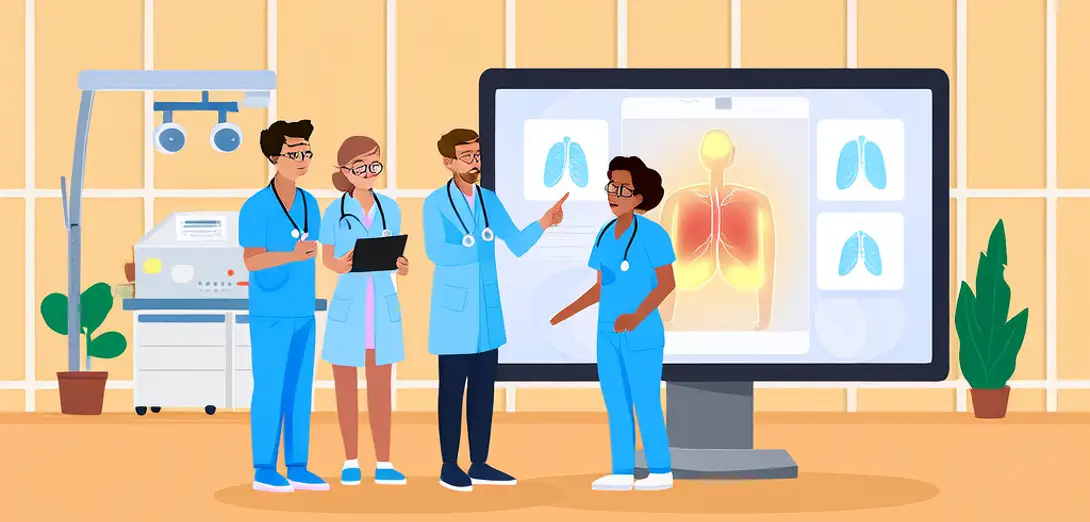
AI Algorithms That Flag Abnormalities in Medical Scans
标记医学影像异常的AI算法
-
Radiologists now use AI tools that scan X-rays, CTs, and MRIs for subtle abnormalities.放射科医生如今使用人工智能工具扫描X光片、CT和MRI,以发现细微异常。
-
These algorithms compare new images against thousands of labeled examples from past patient records.这些算法将新图像与过往患者记录中数千个已标注样本进行比对。
-
They highlight suspicious areas—like lung nodules or brain bleeds—with color overlays and confidence scores.它们用彩色覆盖层和置信度评分标出可疑区域,如肺结节或脑出血。
-
While AI never replaces doctors, it reduces missed findings and speeds up urgent case triage.尽管人工智能从不取代医生,但它能减少漏诊,并加快急症分诊速度。
-
Studies show AI-assisted reading cuts average diagnosis time by nearly 30 percent in busy hospitals.研究表明,在繁忙医院中,AI辅助阅片可将平均诊断时间缩短近30%。
-
The software must be trained on diverse populations to avoid bias in age, gender, or ethnicity.软件必须基于多样化人群数据训练,以避免在年龄、性别或种族上的偏差。
-
Regulatory agencies require rigorous clinical validation before approving any AI diagnostic tool.监管机构要求在批准任何AI诊断工具前,完成严格的临床验证。
-
Some systems also track changes across sequential scans to detect early disease progression.部分系统还能追踪连续扫描间的影像变化,以识别早期疾病进展。
-
Ongoing updates help algorithms adapt to new imaging protocols and rare pathology patterns.持续更新有助于算法适应新的影像采集协议和罕见病理模式。
-
Ultimately, AI augments human expertise rather than substituting for medical judgment.归根结底,AI是增强而非替代医生的专业判断。