正在确认阅读权限…
Deep-Space Communication Delay and Autonomous Decisions
深空通信延迟与自主决策
-
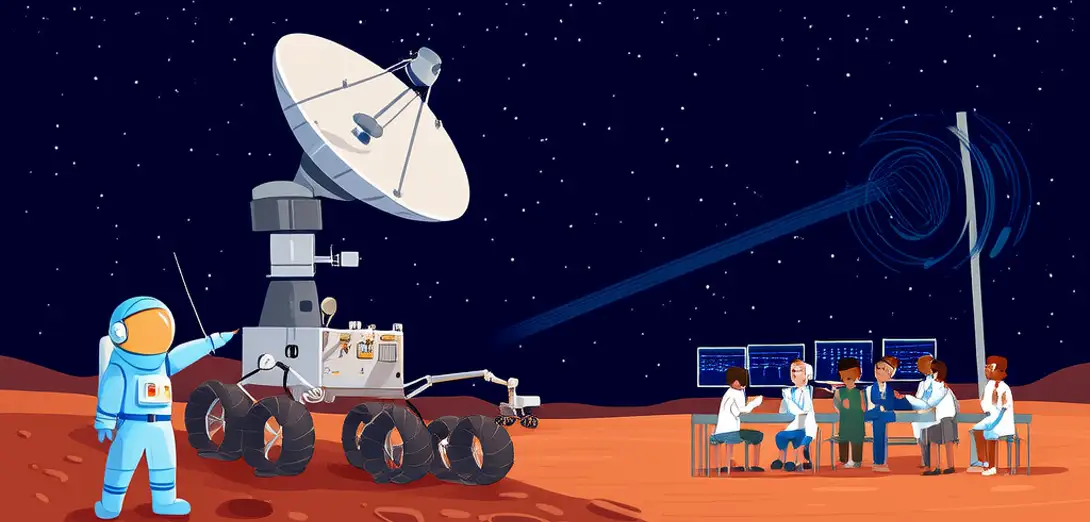
A signal from Mars takes between 4 and 24 minutes to reach Earth — far too long for real-time control of rovers or landers.来自火星的信号需要4到24分钟才能抵达地球,远不足以实时操控探测车或着陆器。
-
To navigate rocky terrain safely, Perseverance uses onboard AI to map paths, avoid obstacles, and select science targets independently.为安全穿越崎岖地形,‘毅力号’依靠车载人工智能自主绘制路径、规避障碍并选择科学探测目标。
-
Its autonomous navigation system processes stereo camera images every few seconds and updates driving plans without ground input.其自主导航系统每隔几秒处理一次双目相机图像,并在无需地面干预的情况下动态更新行驶计划。
-
When drilling into Martian rock, the rover checks for stability and adjusts pressure using embedded sensors and preloaded logic.钻取火星岩石时,探测车通过嵌入式传感器和预设逻辑实时监测稳定性并调节钻探压力。
-
Mission teams send high-level commands like 'explore this hill', then trust the rover to execute details based on current conditions.任务团队仅发送‘探索这座山丘’等高层指令,随后由探测车根据当前环境自主执行具体操作。
-
Autonomy also protects against signal loss: if contact drops, the spacecraft enters safe mode and waits for new instructions.自主性还能应对通信中断:一旦失联,航天器将自动进入安全模式,静待新指令。
-
Future missions to Jupiter’s moons will face even longer delays — up to 90 minutes one-way — making autonomy non-negotiable.未来前往木星卫星的任务将面临更长通信延迟——单程可达90分钟,自主运行势在必行。
-
Engineers test these systems rigorously on Earth using simulated time lags and unpredictable terrain.工程师在地球上通过模拟时间延迟和不可预测地形,对这些系统进行严格测试。