正在确认阅读权限…
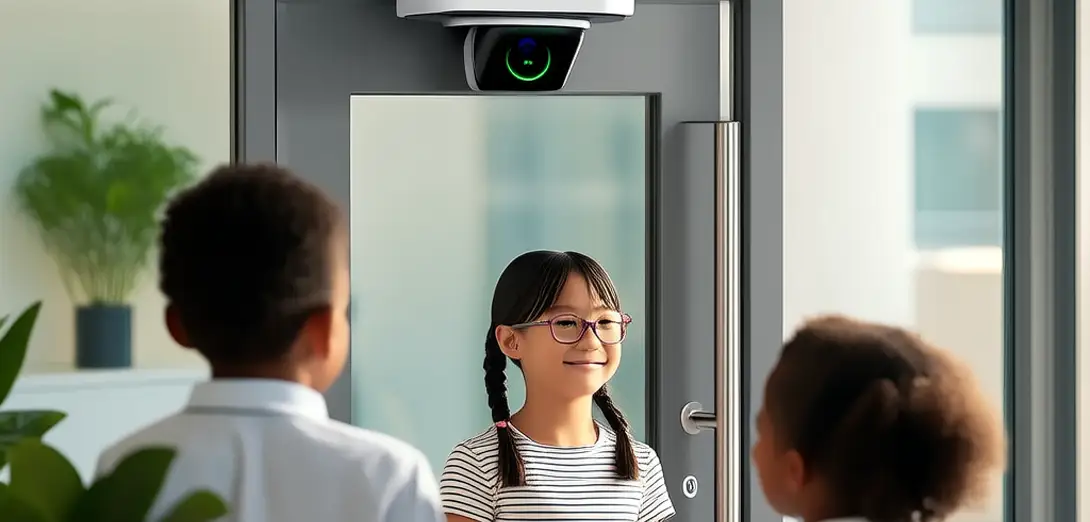
How Face Recognition Systems Authenticate Access at Secure Doors
人脸识别在门禁中的流程
-
When you approach a smart door, an infrared camera captures your face even in low-light or with glasses on.当你靠近智能门时,红外摄像头即使在弱光环境或佩戴眼镜的情况下也能捕捉你的面部。
-
The system first detects facial landmarks like eyes, nose, and jawline using convolutional neural networks.系统首先利用卷积神经网络检测眼睛、鼻子和下颌线等面部关键点。
-
It then converts those features into a unique numerical template—not a stored photo—to protect privacy.随后将这些特征转化为唯一的数字模板(而非存储照片),以保护隐私。
-
This template is compared instantly against encrypted templates previously registered in a secure database.该模板会即时与安全数据库中预先注册的加密模板进行比对。
-
If the match score exceeds a preset threshold, the door unlocks within half a second.若匹配得分超过预设阈值,门将在半秒内解锁。
-
Liveness detection prevents spoofing by checking subtle movements, skin texture, or depth cues from stereo cameras.活体检测通过检查细微动作、皮肤纹理或双目摄像头提供的深度信息来防止欺骗。
-
Some systems combine face recognition with RFID cards or PINs for multi-factor authentication in high-security zones.部分系统在高安全区域结合人脸识别与射频识别卡或密码,实现多因素认证。
-
All processing happens locally on-device in most modern systems to avoid sending biometric data to the cloud.大多数现代系统采用本地设备端处理,避免将生物特征数据上传至云端。
-
False acceptance rates are kept below 0.001% through continuous algorithm updates and hardware calibration.通过持续算法更新和硬件校准,误接受率控制在0.001%以下。
-
Engineers must balance speed, accuracy, and fairness—especially across diverse skin tones and age groups.工程师需在速度、精度和公平性之间取得平衡——尤其要兼顾不同肤色和年龄群体。