正在确认阅读权限…
Why MRI Scans Avoid Ionizing Radiation
为什么核磁共振不用电离辐射
-
MRI machines use strong magnetic fields and radio waves instead of X-rays or gamma rays to create body images.核磁共振(MRI)设备利用强磁场和无线电波成像,而非X射线或伽马射线。
-
Unlike ionizing radiation, radiofrequency pulses do not carry enough energy to remove electrons from atoms or damage DNA.与电离辐射不同,射频脉冲能量不足,无法使原子失去电子或损伤DNA。
-
The magnets align hydrogen nuclei in water-rich tissues, and radio waves temporarily disturb that alignment.磁场使富含水分组织中的氢原子核排列一致,无线电波则暂时扰乱这种排列。
-
When nuclei snap back, they emit faint signals detected by sensitive receivers around the body.原子核恢复原位时发出微弱信号,被环绕身体的高灵敏度接收器捕获。
-
Computers translate those signals into detailed cross-sectional pictures of organs and soft tissues.计算机将这些信号转化为器官和软组织的精细断层图像。
-
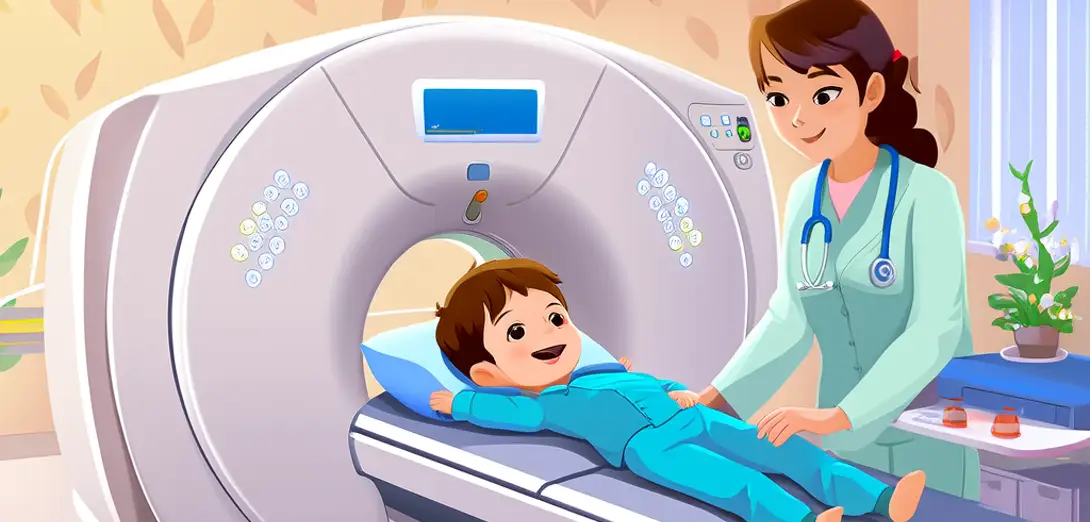
Because no ionizing radiation is involved, MRI is safer for repeated use and for children or pregnant women.由于不涉及电离辐射,MRI更适用于重复检查,也更安全,适合儿童和孕妇。
-
Patients must remove metal objects since the magnet can move or heat them dangerously.患者须移除金属物品,以免强磁场使其移动或过热,造成危险。
-
Contrast agents sometimes used in MRI are also non-radioactive and cleared safely by the kidneys.MRI中有时使用的造影剂同样无放射性,可由肾脏安全清除。
-
Doctors choose MRI when they need high-resolution views of the brain, nerves, or ligaments.医生在需要观察大脑、神经或韧带等部位的高分辨率影像时,常选择MRI。
-
This technology shows how physics principles like nuclear spin enable safe, precise medical diagnostics.这项技术展示了核自旋等物理原理如何实现安全、精准的医学诊断。