正在确认阅读权限…
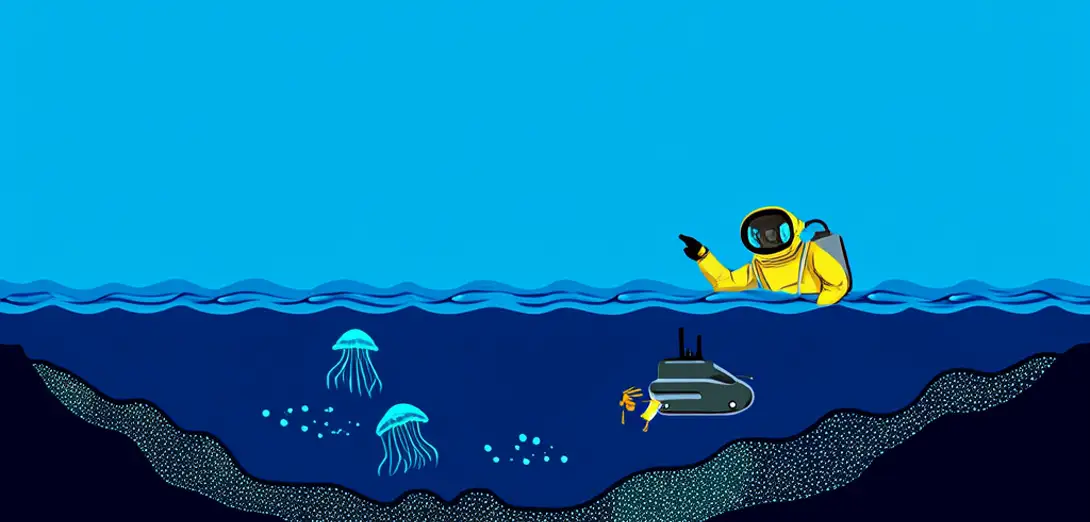
Mariana Trench Pressure and Scientific Exploration
马里亚纳海沟水压与科考
-
The Mariana Trench plunges nearly 11,000 meters below sea level—the deepest known point on Earth, deeper than Mount Everest is tall.马里亚纳海沟深达近11000米,是地球已知最深处,比珠穆朗玛峰还高。
-
At Challenger Deep, water pressure reaches over 1,000 atmospheres, crushing unprotected metal and collapsing air-filled spaces instantly.在挑战者深渊,水压超过1000个大气压,能瞬间压碎未加防护的金属、摧毁所有充气空间。
-
Modern submersibles like DSV Limiting Factor use titanium alloy spheres rated for full-ocean-depth, with viewports ground to micron-level smoothness.现代深潜器(如‘限制因子’号)采用全海深级钛合金球壳,观察窗研磨精度达微米级。
-
Scientists collect microbes from hydrothermal vents using robotic arms, discovering enzymes that function at 120°C and inspire new industrial catalysts.科学家用机械臂从热液喷口采集微生物,发现能在120°C下工作的酶,为新型工业催化剂提供灵感。
-
Pressure-tolerant piezophiles—organisms thriving under extreme compression—reveal genetic adaptations previously unknown to biochemistry.耐高压嗜压菌——在极端压力下繁盛的生命——揭示了生物化学此前未知的基因适应机制。
-
Deep-sea mapping now uses multibeam sonar mounted on autonomous vehicles, building centimeter-resolution 3D models of trench walls and landslide scars.如今深海测绘依靠装在自主航行器上的多波束声呐,构建出海沟壁与滑坡痕迹的厘米级分辨率三维模型。
-
Every descent requires weeks of preparation: testing ballast systems, calibrating oxygen scrubbers, and rehearsing emergency ascent protocols.每次下潜需数周准备:测试压载系统、校准二氧化碳吸收装置、反复演练紧急上浮程序。
-
Indigenous Chamorro oral traditions speak of Sirena, a mermaid who guards the trench’s depths—modern expeditions honor this by naming sampling sites after ancestral terms.当地查莫罗原住民口述传统中,有守护海沟深处的美人鱼‘西瑞娜’;现代科考队以祖先语言命名采样点,以示敬意。
-
Plastic fragments have been found even here, proving no place on Earth escapes anthropogenic contamination.连此处都发现了塑料碎片,证明地球再无一处能免于人类活动造成的污染。
-
Exploring the trench teaches humility: it reminds us that most of our planet remains unmapped, unvisited, and profoundly mysterious.探索海沟教会我们谦卑:它提醒我们,地球大部分区域仍未测绘、未踏足,且深不可测。