正在确认阅读权限…
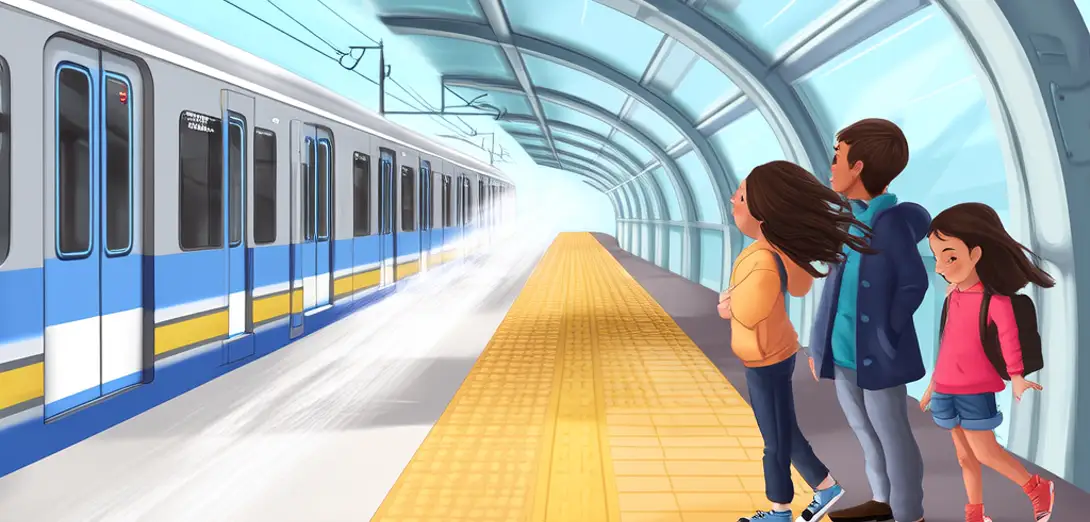
Bernoulli’s Principle and the Safety Line at Train Platforms
伯努利原理与地铁站台安全线的科学依据
-
When a fast train passes a platform, air between the train and passenger moves faster than surrounding air.当快速列车驶过站台时,列车与乘客之间的空气流速高于周围空气。
-
According to Bernoulli’s principle, faster-moving air exerts lower pressure than slower-moving air.根据伯努利原理,流速越快的空气压强越低。
-
This pressure difference creates a subtle but real inward force pulling objects toward the moving train.这种压差会产生一种微弱但真实的作用力,将物体向行驶中的列车方向拉。
-
That’s why standing too close feels unnerving—and why platforms mark safety lines clearly.这正是站得太近会令人不安的原因,也是站台明确标出安全线的原因。
-
The effect is stronger with higher speeds, wider trains, and tighter platform gaps.车速越高、列车越宽、站台间隙越小,这种效应越明显。
-
Even bicycles or loose coats can be tugged dangerously if someone leans past the line.即使自行车或宽松外套,若有人探出安全线,也可能被危险地拽动。
-
Ventilation systems in underground stations must account for this airflow disturbance during peak hours.地下车站的通风系统在高峰期必须考虑这种气流扰动。
-
Some newer platforms install platform screen doors partly to eliminate this aerodynamic risk entirely.一些新建站台安装屏蔽门,部分原因正是为彻底消除这一空气动力学风险。
-
Similar physics explains why airplanes lift off and why shower curtains billow inward during hot showers.类似的物理原理也解释了飞机为何能起飞,以及热水淋浴时浴帘为何向内鼓起。
-
Safety lines exist not just as warnings—but as visible boundaries against invisible forces.安全线不仅是警示标志,更是对抗无形力量的可见边界。