正在确认阅读权限…
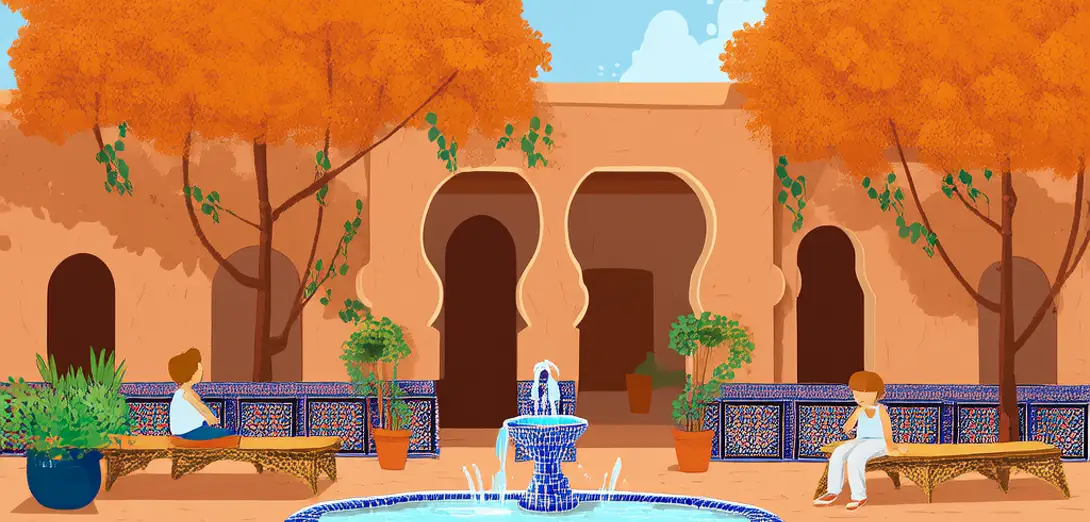
Thermal Mass Dynamics in Moroccan Riad Courtyard Architecture and Urban Microclimate Regulation
摩洛哥里亚德庭院建筑中的热质量动态与城市微气候调节
-
Traditional riads in Fes and Marrakech use thick tadelakt-plastered walls and central water features to manage diurnal temperature swings exceeding 25°C.菲斯和马拉喀什的传统里亚德住宅采用厚实的塔代拉克特灰泥墙和中央水景,以应对昼夜温差超25°C的气候。
-
The courtyard’s geometry creates a thermal chimney effect, drawing cooler air from shaded ground surfaces upward through evaporative cooling zones.庭院几何结构形成热压通风效应,将阴凉地面的较冷空气经蒸发冷却区向上抽引。
-
Zellige tile mosaics absorb solar radiation during peak hours, then re-radiate stored heat gradually after sunset.马赛克彩砖在日照高峰时段吸收太阳辐射,日落后缓慢释放所储热量。
-
Urban planners now quantify these passive systems using EN 15241-compliant thermal mass coefficients in renovation subsidies.城市规划者如今依据EN 15241标准,用热质量系数量化这些被动式系统,并纳入翻新补贴评估。
-
Modern high-rise developments mimicking riad forms often fail because concrete lacks the hygrothermal buffering capacity of lime-based plasters.模仿里亚德形式的现代高层建筑常告失败,因混凝土缺乏石灰基灰泥的湿热缓冲能力。
-
Field studies show riad courtyards maintain ambient humidity 12–18% higher than adjacent streets during summer droughts.实地研究表明,夏季干旱期里亚德庭院的环境湿度比邻近街道高12%–18%。
-
This moisture retention supports micro-ecologies including endemic gecko species critical for pest control in historic medinas.这种保水能力支撑了微型生态系统,包括对历史老城害虫防治至关重要的特有壁虎物种。
-
Architectural historians link courtyard proportions to pre-industrial astronomical alignments optimizing seasonal solar gain.建筑史学者指出,庭院比例与前工业时代的天文方位对齐,以优化季节性日照得热。
-
Climate-resilient retrofitting guidelines now mandate minimum thermal lag times of 14 hours for façade materials in UNESCO World Heritage zones.气候适应性改造指南现规定,联合国教科文组织世界遗产区内建筑立面材料须满足至少14小时的热滞后时间。
-
Digital twin simulations reveal how courtyard orientation reduces HVAC demand by up to 41% compared to sealed glass façades.数字孪生模拟显示,相比密闭玻璃幕墙,庭院朝向可降低暖通空调能耗达41%。
-
Local artisans train EU-funded technicians in traditional plaster application techniques validated through ASTM C1324 testing.当地工匠通过ASTM C1324测试验证的传统灰泥施工工艺,培训欧盟资助的技术人员。
-
These built-environment strategies represent tacit knowledge codified through generational craft transmission rather than formal engineering.这些建成环境策略体现的是世代匠艺传承形成的默会知识,而非正式工程理论。