正在确认阅读权限…
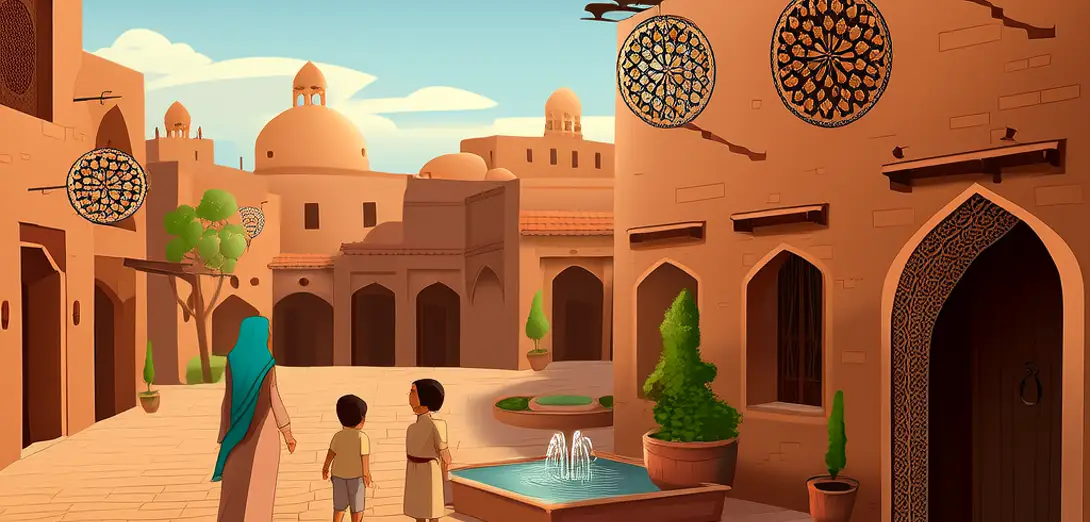
Thermal Inertia Mapping of Persian Qanat Systems in Yazd Urban Fabric
伊朗亚兹德城市肌理中坎儿井系统的热惯性测绘:地下水利与地表微气候的耦合动力学
-
Yazd’s qanat-fed *badgirs* (windcatchers) create thermal inertia effects measurable via diurnal surface temperature differentials exceeding 18°C between adjacent city blocks.亚兹德依靠坎儿井供水的风塔(badgirs)产生热惯性效应,相邻街区地表昼夜温差实测超过18°C。
-
Satellite thermal infrared data fused with ground-penetrating radar reveals how subsurface water flow modulates heat storage capacity in adobe walls built atop qanat tunnels.融合卫星热红外数据与探地雷达揭示:建于坎儿井隧道上方的土坯墙,其储热能力受地下水流调节。
-
Urban planners use computational fluid dynamics models parameterized with local gypsum soil thermal diffusivity (0.0012 m²/s) to predict cooling efficiency under projected 2040 climate scenarios.城市规划者采用计算流体力学模型,输入当地石膏土壤热扩散率(0.0012 m²/s),预测2040年气候情景下的降温效率。
-
The 12th-century Qanat of Chak Chak demonstrates active heat exchange: groundwater at 14°C cools air entering *sahn* courtyards by 9.3°C during summer peak loads.12世纪查克查克坎儿井仍在活跃进行热交换:夏季负荷峰值期,14°C地下水使进入庭院(sahn)的空气降温9.3°C。
-
Historical maintenance logs correlate brickwork porosity adjustments with seasonal shifts in evaporation rates—now quantified via eddy covariance flux towers.历史维修日志显示,砖砌体孔隙率调整与蒸发速率季节变化相关——现通过涡度相关通量塔量化验证。
-
Modern building codes mandate qanat proximity assessments before new construction, referencing UNESCO’s 2022 thermal zoning atlas based on 37-year infrared time-series.现行建筑规范要求新建工程前必须开展坎儿井邻近性评估,并参照联合国教科文组织2022年发布的、基于37年红外时间序列的热区划图。
-
Thermal camera surveys show how qanat alignment determines nocturnal longwave radiation patterns that suppress dew point depression in historic gardens.热成像调查表明,坎儿井走向决定历史园林夜间长波辐射模式,从而抑制露点下降。
-
Soil moisture sensors embedded along qanat routes feed real-time data into municipal HVAC optimization algorithms for public buildings.沿坎儿井路线布设的土壤湿度传感器,向市政公共建筑暖通空调优化算法实时传输数据。
-
This hydro-thermal coupling challenges Western district energy models that treat water infrastructure and building envelopes as decoupled systems.这种水-热耦合机制挑战了西方片区能源模型——后者将水利设施与建筑围护结构视为解耦系统。
-
Restoration projects now require thermal emissivity testing of replacement bricks to maintain phase-shifted heat release profiles critical for night-time passive cooling.修复项目现须对替换砖材开展热发射率测试,以维持关键的相位延迟式释热曲线,保障夜间被动降温效果。
-
The system’s resilience emerges from distributed thermal mass—not centralized control—offering scalable lessons for arid-zone climate adaptation.该系统的韧性源于分布式热质量,而非集中调控,为干旱地区气候适应提供可扩展经验。
-
International water heritage guidelines now incorporate Yazd’s empirical thermal lag metrics as benchmark criteria for subterranean aquifer-dependent settlements.国际水利遗产指南已将亚兹德实测的热滞后指标纳入基准标准,适用于依赖地下含水层的聚落。