正在确认阅读权限…
Dakar’s Night Fish Markets: Grilling as Urban Temporality and Coastal Solidarity
达喀尔海边夜市:烤鱼作为城市时间性与海岸共同体的实践
-
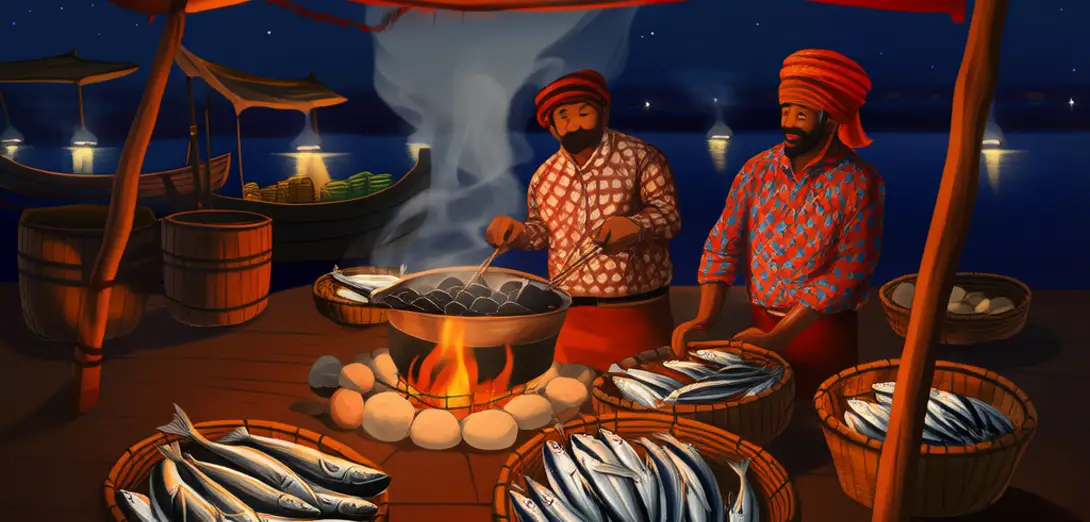
Under the sodium-orange glow of fishing piers, Senegalese vendors rotate sardines and mackerel over charcoal pits that burn all night without pause.在渔码头泛着钠橙色光芒下,塞内加尔小贩彻夜不歇地在炭火坑上翻烤沙丁鱼和鲭鱼。
-
Each fish is scored, salted, and brushed with fermented mango paste before grilling—techniques refined across generations facing rising sea temperatures.每条鱼都先划刀、撒盐,再刷上发酵芒果酱,再行烤制——这些技艺历经数代人,在海温持续上升中不断精进。
-
Customers arrive not just to eat but to witness the rhythm: the clang of ice crates, the call-and-response haggling, the shared silence during tide shifts.顾客前来不仅为进食,更为感受节奏:冰箱碰撞声、讨价还价的呼应、潮汐转换时的共同静默。
-
Unlike formal restaurants, these markets operate on communal time—no clocks, only lunar tides and collective hunger cues.与正规餐厅不同,这些市场依 communal 时间运转——没有钟表,只有月相潮汐与集体饥饿信号。
-
Women grill masters often manage three pits simultaneously while negotiating prices, mediating disputes, and mentoring apprentices in one breath.女性烤鱼师傅常同时照管三处火坑,一边议价、调解争执,一边一口气指导学徒。
-
The scent of charring skin and smoked paprika lingers for blocks, functioning as both olfactory landmark and informal economic signal.焦脆鱼皮与烟熏红椒粉的香气弥漫数个街区,既是嗅觉地标,也是非正式的经济信号。
-
Tourists increasingly attend, yet participation requires accepting unspoken rules: no photos during bargaining, no tipping, no rushing the grill.游客日渐增多,但参与须遵守不成文规矩:议价时不拍照、不给小费、不催促烤制。
-
This isn’t street food—it’s a coastal infrastructure where labor, ecology, and conviviality are calibrated in real time.这并非街头小吃——而是海岸基础设施,劳动、生态与欢聚在此实时校准。
-
Fishermen deliver directly from wooden pirogues still damp with Atlantic spray, linking oceanic uncertainty to urban resilience.渔民直接从仍沾大西洋浪花的木舟上卸货,将海洋的不确定性与城市的韧性相连。
-
Young chefs from Dakar’s culinary schools now apprentice here—not for recipes, but for temporal literacy in resource-constrained spaces.达喀尔烹饪学院的年轻厨师如今来此学徒——不为食谱,而为在资源受限空间中习得时间素养。
-
The fire never sleeps; neither does the negotiation of who belongs, who feeds, and whose knowledge sustains the shore.炉火永不熄灭;关于谁属于此地、谁负责供养、谁的知识维系海岸的协商亦永不停歇。
-
When the first light bleaches the sky, vendors pack quietly—leaving ash, memory, and the quiet certainty of tomorrow’s coals.当晨光褪去夜色,摊主悄然收摊——只留下灰烬、记忆,以及明日炭火重燃的笃定。