正在确认阅读权限…
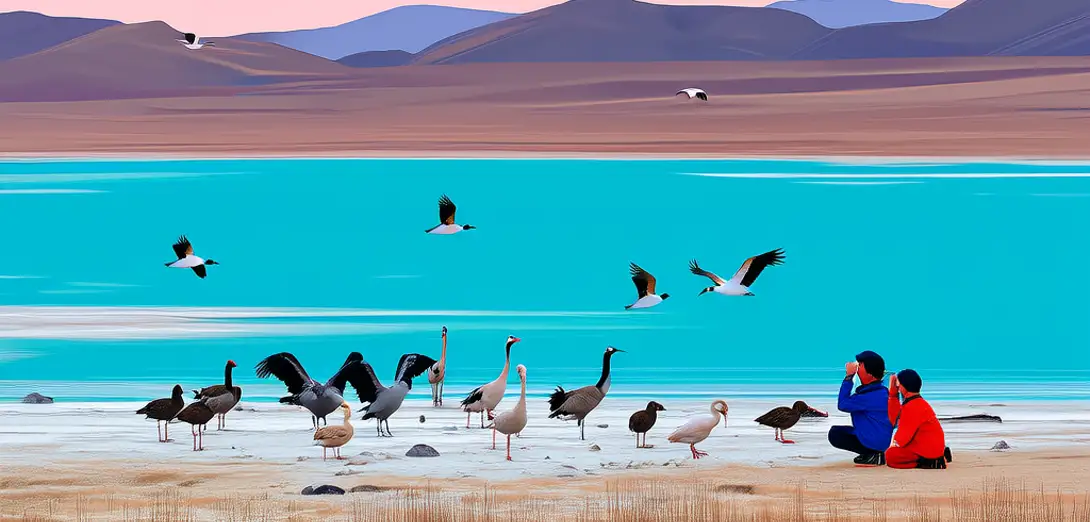
Qinghai Lake’s Avian Confluence: Salinity Gradients and Trans-Himalayan Flyway Politics
青海湖鸟类汇流:盐度梯度与跨喜马拉雅迁飞廊道政治
-
Qinghai Lake’s 3.5% salinity creates a unique ecological bottleneck where Palaearctic migrants converge with resident waterfowl adapted to alkaline stress.青海湖3.5%的盐度形成独特的生态瓶颈,使古北界候鸟与适应碱性胁迫的留居水禽在此交汇。
-
Bar-headed geese exploit thermal updrafts over the lake’s western rim, while black-necked cranes rely on freshwater seeps along its eastern marshes.斑头雁利用湖西岸的热气流升空,黑颈鹤则依赖湖东沼泽区的淡水渗出带。
-
China’s 2021 wetland protection law explicitly names migratory connectivity—not species counts—as the metric for ecological success.中国2021年湿地保护法明确将迁徙连通性——而非物种数量——列为生态成效的核心指标。
-
Local Tibetan communities enforce seasonal bans on egg collection using lunar calendars calibrated to plankton blooms, not bureaucratic deadlines.当地藏族社区依据与浮游植物繁盛期校准的农历,而非行政截止日,实施季节性捡蛋禁令。
-
Hydropower diversions upstream have subtly altered inflow chemistry, shifting zooplankton composition and delaying peak food availability by eleven days since 2015.上游水电引水工程悄然改变了入湖水体化学成分,自2015年起,浮游动物群落结构发生改变,食物丰度峰值推迟11天。
-
International flyway agreements remain silent on saline lake ecosystems, treating them as biogeographic outliers rather than functional nodes.国际迁飞区协定对咸水湖生态系统保持沉默,将其视为生物地理学上的边缘案例,而非功能节点。
-
Satellite telemetry reveals that some bar-headed geese now bypass traditional stopovers, extending nonstop flight segments by 300 kilometers to reach this stable hypersaline refuge.卫星追踪显示,部分斑头雁如今绕过传统停歇地,将不间断飞行航段延长300公里,直抵这片稳定的高盐庇护所。
-
Conservation funding flows disproportionately to charismatic species, yet ecosystem integrity hinges on overlooked brine shrimp and microbial mats.保护资金过度倾向明星物种,而生态系统完整性却维系于被忽视的卤虫与微生物垫。
-
The lake’s shrinking shoreline has intensified human-wildlife conflict—not over livestock, but over ritual bathing sites used by both monks and migratory birds.湖岸线萎缩加剧了人与野生动物冲突——冲突焦点并非牲畜,而是僧侣与候鸟共用的宗教沐浴场所。
-
Ecological diplomacy here demands recognizing salt not as a limiting factor, but as a geopolitical solvent dissolving national boundaries.此处的生态外交要求我们视盐分非限制因子,而是溶解国界的地缘政治溶剂。
-
Monitoring networks now track conductivity, not just water level, treating salinity as a proxy for transboundary watershed health.监测网络如今不仅追踪水位,更监测电导率,将盐度作为跨境流域健康状况的代用指标。
-
This is not merely ornithology—it is hydrology performed in feathers, diplomacy conducted across thermals and tides.这不仅是鸟类学——更是以羽毛为媒介的水文学,以热气流与潮汐为渠道的外交实践。