正在确认阅读权限…
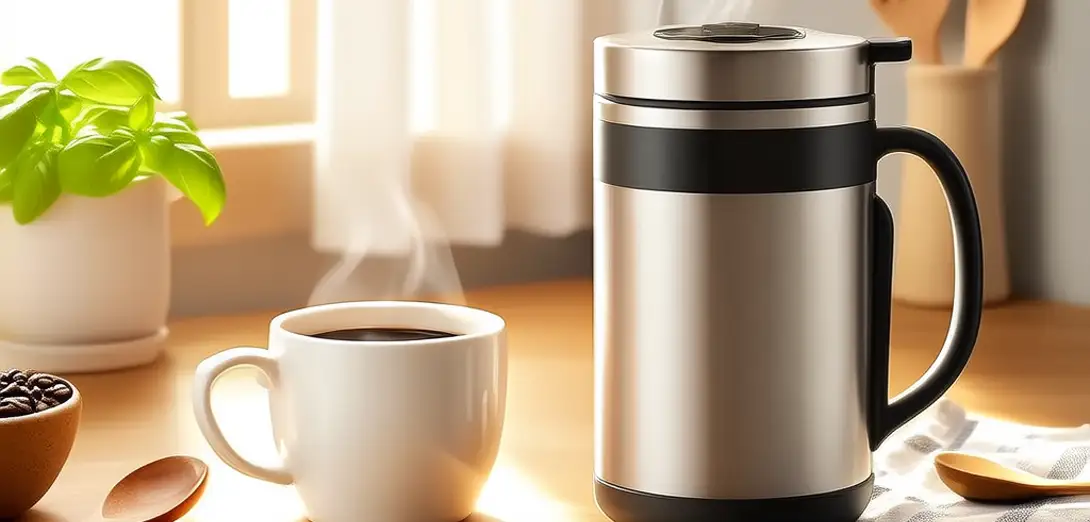
Everyday Thermodynamics: Why Your Coffee Cools Faster in a Ceramic Mug Than a Vacuum Flask
日常热力学:为何咖啡在陶瓷杯中比真空保温杯里冷得更快
-
Ceramic mugs transfer heat rapidly to ambient air through conduction and convection, unlike vacuum-insulated flasks with near-zero thermal bridging.陶瓷杯通过传导和对流迅速将热量散至周围空气中,而真空保温瓶因近乎零热桥效应,保温效果截然不同。
-
The surface roughness and porosity of unglazed ceramic increase effective contact area for heat exchange with surrounding molecules.未上釉陶瓷的表面粗糙度与孔隙率增大了与周围分子热交换的有效接触面积。
-
Vacuum flasks minimize all three heat-transfer modes—conduction, convection, and radiation—via silvered walls and sealed interstitial space.真空保温瓶通过镀银内壁和密封夹层空间,最大限度抑制传导、对流和辐射三种传热方式。
-
Even high-quality ceramic mugs exhibit thermal effusivity values five times greater than stainless-steel vacuum layers under identical conditions.即使高品质陶瓷杯,在相同条件下其热扩散率也比不锈钢真空层高出五倍。
-
User behavior compounds this: frequent sipping exposes hot liquid to cooler air, accelerating evaporative cooling disproportionately in open vessels.用户行为加剧这一现象:频繁啜饮使热饮持续暴露于较冷空气中,导致敞口容器中蒸发冷却显著加速。
-
Thermal imaging reveals localized surface gradients exceeding 8°C/cm on ceramic rims during the first ninety seconds after pouring.热成像显示,倒水后前90秒内陶瓷杯沿局部表面温差梯度超过8°C/cm。
-
Manufacturers now embed phase-change microcapsules into glazes to buffer transient temperature spikes without compromising tactile feedback.制造商现将相变微胶囊嵌入釉料中,以缓冲瞬时温度峰值,同时不牺牲触感反馈。
-
This principle informs HVAC duct lining choices, where moderate thermal mass balances responsiveness with energy retention in office retrofits.该原理指导暖通空调风管内衬选材——适度热容可在办公场所改造中兼顾响应速度与能量保持。
-
Unlike lab-grade calorimeters, household thermal interactions prioritize perceptual fidelity over absolute measurement stability.与实验室级量热仪不同,家用热交互更注重感知保真度,而非绝对测量稳定性。
-
Engineers specify ceramic composition not just for aesthetics but for predictable cooldown curves aligned with user ritual timing.工程师选用特定陶瓷成分,不仅为美观,更因其可预测的降温曲线契合用户饮用节奏。
-
Thermal inertia differences directly affect beverage service design in cafés, influencing cup geometry, lid integration, and restocking frequency.热惯性差异直接影响咖啡馆饮品服务设计,包括杯型结构、杯盖集成方式及补货频次。
-
Understanding these trade-offs helps procurement teams evaluate lifecycle cost versus perceived quality in commercial kitchen equipment.理解这些权衡有助于采购团队评估商用厨房设备的全生命周期成本与感知品质。