正在确认阅读权限…
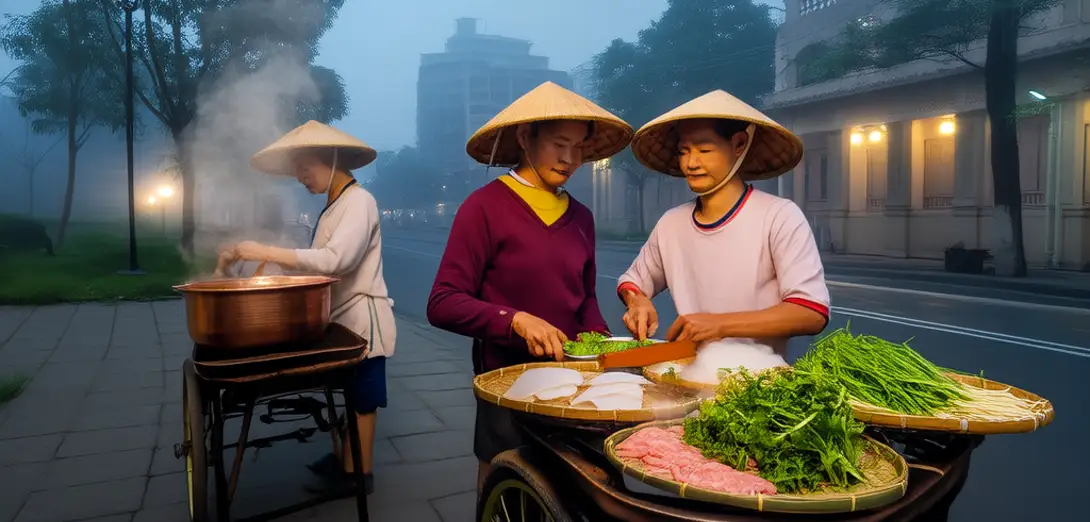
Noodle Sovereignty: Pho Stalls as Urban Negotiation Zones in Hanoi
米粉主权:河内街头粉摊作为城市协商空间
-
Before dawn, Hanoi’s pho vendors roll steel carts onto sidewalks, staking claim not to land but to rhythm—steaming broth, slicing beef, folding herbs in precise sequence.黎明前,河内的 pho 摊主将钢制推车推上人行道,争夺的不是地盘,而是节奏——滚烫的汤、切好的牛肉、精准叠放的香草。
-
Each stall operates under unwritten spatial contracts: proximity to office blocks signals speed, near universities implies affordability, beside temples demands silence at prayer hours.每个摊位都遵守不成文的空间契约:靠近写字楼意味着快,临近大学暗示便宜,毗邻寺庙则要求祈祷时段保持安静。
-
Customers don’t order—they arrive, sit, and signal readiness; the vendor reads posture, breath, and watch glance to time the bowl’s arrival.顾客不点单——他们抵达、落座、示意准备就绪;摊主凭坐姿、呼吸和瞥表动作,精准把握上碗时机。
-
Broth clarity, tendon texture, and herb freshness function as public metrics of integrity, scrutinized daily by regulars who treat criticism as civic duty.汤色清亮、牛腱弹牙、香草鲜嫩,是公开的诚信指标,常客每日审视,批评被视为公民责任。
-
Young professionals negotiate status not through titles but by knowing which stall serves rare cuts like gầu or sách during monsoon shortages.年轻白领不靠头衔彰显地位,而靠知晓哪家摊子在雨季缺货时仍能供应稀有部位如 gầu 或 sách。
-
When municipal inspectors appear, vendors pause mid-scoop—not in fear but to offer steaming bowls, converting authority into reciprocity.市政检查员一现身,摊主便暂停舀汤——并非出于畏惧,而是递上热腾腾的 pho,将权威转化为互惠。
-
Tourists receive extra lime and chili, not as accommodation but as gentle calibration of their palate’s unfamiliarity.游客多得一份青柠与辣椒,并非迁就,而是温和校准其味觉的陌生感。
-
These stalls resist gentrification not with protest banners but by refusing Wi-Fi, apps, or fixed prices—keeping exchange human-scale and immediate.这些摊位不靠抗议横幅抵制士绅化,而是拒绝 Wi-Fi、手机应用与固定标价——让交易保持人本尺度与即时性。
-
Pho here is neither fast food nor heritage exhibit; it’s daily infrastructure sustaining trust across generations and income brackets.这里的 pho 既非快餐,亦非文化遗产展;它是日常基础设施,维系着跨越世代与收入阶层的信任。
-
The sidewalk becomes a parliament where taste, timing, and tacit agreement outweigh formal policy.人行道成了议会,口味、时机与心照不宣的默契,重于正式政策。
-
Every bowl reaffirms that urban life thrives not in master plans but in micro-adjustments made over simmering cauldrons.每一碗都在重申:城市生活不在宏大规划中繁荣,而在咕嘟冒泡的锅灶旁,靠无数微调生生不息。
-
Here, sovereignty isn’t declared—it’s ladled, served, and consumed while still hot.在这里,主权无需宣告——它被盛起、奉上,趁热入口。