正在确认阅读权限…
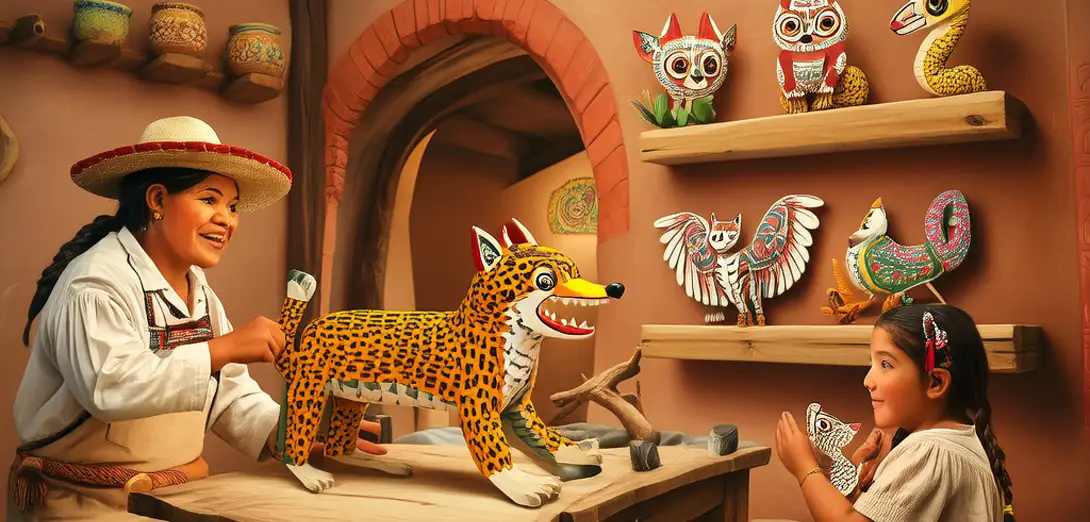
Ceramic Memory: Oaxacan Alebrijes and the Ontology of Ancestral Craft
陶土记忆:瓦哈卡阿莱布里赫斯雕刻与祖先工艺本体论
-
Oaxacan alebrijes—hand-carved, brightly painted spirit animals—are not souvenirs but ontological propositions, asserting that imagination precedes material form.瓦哈卡州的阿莱布里赫斯——手工雕刻、色彩艳丽的灵兽——并非纪念品,而是本体论命题,宣称想象力先于物质形态。
-
Each carving begins with selecting copal wood that ‘speaks’ to the artisan, its grain suggesting whether jaguar, coyote, or winged serpent will emerge.每件雕刻始于挑选能‘与匠人对话’的柯帕尔木,其木纹暗示将浮现的是美洲豹、郊狼还是带翼蛇。
-
Paint layers follow strict chromatic logic: cobalt blue for sky ancestors, ochre for earth memory, crimson for unresolved grief transformed into vitality.上色遵循严格的色彩逻辑:钴蓝代表天界祖先,赭石象征大地记忆,猩红则将未化解的悲恸转化为生机。
-
Families guard recipes for natural pigments—ground minerals, crushed insects, fermented flowers—treating them as intellectual property older than copyright law.家族世代守护天然颜料配方——研磨矿石、碾碎昆虫、发酵花朵——视其为早于版权法的知识产权。
-
When international collectors demand uniform sizing, artisans respond with ‘dual-specimen’ pairs: one standard, one deliberately asymmetrical to honor cosmic imbalance.当国际藏家要求统一尺寸时,匠人以‘双生标本’回应:一件标准规格,一件刻意不对称,以致敬宇宙的失衡。
-
Young apprentices don’t copy models; they spend months observing how light moves across carved curves at different hours, learning time as texture.年轻学徒不临摹范本,而是花数月观察不同时辰光线如何掠过雕琢曲线,习得时间即质感。
-
The 2017 earthquake cracked workshops, yet families rebuilt using salvaged wood fragments embedded in new pieces—rupture as lineage.2017年地震震裂工坊,家族却用 salvaged 木片嵌入新作重建——断裂即血脉。
-
Museums display alebrijes behind glass, but elders insist their power activates only when held, warmed, and spoken to during family storytelling.博物馆将阿莱布里赫斯置于玻璃柜中展出,但长者坚称,唯当它们被握在手中、体温焐热、并在家族讲述故事时被低语,其力量才真正苏醒。
-
This craft rejects ‘art for art’s sake’; every piece negotiates presence between living, dead, and yet-unborn relatives.这门手艺拒绝‘为艺术而艺术’;每件作品都在生者、逝者与尚未降生的亲人之间协商存在。
-
Commercial fairs now require provenance statements listing not just village but ancestral workshop name and migration route from Zapotec highlands.如今商业展会要求提供溯源声明,所列不止村庄名,更须注明祖传工坊名称及自萨波特克高地迁徙的路线。
-
Alebrijes teach that cultural continuity isn’t preservation but metamorphosis—where tradition breathes through new lungs, not borrowed masks.阿莱布里赫斯昭示:文化延续并非保存,而是蜕变——传统借新生之肺呼吸,而非戴借来的面具。
-
They are not objects to be owned but relationships to be tended, one brushstroke, one ancestor, one generation at a time.它们并非可供占有的物件,而是需用心维系的关系,一次笔触、一位祖先、一代人,绵延不息。