正在确认阅读权限…
Loom Logic: Navajo Weaving as Treaty Interpretation and Material Jurisprudence
织机逻辑:纳瓦霍编织作为条约阐释与物质法学
-
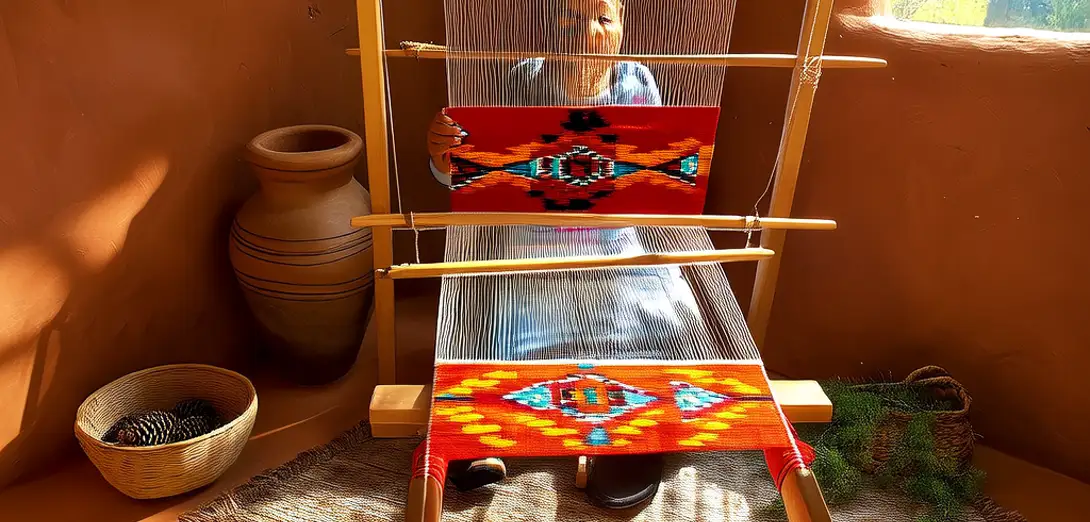
Navajo weavers encode treaty boundaries, water rights disputes, and mineral extraction timelines into geometric patterns—each zigzag representing a contested river course, each diamond a reservation border surveyed in 1868.纳瓦霍织工将条约边界、水权争端和矿产开采时间表编码进几何图案中——每个锯齿形代表一条存在争议的河道,每个菱形代表1868年勘定的保留地边界。
-
Elders teach youth not just warp tension and dye chemistry, but how to read wool density as evidence of drought years and synthetic thread intrusion as markers of federal policy shifts.长者不仅传授经线张力与染料化学知识,更教导青年如何通过羊毛密度识别干旱年份,通过合成纱线的混入标记联邦政策的转变。
-
The 1868 Treaty of Bosque Redondo appears in textile form at the Navajo Nation Museum: a 12-foot rug where indigo bands signify promised rations, faded ochre lines show broken livestock guarantees.1868年《博斯克雷东多条约》以纺织形式呈现于纳瓦霍民族博物馆:一幅12英尺长的地毯中,靛蓝条带象征承诺发放的配给粮,褪色赭石线条标示被违背的牲畜保障条款。
-
Contemporary artists embed GPS coordinates and uranium assay data into tapestry wefts, transforming weaving into forensic documentation accessible only through tactile examination.当代艺术家将GPS坐标与铀含量检测数据嵌入挂毯纬线,使编织升华为仅能通过触觉检验获取的法证记录。
-
Legal scholars consult master weavers when interpreting ambiguous treaty clauses—woven records often predate written translations and retain original Diné semantic nuance.法律学者在解释模糊条约条款时,常向资深织工请教——织物记录往往早于书面译本,且保有原始纳瓦霍语的语义细微差别。
-
When uranium mining resumed near Church Rock in 2022, women’s weaving collectives produced 'radiation rugs' using naturally fluorescent yarns visible only under UV light—legal protest as luminous artifact.2022年教堂岩附近铀矿重启开采后,妇女编织合作社制作出‘辐射地毯’,采用天然荧光纱线,仅在紫外光下可见——以发光实物实现法律抗议。
-
The U.S. Bureau of Indian Affairs once classified weaving as 'craft,' not intellectual property; today, Navajo Nation courts recognize textile archives as admissible evidence in land claims.美国印第安事务局曾将编织归类为‘手工艺’而非知识产权;如今,纳瓦霍民族法院承认纺织档案可作为土地主张案件的呈堂证据。
-
Weaving looms stand in chapter houses not as decor but as constitutional fixtures—where elders deliberate land leases while warping threads in ceremonial sequence.织机立于分会堂内,并非装饰,而是宪制性设施——长者一边按仪式顺序牵经,一边商议土地租赁事宜。
-
Young attorneys intern with master weavers to study how pattern repetition mirrors precedent logic, and how color transitions enact procedural fairness.年轻律师师从资深织工实习,学习图案重复如何映射先例逻辑,色彩过渡如何体现程序公正。
-
This is jurisprudence woven, not written: law as embodied rhythm, precedent as counted warp, sovereignty as unbroken weft.这是编织而成的法学,而非书写而成:法律即具身的节奏,先例即计数的经线,主权即连续不断的纬线。
-
Every rug carries two signatures—the weaver’s and the land’s—and both hold equal standing in Diné legal ontology.每张地毯承载两个签名——织工的与土地的——二者在纳瓦霍法律本体论中地位平等。
-
To unroll a Navajo rug is not to display art but to convene court: material, memory, and mandate inseparable.铺开一张纳瓦霍地毯,不是展示艺术,而是召集法庭:物质、记忆与法定义务不可分割。