正在确认阅读权限…
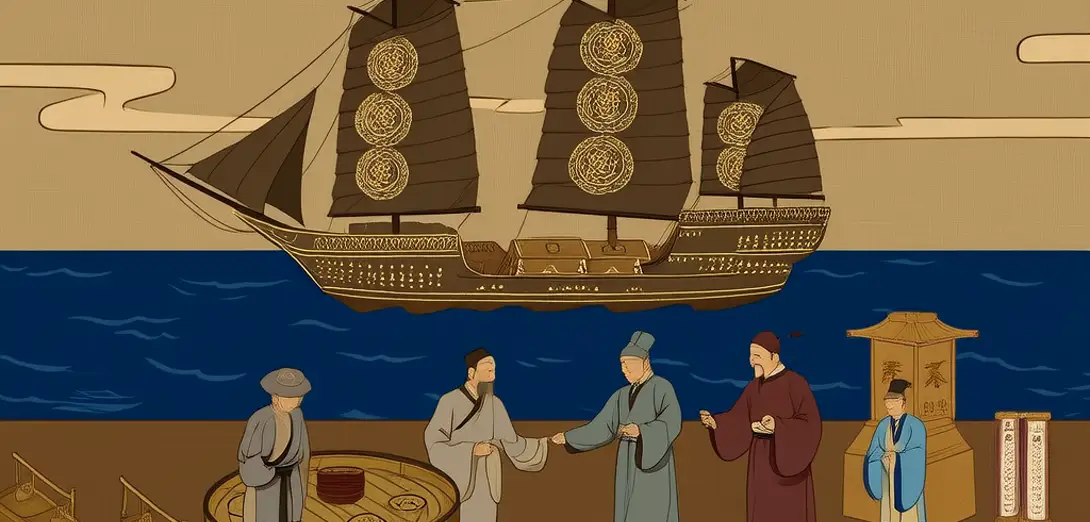
Zheng He’s Voyages and the Tributary System in Practice
郑和下西洋与朝贡体系的实际运作
-
Between 1405 and 1433, Admiral Zheng He commanded seven maritime expeditions reaching Southeast Asia, India, the Persian Gulf, and East Africa.1405至1433年间,郑和率船队七下西洋,航迹遍及东南亚、印度、波斯湾与东非。
-
These voyages combined naval demonstration, diplomatic engagement, and commercial facilitation—all framed within the Ming tributary system’s ritual language.这些航行融海军展示、外交互动与商贸促进于一体,均以明朝朝贡体系的礼仪话语为框架。
-
Foreign envoys presented local products as ‘tribute,’ receiving imperial gifts of greater value—making the exchange economically favorable while affirming hierarchical symbolism.外国使节进献本地物产作为‘贡品’,朝廷则回赐价值更高的赏赐,既使交换在经济上获益,又维系了等级象征。
-
Chinese records emphasized harmony and benevolence, yet archival fragments from Hormuz and Malacca reveal negotiations over port fees, piracy suppression, and succession disputes.中方文献强调和谐与仁德,但霍尔木兹与马六甲的档案残片却显示,双方曾就港口费用、剿灭海盗及王位继承争端展开谈判。
-
Ships carried interpreters fluent in Arabic and Swahili, suggesting preparation for dialogue—not just ceremonial reception—across linguistic and religious boundaries.船队配备通晓阿拉伯语与斯瓦希里语的译员,表明其准备跨越语言与宗教界限开展实质对话,而非仅行礼节性接待。
-
The fleet transported porcelain, silk, and medicinal herbs, but also collected botanical specimens and geographic notes useful for navigation and statecraft.船队运载瓷器、丝绸与药材,同时也采集植物标本、记录地理信息,服务于航海与治国。
-
Unlike European colonial ventures, these missions avoided permanent garrisons or settler colonies, reflecting a worldview centered on prestige, not territorial extraction.与欧洲殖民活动不同,这些远航未设永久驻军或移民据点,体现的是一种重声望、轻领土攫取的世界观。
-
Their cessation after 1433 coincided with fiscal strain and a Confucian court faction’s argument that maritime power diverted resources from northern frontier defense.1433年后远航终止,恰逢财政吃紧,且儒家官僚集团主张海权耗费资源,应优先保障北方边防。
-
Modern scholars reinterpret the voyages not as isolationist anomalies but as calibrated extensions of land-based diplomatic infrastructure into oceanic space.当代学者不再将这些航行视作孤立封闭的例外,而看作陆基外交体系向海洋空间的精准延伸。
-
They exemplify how premodern states exercised influence through relational networks rather than fixed borders or coercive administration.它们彰显前现代国家如何依托关系网络施加影响,而非依赖固定疆界或强制治理。